Precision Armament releases modular TiTrex suppressor with replaceable 3D-printed titanium cores
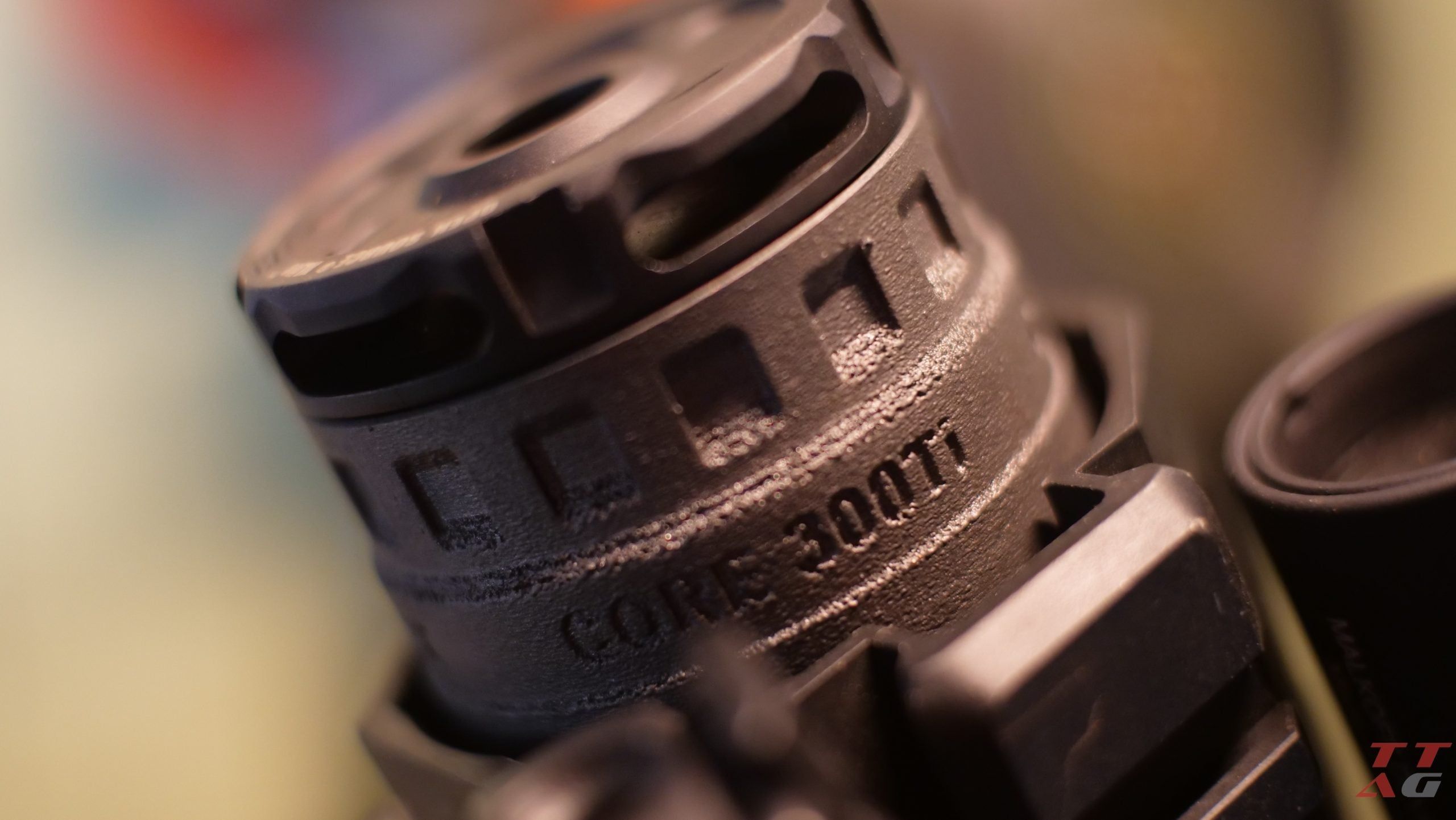
Precision Armament launched the TiTrex suppressor, built around a replaceable-core architecture that cuts suppressor inventory costs for shooters running multiple calibers. The design eliminates buying separate suppressors for .308, .223, 9mm, and .45 ACP platforms. A single registered Form 4 suppressor accepts caliber-specific cores, each optimized for dedicated cartridge sound reduction.
The TiTrex core is 3D-printed titanium. The open HUB mounting interface accepts standard muzzle devices across centerfire and rimfire applications. Precision Armament engineered caliber-specific bore geometry into each core to maximize sound suppression for its intended cartridge.
Core swaps cost significantly less than purchasing multiple complete suppressors. Hunters and tactical carriers running two or more calibers save $400-800 per additional suppressor can. A shooter rotating between .308 hunting rifle, .223 AR, 9mm pistol, and .45 ACP defensive carry now needs one suppressor body instead of four.
Why It Matters for Gun Owners
This addresses a recurring complaint from suppressor owners: the registration and cost barrier creates friction when building multi-caliber arsenals. Federal Form 4 applications require months of processing and $200 tax stamps per suppressor. Modular core architecture flips that equation. Register the TiTrex once. Build your suppressor collection with swappable cores.
The 3D-printed titanium construction raises a critical question: durability under thermal cycling. Printed metals can fail when subjected to repeated heating and cooling if the design tolerances are loose. Precision Armament's engineering determines whether the TiTrex core maintains structural integrity through years of centerfire rifle use, or becomes a liability that fragments under sustained fire.
Weight savings matter to shooters balancing rifle ergonomics. Titanium is lighter than steel or aluminum while handling the pressure and heat that suppressor internals experience. A 3D-printed core can achieve weight reduction that traditional manufacturing cannot match, assuming the print quality controls are rigorous.
The HUB mounting system provides cross-platform compatibility. Shooters switching between muzzle devices or adapters gain flexibility without replacing the entire suppressor body. Standard HUB interface compatibility with other manufacturers' accessories increases the TiTrex value proposition.
Market Position and Execution Risk
Precision Armament enters suppressor territory dominated by Surefire, Dead Air, and Rugged—manufacturers with established track records and dealer networks. All three offer modular suppression options already. Dead Air's Sandman series accepts user-swappable baffles. Rugged Suppressors built the Radiant platform for multi-caliber use.
The TiTrex differentiates through 3D-printed construction, but manufacturing repeatability becomes critical. Printer settings, material consistency, and post-processing determine whether core-to-core performance variance stays acceptable. Shooters buying multiple cores expect identical sound reduction across each unit. Quality control failures would damage Precision Armament's credibility faster than competitors.
Pricing and core availability determine real-world adoption. If TiTrex cores cost $150-250 per unit and stock remains available, shooters will switch. If cores cost approaching a complete suppressor price or face back-order delays, the modular advantage disappears.
DownRange Bottom Line
The TiTrex modular core concept solves a genuine suppressor owner problem. Multi-caliber carriers need multi-caliber suppression without accumulating Form 4 tax stamps and registration delays. Precision Armament's 3D-printed titanium execution requires field validation. Shooters considering the TiTrex should demand durability data and thermal performance testing before committing to the platform. Core availability and pricing will determine whether modular suppression reaches mainstream adoption or remains niche.