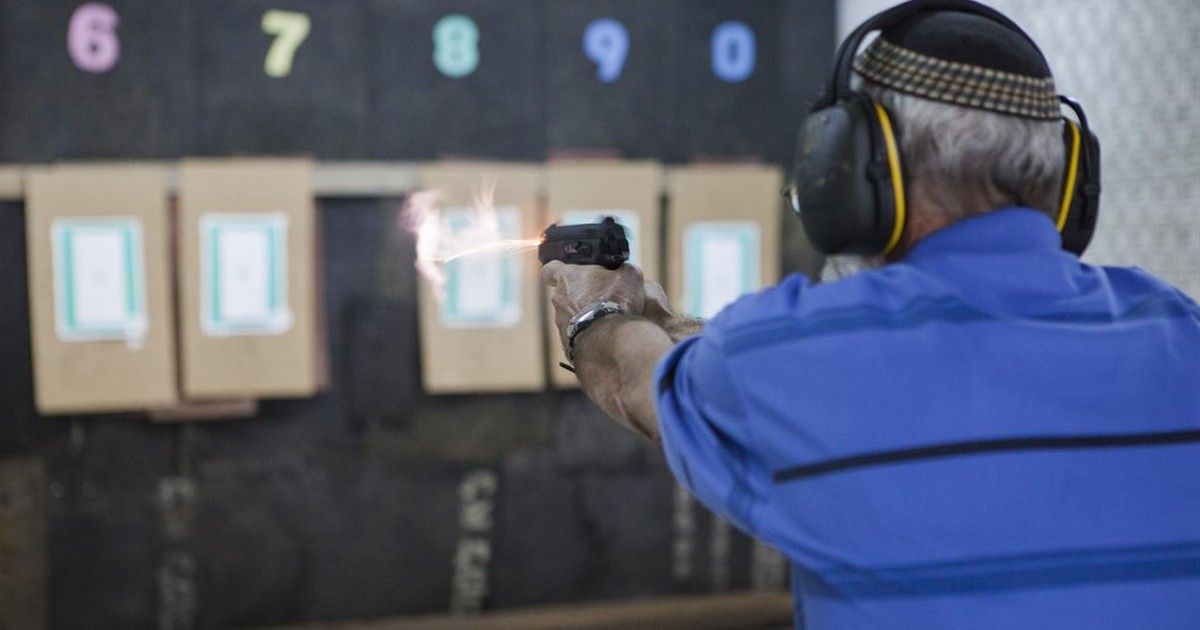
Fuller Wants American Jews Armed, Citing Israel's Strict Licensing
Dr. Adam Fuller, the Clayman Professor of Jewish Studies and associate professor of political science at Youngstown State University, wants Jews to own guns. He made that case to honors students at Yeshiva University in New York, where he discussed his book, The Armed Jew: The Case for Jewish Gun Ownership. Fuller spent years arguing for Jewish armed self-defense in print before he owned a gun himself. He changed that after October 7, 2023, when students in his classroom defended Hamas and campus groups announced days of 'resistance.' Fuller now carries a concealed handgun under a license he earned.
Key Details
Fuller's argument rests on a few specific claims and a sharp contrast with Israel.
- Venue: Honors students at Yeshiva University, New York.
- Book: The Armed Jew: The Case for Jewish Gun Ownership, which Fuller wrote because he found little scholarship on Jewish survival compared with the literature on Jewish cemeteries.
- Trigger: Students defending Hamas after October 7, 2023, and campus 'resistance' events prompted him to act.
- Path to ownership: He asked a former student, a competitive pistol shooter, to help him buy a handgun and learn to use it. He later obtained a concealed carry license.
- Core claim: Fuller says Jews get stereotyped as weak or timid, even by Jewish writers, and that accepting those stereotypes endangers American Jews.
- Israel's model: Fuller says Israelis treat arms as a collective, military right. A civilian gun license there generally requires prior infantry service.
The Israeli civilian system is restrictive on paper. A civilian handgun license covers one registered handgun, and the license cannot exist apart from that gun. License holders must renew every three years and complete refresher training about every 18 months. New licensees may keep only 100 rounds at home, and they must shoot or surrender extra ammunition at the range before buying more. A 2025 study described these limits as tighter than those in California, New York, or Massachusetts. Since October 7, 2023, Israel has expanded license eligibility and doubled the home ammunition allowance for ordinary handgun owners. Even so, those changes do not bring Israeli law close to Wyoming, Maryland, or Massachusetts.
Background
The Supreme Court's 2022 decision in New York State Rifle & Pistol Association v. Bruen reshaped carry law nationwide. The Court struck down New York's proper-cause requirement for public carry. It also set a test that asks whether modern gun regulations fit within the nation's historical tradition of firearm regulation. Bruen moved carry from a privilege the government grants toward a right the government must justify. Israel's framework runs the other way. The state issues licenses to qualified applicants, and the individual right to a firearm does not stand on its own.
The October 7, 2023 Hamas attack on southern Israel shifted Israeli policy. The government loosened some civilian licensing rules afterward, which reflects a strain of thinking that treats armed civilians as part of national defense. American Jewish institutions also faced rising antisemitic threats during the same period. Fuller's book enters that debate from a scholar's side. He does not frame the issue as a policy fight over Israel. He frames it as a question of how Jews see themselves.
Why It Matters for Gun Owners
Fuller's message reaches beyond one faith community. Synagogues, Jewish day schools, and community centers often depend on police response times that run longer than an active attack. Armed and trained members can serve as a first layer of defense, and that point applies to any congregation, school, or venue with a crowd and no armed staff. Gun owners in those settings should know their state's rules on carrying onto property, security exemptions, and church or school carry policies. In states like California, New York, and Massachusetts, a lawful carry permit can take months and require extensive paperwork. Gun owners there should track their permit status and renewal dates closely. Anyone following Fuller's path should choose a qualified instructor, practice regularly, and store firearms securely at home, especially where children or visitors live.
DownRange Analysis
Fuller's argument works best on the Second Amendment side of the ledger. The right belongs to individuals, and Bruen made that clear for carry in public. Israel's model would struggle in an American court. A licensing regime that treats gun ownership as a privilege, caps home ammunition, and ties a license to one registered handgun would face serious challenge under Bruen's text-and-history test. The military-service prerequisite would look even weaker. Fuller himself treats Israel as a warning, not a template, and that reading holds up. The market signal is clear too. Demand for beginner handgun courses and carry training rises after events like these, and dealers in Ohio, New York, and Massachusetts see it first. Gun owners should do three things now. Get trained. Check your state's carry rules. Store your firearm so it stays secure and ready. Defenselessness is not a virtue, and Fuller's book gives gun owners a clear case to make to their own communities.