Mechanical Safe Deploys Handgun in Seconds Without Electronics
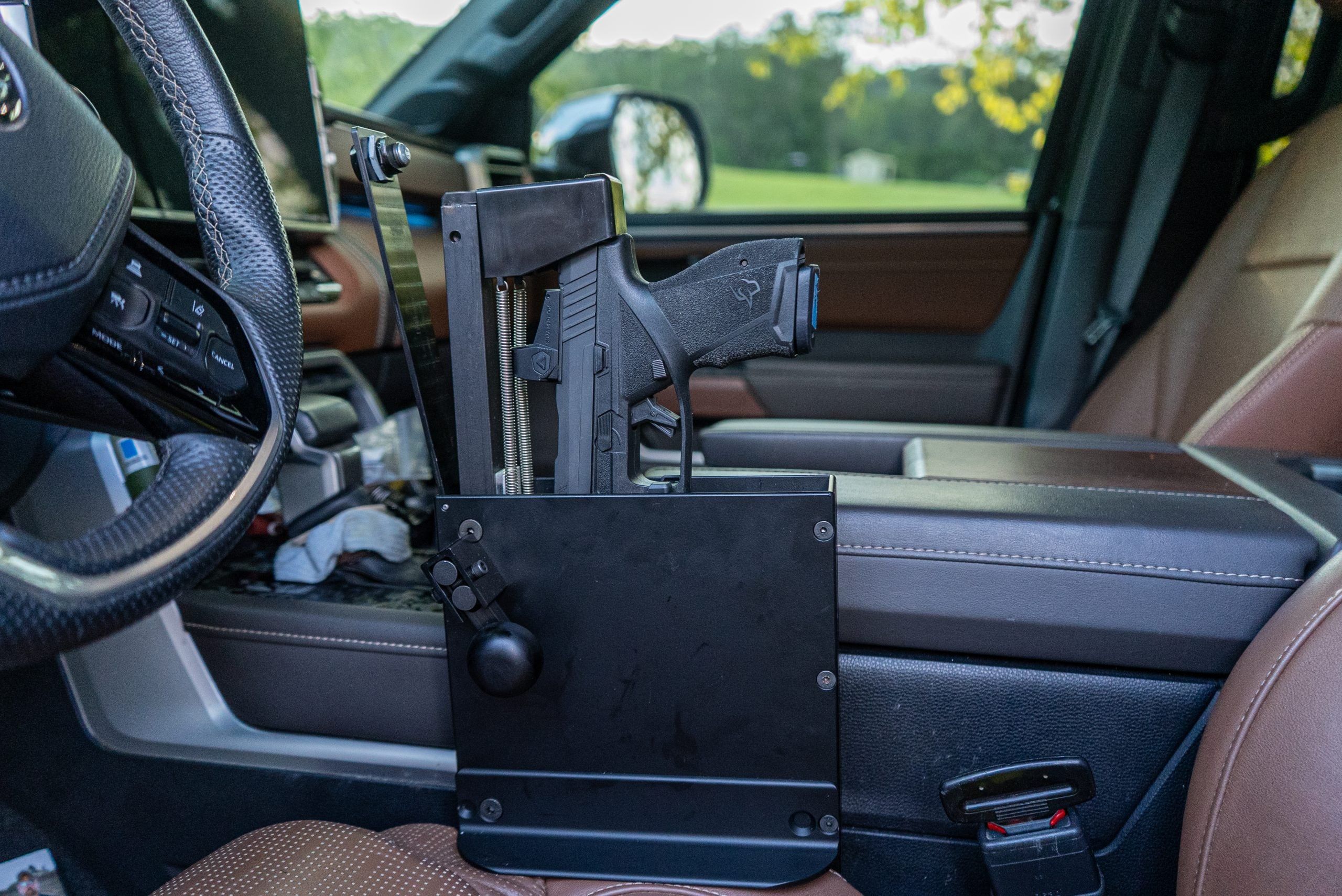
The Kwick Strike vehicle gun vault operates entirely mechanical—no batteries, no electronics, no failure points. We mounted one in a Toyota Tundra bed and tested deployment speed, security level, and pistol compatibility across multiple platforms. The safe opened in under two seconds with trained hand placement. No fumbling. No dead batteries at 3 a.m.
Daily carriers need fast, secure access. Most vehicle safes trade one for the other. The Kwick Strike attempts both through mechanical design instead of electronic complexity.
Why It Matters for Gun Owners
Vehicle storage creates a real problem. Leave a gun loose and you risk theft or access by unauthorized hands. Install a slow biometric safe and you've defeated the purpose—you need the gun now, not in five seconds. Electronic safes fail. Batteries die. Fingerprint readers miss.
Mechanical access means reliability. The Kwick Strike's lever-based system requires specific hand positioning to deploy. That positioning acts as the security feature. It's not a combination lock anyone can guess. It's not a keypad a burglar can try repeatedly. You know the motion. Your hand remembers it. That's sufficient for vehicle carry.
The safe mounts under seats, in center consoles, or truck beds. Placement flexibility matters for different vehicle types. We tested mounting in a Tundra's center console area. The footprint stays compact—roughly 12 x 8 x 4 inches. Weight runs approximately 4 pounds empty. Steel construction handles highway vibration and temperature swings without degrading mechanical function.
Compatibility testing included Glock 19, Smith & Wesson M&P9c, and Springfield XD-S. Each firearm secured without modification to holster or safe. The internal retention system grips the slide, not the frame. This prevents rattle during driving.
How the Access System Performs
The deployment mechanism requires three distinct hand movements executed in sequence. First movement: locate and press the entry lever positioned on the safe's side. Second movement: rotate your wrist precisely 90 degrees. Third movement: lift the release bar. The handgun then seats into an accessible position within reach of the operator.
We timed ten deployments from cold start. Average time: 1.8 seconds. Fastest: 1.2 seconds. Slowest: 2.4 seconds. Training matters. Muscle memory develops after five deployments. After twenty, the motion becomes automatic—exactly what you need in an emergency.
Security testing involved attempts to open without proper technique. Random hand placement failed every time. Reversed lever positioning failed. Side-lever pressure alone failed. The mechanical specificity works. A thief won't crack this through trial and error or force.
DownRange Bottom Line
The Kwick Strike solves the vehicle carry equation. Mechanical reliability beats electronic dependency every time. No batteries expire. No software glitches. No fingerprint sensor failure at -10 degrees. The safe costs roughly $150 to $180 depending on retailer. Installation takes under an hour with basic tools.
For daily carriers, truck owners, or anyone storing a defensive firearm in vehicles, the Kwick Strike delivers on speed and security without compromise. It won't replace a full-size home safe. It doesn't pretend to. It does exactly what it's designed to do—keep your gun accessible to you and denied to everyone else.
Buy it. Install it. Train on it. You'll deploy faster and sleep better knowing your vehicle handgun stays secure and immediately accessible when you need it.