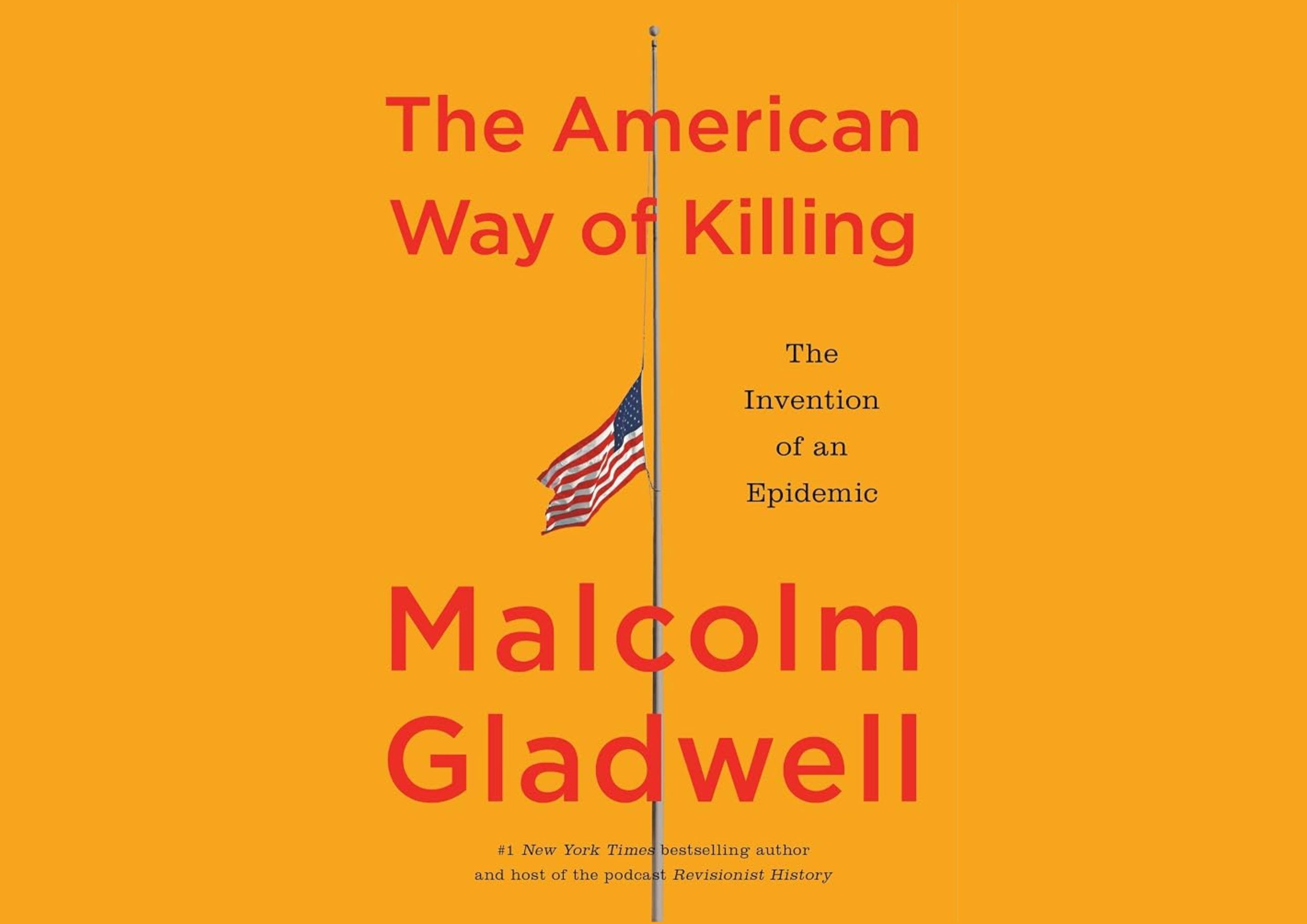
Malcolm Gladwell Blames the Left for the Assault Weapon Myth
Malcolm Gladwell's new book, The American Way of Killing, tells gun owners something they already know: the gun-control movement built its case on confusion about what a rifle does. The Washington Free Beacon's review credits Gladwell with readable prose and a few sharp observations. It also says the book reads like a set of unrelated positions picked at random. Gladwell's opening chapter targets the left on so-called assault weapons, and conservatives will recognize most of the arguments. The book's bigger swing comes in its treatment of the Second Amendment, where the reviewer finds the reasoning weakest.
Key Details
The book's core claim is that both sides hold "dishonest conversations," which Gladwell defines as pretending irrelevant facts matter or dodging hard conclusions. The assault weapon chapter gets the most attention from the reviewer. Here is what the review puts on the table:
- Gladwell argues that assault weapons do not fire automatically when the trigger is held down, a point gun owners have made for decades.
- He cites a 1988 report by activist Josh Sugarmann that openly celebrated the public's tendency to assume anything that looks like a machine gun is one.
- Assault weapons differ from other semiautomatic rifles mainly through cosmetic features such as pistol grips and folding stocks.
- Handguns account for far more everyday gun deaths than rifles of any kind, and have historically been more common in mass shootings, though the reviewer notes that gap has narrowed recently.
- The 2008 Heller decision held that the Second Amendment protects an individual right to keep and bear arms, not only militia service.
- Gladwell relies on legal scholar Carl Bogus's argument that the Founders' militia concerns really masked a desire to protect Southern slaveholders from revolts.
- Charlie Cooke, writing in National Review, pointed out that the slave-revolt theory fails to explain similar arms language in the constitutions of free states.
- Historian Noah Shusterman argues that a Bill of Rights ratified across the Atlantic seaboard would have needed a militia or standing army provision to avoid objections.
- A separate chapter credits urban trauma centers with saving more gunshot victims, which Gladwell calls a source of "moral hazard."
Background
The fight over "assault weapons" began in earnest in the 1980s, when gun-control groups started using visual features to define a category of rifles. Congress passed a federal assault weapons ban in 1994. It contained a sunset clause and expired in 2004. Several states kept or expanded their own feature-based bans, and those laws remain the main source of litigation today. The Supreme Court's 2008 Heller decision struck down the District of Columbia's handgun ban and recognized an individual right under the Second Amendment. In 2010, McDonald v. Chicago applied that right to the states. In 2022, New York State Rifle & Pistol Association v. Bruen required courts to test gun laws against the nation's historical tradition of firearm regulation. A Supreme Court case now pending could address whether states may ban certain common rifles. The Free Beacon review argues that Heller already removed handgun bans from the table, which leaves the rifle debate as the next target.
Why It Matters for Gun Owners
The chapter matters most for owners in states with feature-based bans. California, New York, and New Jersey all restrict rifles based on pistol grips, folding or telescoping stocks, and similar features. Under those laws, a rifle that is functionally identical to an unrestricted model can become a felony to possess. Gladwell's argument that these features are cosmetic gives challengers a useful public admission from a mainstream author, even though he does not endorse repeal. Owners in restrictive states should check their state's current feature list before buying or modifying any rifle. Keep receipts, registration paperwork, and dealer records organized. Watch the pending Supreme Court case closely, because a ruling could either strike down or uphold these feature tests and change the rules quickly.
DownRange Analysis
Gladwell's cosmetic-feature argument is the right argument, and it lines up with Bruen. A ban on a pistol grip or a folding stock regulates appearance, not function. Courts applying Bruen have to find a historical analogue for that distinction, and the gun-control side has not produced a convincing one. The slavery-revolt theory is a weak link, as the reviewer shows, and it hurts Gladwell's credibility on the Second Amendment. Market-wise, feature bans keep AR-platform buyers hunting for compliant configurations, which keeps demand for state-legal parts high. Gun owners should do three things now. Read your state's statute line by line. Support the litigation groups already fighting these laws. And do not treat a bestseller as legal authority, no matter how well it reads.