Maryland Lets You Drive Armed to Synagogue, Not Walk There
Menashe Shapiro, a 29-year-old ordained rabbi and Georgetown law student, can legally carry a firearm inside his Orthodox congregation's building in Silver Spring, Maryland. He cannot legally walk there with it. A September ruling by a Maryland judge on a local gun control law created that split, and a civil fine of up to $500 for a first offense now applies to anyone who walks to shul armed on Shabbat. The Silver Spring Jewish Center, represented by the religious liberty nonprofit Becket, is the congregation at the center of the dispute. The practical result is absurd: a licensed carrier can drive to synagogue armed but cannot walk there on the Sabbath, when driving is forbidden.
Key Details
The facts are narrow, and they matter. Here is what the record shows:
- Who: Menashe Shapiro, 29, an ordained rabbi and law student at Georgetown University.
- Where: Silver Spring Jewish Center, an Orthodox synagogue in Maryland.
- Security model: The shul cannot afford a paid guard for the building's full hours, which run from 6 a.m. to 11 p.m. It relies instead on trained congregants holding carry permits.
- The ruling: A judge's September decision on a local gun control law produced the carry-versus-walking conflict.
- Penalties: A civil fine of up to $500 for a first offense and up to $750 for subsequent offenses, applied to carrying while walking to synagogue.
- Legal counsel: Eric Baxter, senior counsel at Becket, represents the congregation and has argued the rule has no safety rationale.
- Religious constraint: Shapiro's route falls within an eruv, the enclosure that lets observant Jews carry certain objects on Shabbat. Driving is prohibited on Shabbat.
Baxter's argument is direct. He says the state cannot claim a safety interest in barring firearms at this location while allowing the same firearms to arrive by car. The distinction, in his telling, falls on Jews who must walk on the Sabbath.
Background
Maryland's carry framework changed after the Supreme Court decided New York State Rifle & Pistol Association v. Bruen in 2022. That decision struck New York's discretionary "proper cause" requirement and set a text, history, and tradition test for evaluating modern gun laws. Maryland lawmakers responded by rewriting the state's carry rules and listing a range of sensitive places where carry is restricted. Places of worship sit on that list, which is why Maryland congregations face a default ban unless the rules allow otherwise. Federal courts have spent the years since then sorting out which sensitive-place restrictions survive Bruen scrutiny.
The Maryland law in this case also includes a provision that lets people drive through certain areas near places of worship with a firearm. That provision, as described in the reporting, allows a carrier to drive within 100 yards of such a site. The congregation's argument turns on the gap between that driving allowance and the walking restriction. Shapiro cannot satisfy the driving language because his religion forbids driving on Shabbat. The judge's ruling created that outcome, and it is now the subject of Becket's challenge.
Why It Matters for Gun Owners
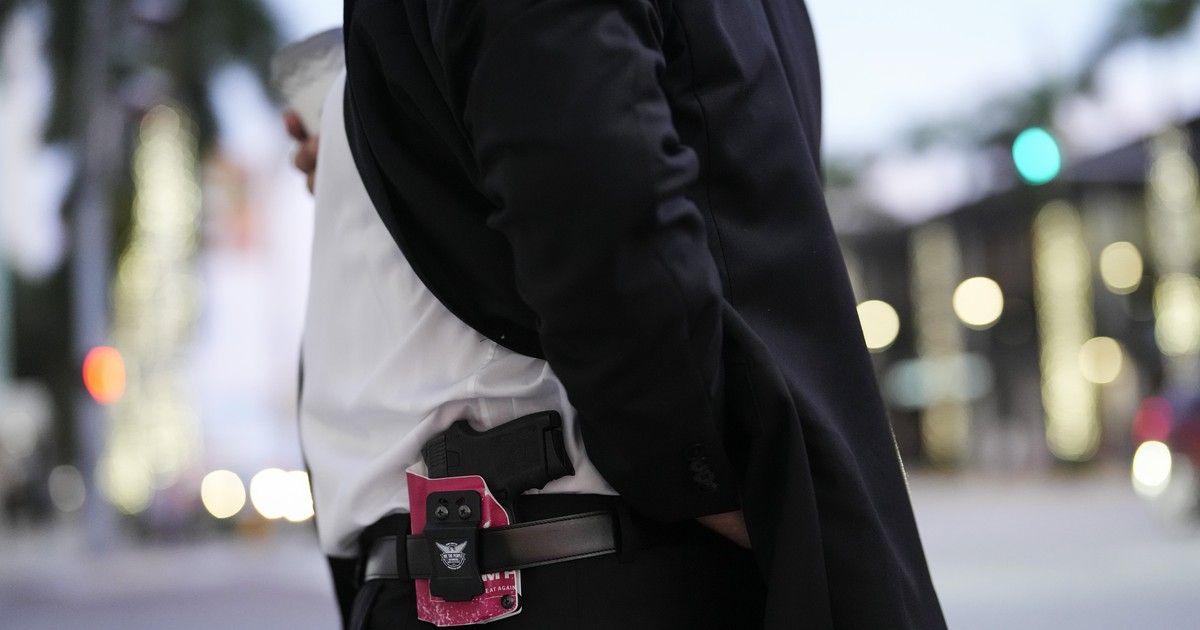
Any Maryland carrier who walks to a place of worship needs to read the current ruling closely. Carry rules that depend on the mode of transport are unusual, and they create traps. A licensed carrier who parks across the street and walks the final block could face the same fine Shapiro faces. Volunteer security teams at churches, synagogues, and mosques in Maryland should also review how their members arrive. Congregations that rely on armed volunteers because they cannot afford paid security will feel the squeeze first.
The lesson extends beyond Maryland. Many states write sensitive-place rules with specific carve-outs, and those carve-outs rarely account for how people actually travel. Anyone with a permit in a restrictive state should map the route to a place of worship before the trip, not after. Check the statute's definitions, the distance language, and whether a local ordinance adds penalties on top of the state law.
DownRange Analysis
This rule fails Bruen's test on its face. Maryland cannot point to a historical tradition of banning carry on foot while allowing it by car. The distinction is arbitrary, and the government would struggle to explain the safety interest behind it. Baxter's point about the purpose of the law is the strongest argument in the case. If the goal is preventing armed people from entering a sacred space, the statute permits the same carrier to arrive by vehicle and reach the parking lot. The rule regulates the mode of travel, not the risk.
Gun owners should take three steps now. First, know whether your state restricts carry at places of worship and whether the congregation has granted permission. Second, if you carry for church security, get written authorization and understand the exact boundaries of your permit. Third, track Becket's case and the court's handling of it. A ruling against this rule would help every carrier who walks to services, and gun owners who care about Second Amendment consistency should watch closely.