NRA-ILA's Commerford: Post-Election Gun Control Push Is Coming
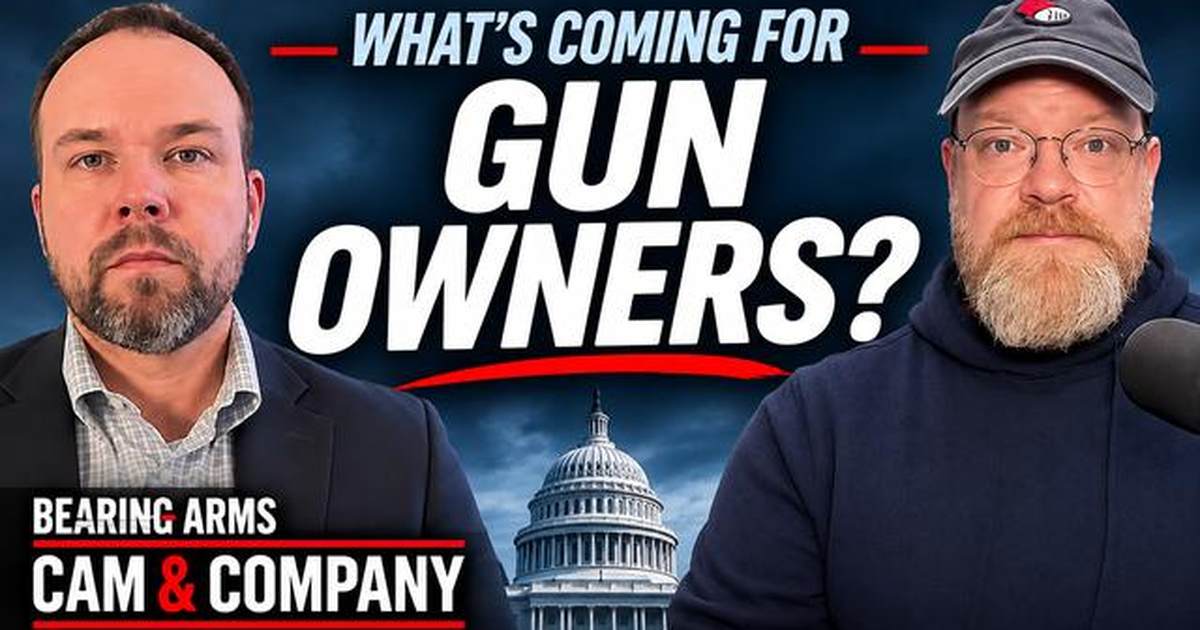
NRA-ILA Executive Director John Commerford warned on November 11, 2026, that a new wave of gun control is headed for state legislatures and Congress. Commerford sat down with Cam Edwards of Cam & Company on Bearing Arms to name the biggest threats to the Second Amendment after the 2026 elections. He also outlined where anti-gun lawmakers are likely to push new restrictions and what gun owners can do to push back. Expect the fight to run on two tracks at once: statehouse bills and federal proposals. Gun owners who sit out the next session will hand those bills a free pass.
Key Details
The interview ran on Bearing Arms at 12:38 PM Eastern on November 11, 2026, and runs 40 minutes and 18 seconds. Here is what the segment covers:
- Speaker: John Commerford, Executive Director of the NRA Institute for Legislative Action (NRA-ILA)
- Host: Cam Edwards, Cam & Company
- Timing: Framed around the aftermath of the 2026 elections
- Focus areas: The biggest threats to the Second Amendment, where anti-gun lawmakers may try to advance restrictions, and how gun owners can respond
- Venues named: State legislatures and Congress
The same page carried several related headlines. One reports that a judge expanded an injunction against the AR-15 and magazine ban to cover the rest of Virginia's state agencies. Another details a Florida deputy telling fairgoers they may carry, but should keep quiet about it. A third covers a run of gun seizures on Chicago public transit, which the piece calls a supposedly gun-free zone. The page does not provide case numbers, bill numbers, or vote counts for the Commerford interview. Check the full audio for specifics on any proposed legislation.
Background
The Second Amendment fight has moved from courtrooms to statehouses over the past decade. In 2008, District of Columbia v. Heller established an individual right to keep and bear arms for self-defense in the home. In 2010, McDonald v. City of Chicago applied that right to the states. Then, in 2022, New York State Rifle & Pistol Association v. Bruen struck down New York's may-issue carry permit scheme and set a text-and-history test for modern gun laws. Under Bruen, the government must show that a regulation fits within the nation's historical tradition of firearm regulation.
That test changed the playing field. Lawmakers who once relied on broad interest-balancing now have to find historical analogues for new restrictions, and courts have thrown out laws that fail that search. Anti-gun legislators have responded by drafting narrower bills and by pursuing ownership limits, permitting regimes, and sensitive-place rules. Virginia's pending litigation over AR-15 and magazine restrictions shows how those disputes play out in court once a law takes effect. Commerford's warning fits that pattern: the fight shifts with every election cycle.
Why It Matters for Gun Owners
Any new state law that restricts a firearm or magazine hits owners immediately. A ban on a rifle platform or a magazine capacity limit can turn a lawful owner into a felon overnight, depending on the grandfathering language. Owners in states with divided legislatures and new majorities should read every bill that gets introduced, not just the ones that pass. Watch the committee calendars. Most bills die in committee, and the ones that survive usually move fast in the last weeks of a session.
Federal proposals matter too. A bill in Congress can preempt state law, shift funding, or change the rules for interstate transport. Gun owners who travel with firearms should track any change to the federal framework for carrying through states that restrict it. Carry-permit reciprocity is the first thing to check after any shift in the House or Senate. Owners in Virginia should follow the injunction case closely, because its scope determines which state agencies can enforce the challenged restrictions. Keep your state representative's office on speed dial during session. A single phone call from a constituent still moves a vote.
DownRange Analysis
Commerford's warning deserves a skeptical read. Every election cycle brings the same promise from one side and the same alarm from the other. The question is what survives Bruen. Under that test, a ban on commonly owned firearms faces a steep climb, because the government must point to historical analogues that match the modern law. Many recent restrictions have struggled on that exact point. Courts, not campaign rhetoric, will decide the outcome.
Market effects follow the legal fight. Owners who expect a ban often buy ahead of it, and dealers see spikes in sales of targeted models. Sitting on a stockpile is not a strategy. Right now, the smart move is to document your lawful purchases, confirm your state's current rules, and support the NRA-ILA and your state affiliate with time and money. Write to your legislators before any bill hits a floor vote. Then keep your holsters on and your paperwork in order.