Wheelchair Shooter Completes Full Tactical Match Without Accommodation
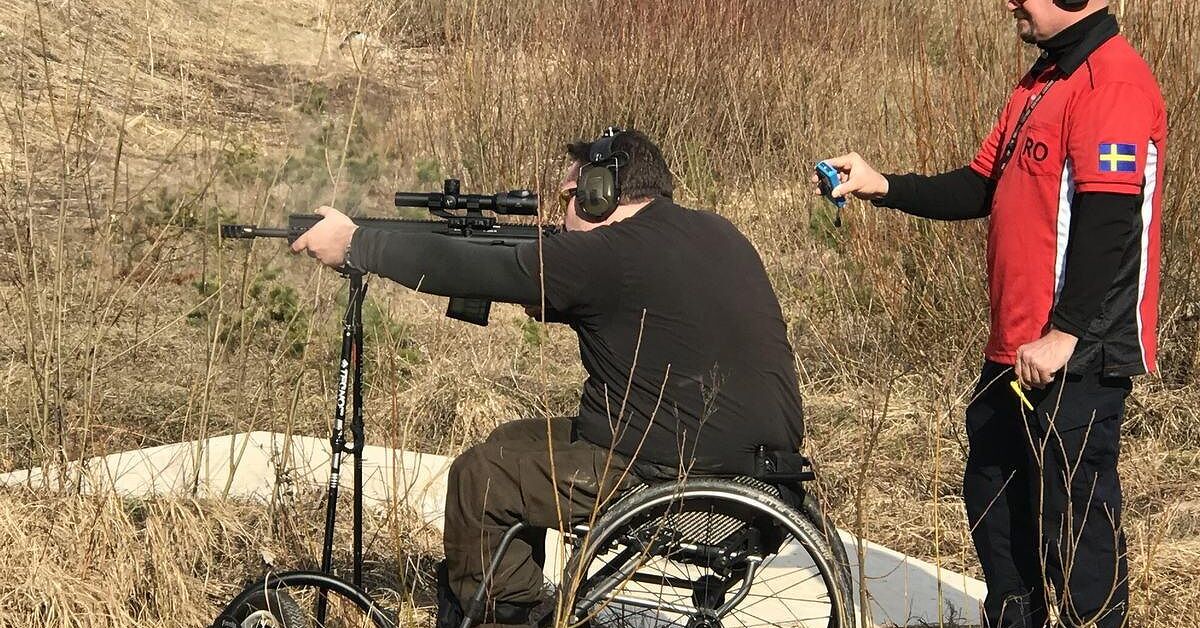
A disabled competitor finished an entire practical shooting match firing an HK MR308 rifle through every stage—no separate category, no modified scoring, no excuses. Range officers scored hits and splits identically to standing shooters. The match proved that accessibility and competitive standards aren't mutually exclusive.
The shooter moved through multiple stages from a wheelchair, engaging targets at various distances while seated. Fellow competitors and range staff judged results on accuracy and time alone. No handicap adjustments. No sympathy scoring. Performance was performance.
This matters because the shooting sports have long operated under an unstated assumption: if you can't shoot standing, you shoot in a different match or don't shoot at all. Practical shooting—IPSC, 3-Gun, steel challenge events—demands movement, target transitions, and positional changes. A wheelchair seemed incompatible with the sport's core demands. This competitor proved that assumption wrong.
The HK MR308, a .308 Winchester semi-auto, isn't a beginner's rifle. Recoil management matters. Sight picture matters. Trigger control matters. Using it from a seated position required adapting technique, not abandoning rigor. Range officers didn't lower the bar—the shooter simply cleared it from a different stance.
Tactical matches already test unconventional positions. Shooters fire from barricades, around barriers, and from compromised stances. A wheelchair is just another position. The targets don't move closer. The time limits don't expand. The hit zones don't grow. What changes is the physical approach to solving the same problem.
For gun owners who carry, this carries a message beyond competition. Millions of Americans have mobility limitations—injuries, age, disabilities present from birth or acquired through accident or service. They own firearms for self-defense and sport. They shouldn't have to choose between pursuing the shooting sports seriously and their physical reality.
The industry has marketed guns as accessible across demographics. Marketing isn't enough if practical shooting excludes anyone capable of safe performance. If a wheelchair shooter can hit targets under time pressure using a full-power rifle, the limiting factor isn't the equipment or the sport—it's the willingness of range operators and competitors to see past the wheelchair.
This match also signals something to match directors and range staff nationwide. You don't need massive infrastructure changes. You don't need to rewrite rulebooks or create new divisions. You need to ask one question: can this person safely and accurately complete the course as written? If yes, they shoot. If no, the answer is no—not because of disability, but because of the same safety and performance standards everyone faces.
Inclusivity that matters doesn't lower standards. It removes artificial barriers while keeping real ones in place. A shooter who can't safely manipulate the rifle doesn't belong on the line. A shooter who can manipulate the rifle safely but needs a different chair to do it? That's not a safety issue. That's an arbitrary restriction.
The conversation shifts when you see it happen. One competitor in a wheelchair finishing a full match changes how other disabled shooters see their own options. It changes how range officers think about course design. It changes how the sport thinks about who belongs.
For daily carriers and competitive shooters both, practical skills matter more than appearance. The wheelchair doesn't affect trigger press, sight alignment, or target transitions—only the foundation those skills build from. That's worth remembering the next time someone says a shooter can't compete because of how they move through the world.