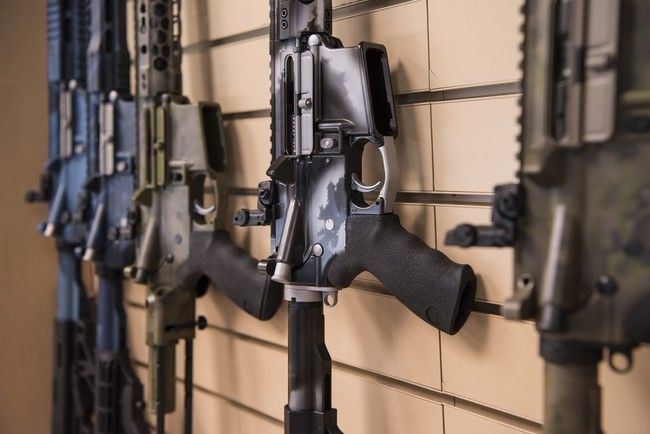
Supreme Court Set to Rule on Assault Weapon Ban Constitutionality
The Supreme Court granted certiorari to hear a constitutional challenge to assault weapon bans, the first major Second Amendment case since the landmark Bruen decision in 2022. The Second Amendment Foundation (SAF) submitted an amicus brief in support of the challenge, arguing that bans on commonly owned rifles violate the Second Amendment under Bruen's text-and-history framework.
Key Details
- SCOTUS accepted the case after years of lower courts upholding various state and federal assault weapon bans
- The challenge directly confronts the constitutional basis for restrictions on rifles classified as "assault weapons"
- SAF's brief argues these bans fail Bruen's requirement that firearm regulations find support in historical tradition
- The decision represents the first major Second Amendment case the high court will hear since establishing its current constitutional standard in 2022
Why It Matters for Gun Owners
This case could determine whether states like California, New York, New Jersey, Connecticut, Maryland, and Massachusetts can enforce existing assault weapon bans—or whether those laws face invalidation nationwide. The practical stakes are enormous: millions of gun owners in ban states own rifles classified as "assault weapons" under state law. A favorable ruling would either strike down existing bans or force legislatures to completely redefine what weapons they can restrict. Gun owners in compliant states who've registered, registered, or avoided certain purchases based on state law also face potential relief. Conversely, a ruling against the challenge would cement state authority to ban entire categories of commonly owned rifles, signaling Bruen's limits.
DownRange Analysis
Under Bruen, the Court must ask whether the historical tradition of firearm regulation supports modern assault weapon bans. The answer appears straightforward: no 18th or 19th-century regulation targeted rifles based on cosmetic or mechanical features like pistol grips or collapsible stocks. SAF's argument is textually sound. The real question is whether Chief Justice Roberts and the current majority will follow Bruen's logic to its conclusion or retreat into deference toward state legislatures. This case will define whether Bruen was a genuine doctrinal shift or merely a speed bump for anti-gun states. Gun owners should monitor oral arguments closely—the justices' questions will signal how this ruling will actually land.