SCOTUS Takes Two AR-15 Ban Cases, Argues December 2
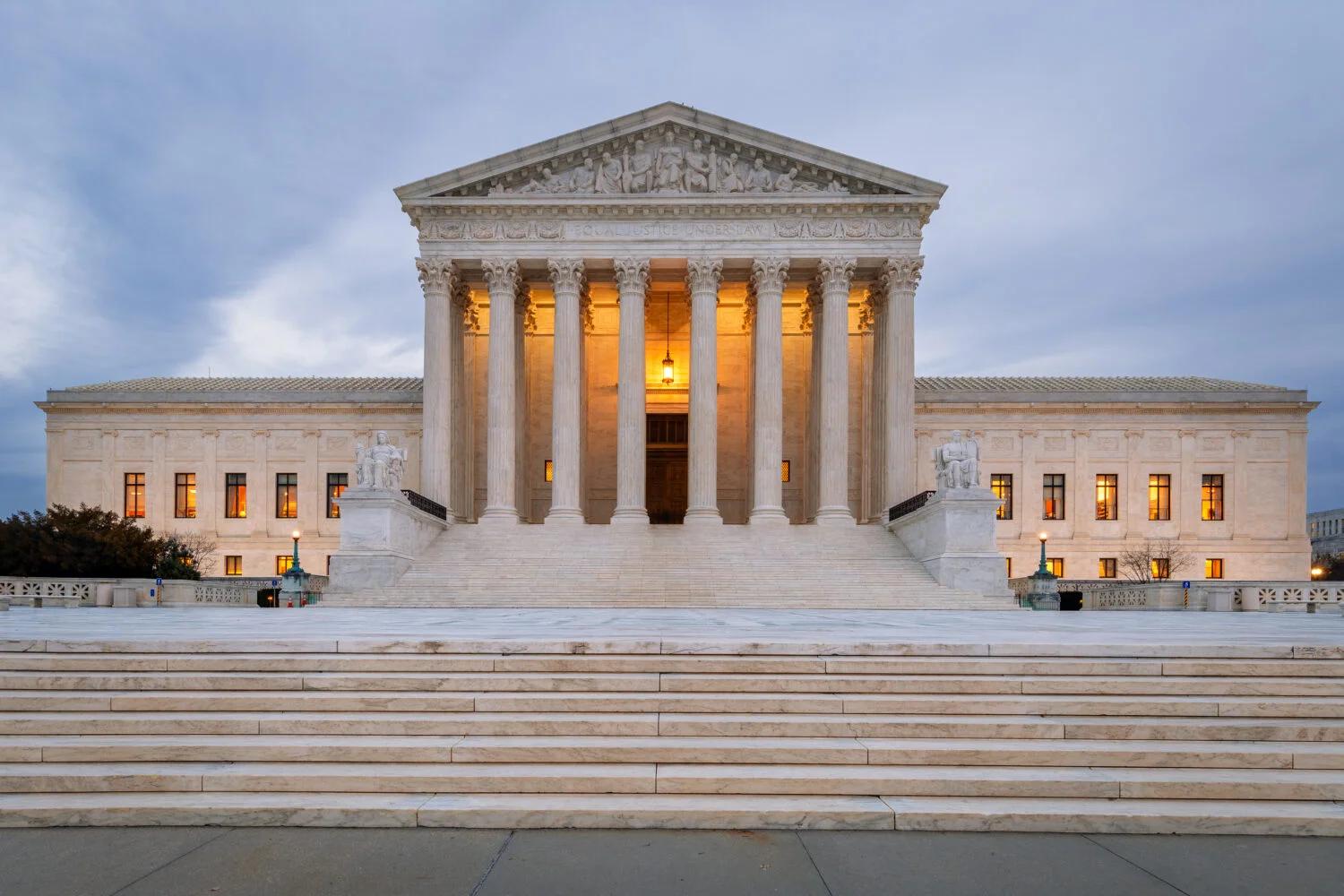
The Supreme Court granted review in Viramontes and Grant, two pending assault-weapons ban cases, and set oral argument for the morning of December 2, 2026. The same day, the Court turned away 15 firearms-law petitions. Twelve of those denials targeted the federal felon-in-possession ban, 18 U.S.C. § 922(g)(1), or a state equivalent. Two AR-15 cases from last Friday's conference remain on hold, and the Court will likely dispose of them in light of Viramontes.
Key Details
The orders break down into four buckets: grants, denials, pending AR-15 cases, and the next conference. Here is what matters.
- Grants: Viramontes and Grant, both assault-weapons ban cases. Oral argument is set for the morning of December 2, 2026.
- Denials: 15 petitions denied on November 16, 2026. Twelve challenged § 922(g)(1) or a state equivalent.
- Novotny v. Moore: A Maryland challenge to the state's sensitive places laws. The Court denied review. Justice Clarence Thomas wrote a statement explaining his view.
- Held cases: Two AR-15 ban petitions from Friday's conference remain pending. The Court is likely to grant, vacate, and remand (GVR) both in light of Viramontes.
- New petitions: Seven firearms petitions arrived in the past week. Six challenge § 922(g)(1) or a state equivalent. One challenges the federal machine gun ban.
- Next conference: Friday, December 4. The Justices plan to discuss 11 firearms cases: ten felon-in-possession challenges and one challenging Congress's Commerce Clause power over firearms.
- Next orders list: Monday, December 7.
The felon-ban petitions raise distinct questions. One asks whether § 922(g)(1) is facially constitutional. Others ask whether it violates the Second Amendment as applied to people whose only convictions are nonviolent, including stale drug distribution convictions and a decade-old offense. A separate petition asks whether a gun that crossed state lines at some point in the past can support a federal possession charge when the defendant never touched interstate commerce.
Background
District of Columbia v. Heller (2008) recognized an individual right to keep and bear arms. McDonald v. Chicago (2010) applied that right to the states. New York State Rifle & Pistol Association v. Bruen (2022) required courts to test gun laws against the nation's historical tradition of firearm regulation. United States v. Rahimi (2024) upheld a restraining-order gun ban and told lower courts to look for principles in history, not exact historical twins.
Those cases left the felon ban unsettled. The Third Circuit, sitting en banc in Range v. Attorney General (2024), held § 922(g)(1) unconstitutional as applied to a man whose only conviction was nonviolent. Other circuits have upheld the statute, and the split is what drives the flood of petitions now on the Court's docket. On the AR-15 side, the Court declined to take up Snope v. Brown in 2025, with Justice Brett Kavanaugh writing that the Court should address the issue within a term or two. Viramontes and Grant are that answer arriving.
Why It Matters for Gun Owners
Two groups should pay close attention. The first is anyone with a prior felony conviction. Section 922(g)(1) applies to offenses punishable by more than one year, which covers many nonviolent crimes. If you have a conviction that dates back years and involves no violence, the December 4 conference and any grant on this question could change your legal exposure. Do not assume the answer. Check whether your state offers rights restoration, and whether that restoration reaches federal firearm rights. Those are different questions.
The second group is owners in states with assault-weapons bans, including California, Illinois, New Jersey, and New York. The Court has agreed to decide whether the Second Amendment protects AR-15-platform rifles. Until a ruling arrives, your state's law controls. Keep purchase records, transfer paperwork, and proof of compliance with your state's registration rules. Expect a decision before the Court's term ends next summer. Watch the December 2 argument transcript for signals on how the justices view the "common use" framework.
DownRange Analysis
The Court took two AR-15 cases and set them for argument in the same term it is weighing felon-ban petitions. That sequencing tells us the justices want the Second Amendment questions answered together, not piecemeal. Under Bruen, the government must point to historical analogues. Heller already protected arms in common use. A ruling that protects AR-15s would force states to justify their bans with real historical evidence. A ruling that upholds them would give states a clear path to keep the laws on the books.
The felon-ban question is harder to predict. The Court has been reluctant to disturb 922(g)(1) broadly, and a narrow as-applied ruling for nonviolent offenders is the most realistic outcome. For the market, expect demand spikes around December 2 and the decision date, the same pattern we saw after every major ruling. Do not buy at inflated ban-state prices based on rumor. What a gun owner should do right now is simple. Track the December 7 orders list, document your compliance, and if you have a nonviolent old conviction, talk to a lawyer who handles restoration before you touch a firearm.