Savage's First Suppressor Is a Reflex Can With a 20-Round Limit
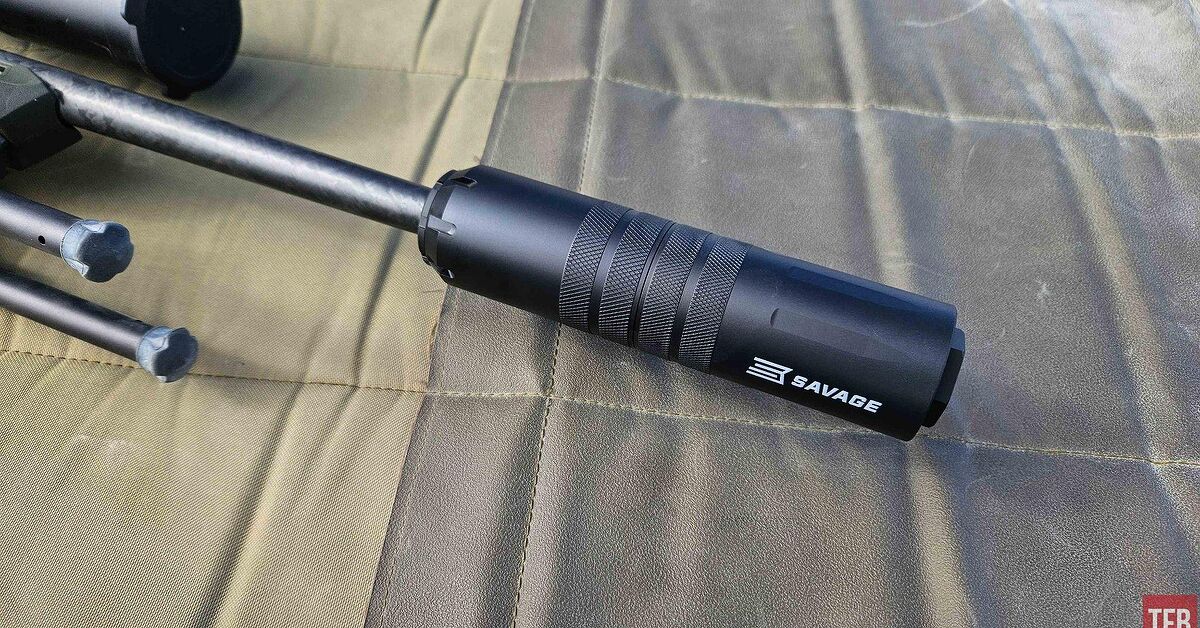
Savage Arms just put its first suppressor in front of reviewers, and it is a reflex design. The AccuCan 30 BOB arrived at The Firearm Blog as one of two Savage cans sent for evaluation, and the first unit tested was the BOB. The publication ran the review on October 31, 2026, as part of its weekly Silencer Saturday series. Reviewers fired the can on a Savage Model 110 Predator Ultra Light chambered in 6.5 Creedmoor. The can is rated for 20 rounds fired at one round per second, then a full cool-down before the next string. Savage is a bolt-action rifle company, so this is a new lane for the brand, and it puts a name many hunters already trust on a can that behaves differently from the standard tube.
Key Details
The BOB earns its name from 'back over barrel.' The rear of the body extends forward over the first few inches of the barrel, which adds internal expansion volume without adding overall length. Here are the published specifications and notable features:
- Model: AccuCan 30 BOB, reflex design
- Rate of fire: Controlled, one round per second, up to 20 rounds, then cool to ambient temperature
- Thread mount: 5/8-24, with the threads buried deep inside the can
- Construction: Aluminum body with a titanium thread insert
- Front end: Integrated flash hider
- Included: Armageddon Gear soft case and a dedicated wrench for torquing the can onto the host gun
The reviewer describes the body as wider than most suppressors in its class. That girth gives the reflex chamber room to expand gas while still fitting common barrel contours. The reviewer has not captured sound data yet, so the 'fairly quiet' impression comes from one range session. The reviewer also points to a reader observation that a tighter bullet-to-bore fit improves the plugging effect in reflex cans. The idea is that a closer fit keeps gas from escaping alongside the projectile and pushes it into the expansion chamber instead. The reviewer plans to test that theory with the BOB.
Background
Reflex suppressors trade a little more diameter for more internal volume in the same overall length. Designers have used the approach for years, mostly from smaller specialty makers. A large rifle manufacturer releasing one is the unusual part. The Firearm Blog notes that Savage Arms recently changed hands and was purchased by Smith & Wesson. Gemtech, a Smith & Wesson brand, already makes suppressors, so the company now owns a silencer maker. The reviewer's read is that Savage keeps building bolt guns under its own name, and that Smith & Wesson does not build bolt rifles. That split reduces the chance that Savage's rifles and cans compete with Smith & Wesson's own lineup. How the AccuCan family fits alongside Gemtech's products has not been announced.
Why It Matters for Gun Owners
Any buyer looking at a reflex can needs to know the muzzle setup before purchase. The BOB's 5/8-24 threads sit deep inside the body, which makes thread adapters a real hazard. If a muzzle adapter unthreads from the barrel, it can stay trapped inside the can. Wrench flats do little good several inches down a tube, so the trapped adapter becomes a fight you don't want to have at the range. The reviewer warns against using an adapter at all and recommends running the can on the correct muzzle thread size. Owners of 6.5 Creedmoor rifles and other .30-caliber hunting rifles should check their barrels now and confirm the thread pitch before ordering. Owners of .22 and smaller rifles should also check whether a specific mount is available for their bore. The federal tax on suppressors has dropped to zero under the 2025 reconciliation law, so a buyer now pays the transfer fee and waiting time, not a $200 stamp, which makes testing a fit more affordable than it used to be.
DownRange Analysis
Suppressors are regulated under the National Firearms Act. Post-Bruen, courts have not struck down the NFA's suppressor provisions, and the regulatory framework still governs the purchase process. The legal question here is minor. The engineering question is not. A 20-round firing schedule with a one-second cadence sounds cautious, and that is the right instinct for a can that lives in a steel-and-aluminum tube. Aluminum on a .30-caliber can raises a reasonable durability question, and the titanium insert only covers the threads. Reflex cans also demand more care with cleaning and with bore alignment. Savage has not published a price in the review, and a reader comment in the source pegged the can near $1,000. That number needs confirmation from Savage or a dealer before anyone makes a buying decision. What should a gun owner do right now? Check your muzzle thread pitch, skip the thread adapter, and wait for independent sound and durability testing before paying for a reflex can with an aluminum body.