12-Pound Magazine-Fed AR Splits Difference Between Rifle and Squad Gun
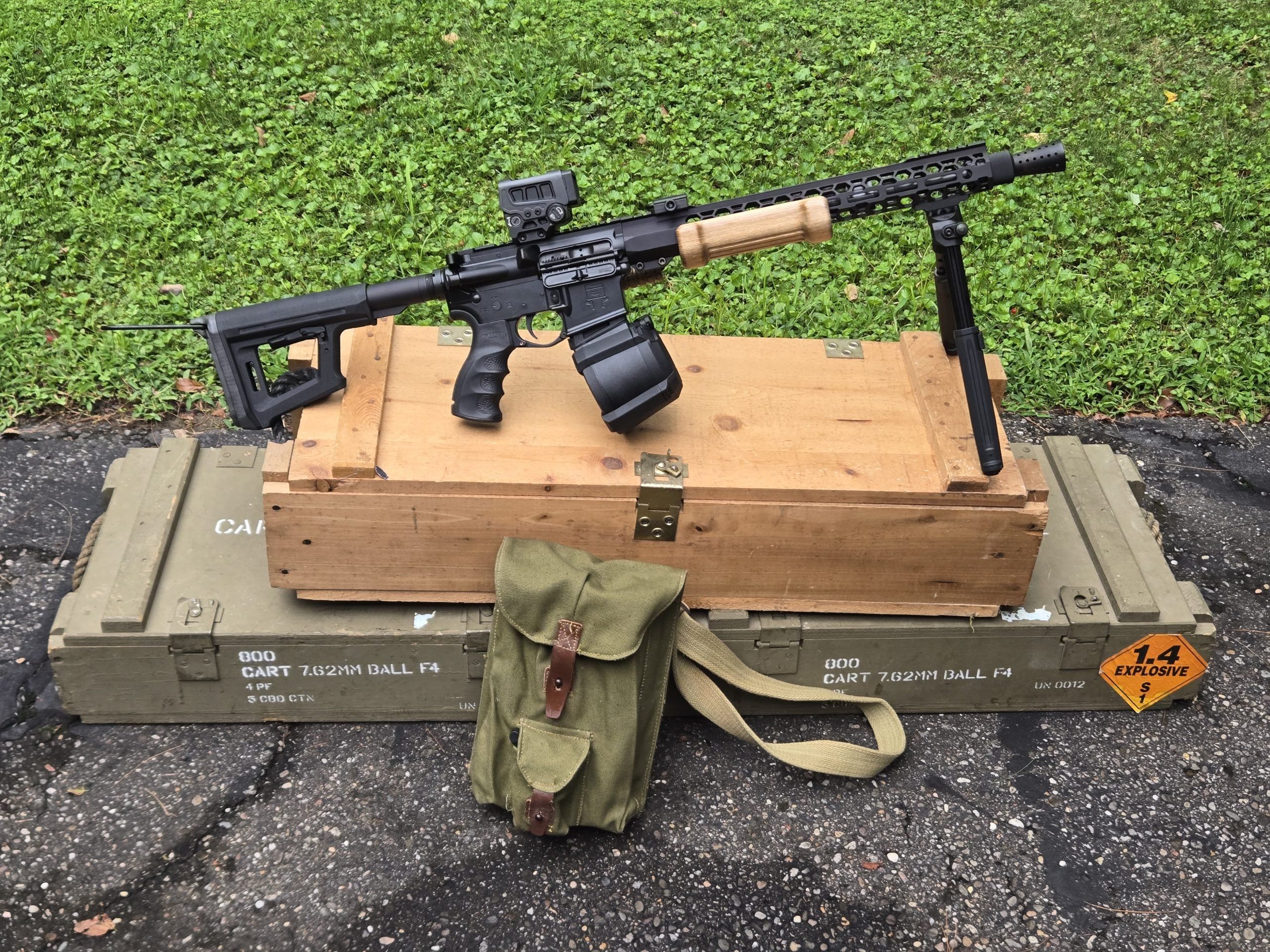
The ARPK isn't a registered machine gun. It's a semi-automatic AR-15 build that mimics the ergonomics and appearance of the Soviet RPK and American M249 Squad Automatic Weapon. Built by a shooter who wanted more than a standard rifle but less legal complexity than a transferable machine gun, the ARPK delivers controllable, rapid semi-automatic fire in a package that tips scales at 12 pounds.
The builder started with a 16-inch barrel and AR platform. Then he added a heavy profile barrel, extended handguard, and oversized charging handle. The result looks like something between a designated marksman rifle and a light machine gun. At 12 pounds unloaded, it's heavier than most AR carbines but lighter than actual crew-served weapons. The semi-automatic fire control group keeps it legal under federal law across all 50 states.
Magazine capacity runs standard AR—30 rounds in most configurations. Some builders experiment with 40-round Lancer mags or PMAGs for the aesthetic. Ammunition costs stay normal since you're running 5.56 NATO or .223 Remington through a standard AR magazine well. No special drums. No proprietary feeding systems.
Why It Matters for Gun Owners
This build proves you don't need a pre-1986 machine gun or federal tax stamp to own a functional, controllable automatic-style weapon. For shooters in states with magazine capacity limits or assault weapon definitions, an ARPK offers performance without triggering legal tripwires.
The semi-automatic platform also means lower maintenance than actual machine guns. No carrier tilt wear. No bolt carrier group battering. You get the handling characteristics of a crew-served weapon—better weight distribution, longer sight radius, easier support weapon shooting—without the Class III paperwork or $200 tax stamp.
For home defense in areas where long gun selection gets restricted, an ARPK sits in legal gray space. It looks tactical. It functions reliably. It costs less than restricted-state workarounds like featureless stocks or fin grips. A fully built ARPK runs $1,200 to $2,000 depending on parts quality and optics.
Training transfers directly. Any AR shooter can handle an ARPK immediately. Ammunition compatibility stays universal. Parts are off-the-shelf. You're not betting money on a niche platform that disappears in five years.
Background
The RPK concept originated in Soviet doctrine—a rifleman's automatic rifle that bridged the gap between assault rifles and machine guns. The original fired 7.62x39 Soviet rounds. American shooters have long adapted AR platforms to mimic this role, dating back to the early 2000s when builders started experimenting with heavier uppers and extended rails.
The M249 SAW influenced the ARPK's ergonomics and proportions. That weapon mounted on a rifle sling differently than traditional carbines, allowed better support shooting, and distributed recoil management across a wider platform. Semi-automatic builders borrowed those lessons.
This particular build surfaced as a personal project that evolved beyond its original purpose. Instead of a test bench experiment, it became a functional semi-automatic rifle that actually performs the role its aesthetic promises.
DownRange Bottom Line
An ARPK proves semi-automatic rifles can deliver crew-served weapon characteristics without Class III restrictions. You get legal status across all states, standard ammunition compatibility, and an AR platform that functions reliably for defense or sport shooting. It's a 12-pound reminder that sometimes the best firearm solutions don't require federal registration—just solid engineering and part selection.