SDCGO Says Only 126 'School Shootings' Happened Since Columbine
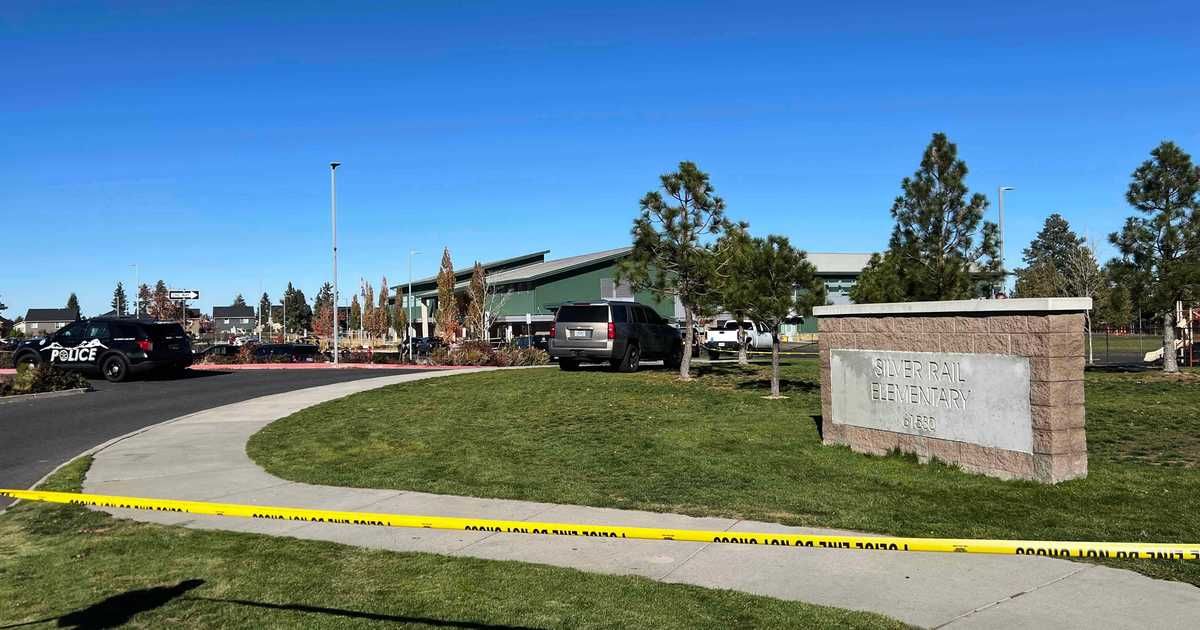
The San Diego County Gun Owners PAC says the true count of school shootings since 1999 is 126, not the 1,100-plus events that mainstream outlets repeat. Executive Director Michael Schwartz ran the numbers himself. He started with public data from Everytown Research & Policy, then applied a strict definition of what qualifies. The filtered list, published on Gun Owners Radio, shrinks the figure to roughly one tenth of what circulates. Schwartz argues the gap comes from padding: crimes near schools and incidents that happen when no classes are in session.
Key Details
SDCGO's methodology is the core of the dispute, so the specifics matter. The group counted only intentional firearm discharges aimed at U.S. K-12 schools or at people in a school role. Schwartz's list draws the line at a specific set of conditions:
- Starting pool: 1,100-plus events reported by mainstream media, according to SDCGO.
- Data source: Public records compiled by Everytown Research & Policy, then filtered by SDCGO.
- Final count: 126 incidents since the 1999 Columbine shooting.
- Eligible targets: Schools, students, employees, security officers, or others in a school-related role.
- Eligible settings: Buildings, grounds, parking lots, and school activities during the school day, arrival, dismissal, or supervised events.
- Injury requirement: None. A victim did not have to be hurt.
- Excluded: Accidents, stray fire, unrelated crimes, gang violence, spontaneous personal disputes, and off-campus incidents without evidence of school targeting.
- Approved exceptions: Certain school-bus incidents, shots fired from off campus toward schools, and selected borderline cases.
- Illustrative exclusion: A drug deal gone wrong across the street from a school, at midnight, during summer recess, on a weekend.
SDCGO is not asking for trust. It wants a fight on the facts. Schwartz challenges anyone to name incidents the list omits, but he wants more than raw statistics. He asks for verified accounts of specific events, plus an answer to one question: would the general public think of that incident when they hear the phrase "school shooting"?
Background
The modern school shooting narrative traces most directly to April 20, 1999, when two students killed 12 classmates and one teacher at Columbine High School in Littleton, Colorado. That attack set the template most Americans picture: an armed attacker entering a school to inflict mass casualties. Federal law followed a different path. The Gun-Free School Zones Act of 1990 made it a crime to possess a firearm within 1,000 feet of a school. The U.S. Supreme Court struck down the original version in United States v. Lopez (1995), and Congress reenacted it with a jurisdictional fix in 1996.
Since then, advocacy groups and data trackers have competed to define the problem. Everytown Research & Policy, the research arm of a gun-control advocacy organization, publishes incident data that many outlets cite. The Gun Violence Archive, a nonprofit, tracks all gun incidents in the country, and its totals include a wide range of events that never involve a school at all. The definitional gap SDCGO points to is real. A count built from every incident near a school will always run far higher than a count built from attacks on schools.
Why It Matters for Gun Owners
Numbers drive legislation. When a legislator cites 1,100 school shootings, the bill that follows gets easier to pass. Gun owners who push back need to understand the definitions behind the figures, not just argue that the figures are wrong. If you debate this at a city council, a school board, or on social media, pull the methodology first. Know what counts and what doesn't before you open your mouth.
Your own carry habits also depend on school-zone law. The federal Gun-Free School Zones Act still applies on school grounds, with its licensed-carry and other exceptions. California adds its own layer under Penal Code 626.9, which the state enforces strictly. Carriers in California and other states with school-zone statutes should verify exactly where those boundaries sit, including on routes they drive daily. A map on your phone does not replace reading the statute.
DownRange Analysis
Does SDCGO's approach survive scrutiny? Partly. Its exclusions are defensible on their face. A drug deal across the street from a school at midnight on a summer weekend tells you little about school safety. But the group's own list is only as good as its sourcing, and the claim that Everytown is "putting its thumb on the scale" needs the same rigor SDCGO demands from the other side. Publish the incident list, cite each source, and let critics check the work.
Under New York State Rifle & Pistol Association v. Bruen (2022), courts ask whether a modern gun law fits the nation's historical tradition of firearm regulation. Crime statistics, real or inflated, rarely decide that question. Courts want historical analogues. Gun owners should use this data fight in legislatures and public debate, where the numbers do real damage. In a courtroom, the text-and-history test controls.
What should you do now? Read the SDCGO list on Gun Owners Radio. Check the methodology against the incidents you know. If you find a missing event that fits the group's criteria, send it with a verified source. Stop repeating the 1,100 figure without context. Your credibility is worth more than any single statistic.