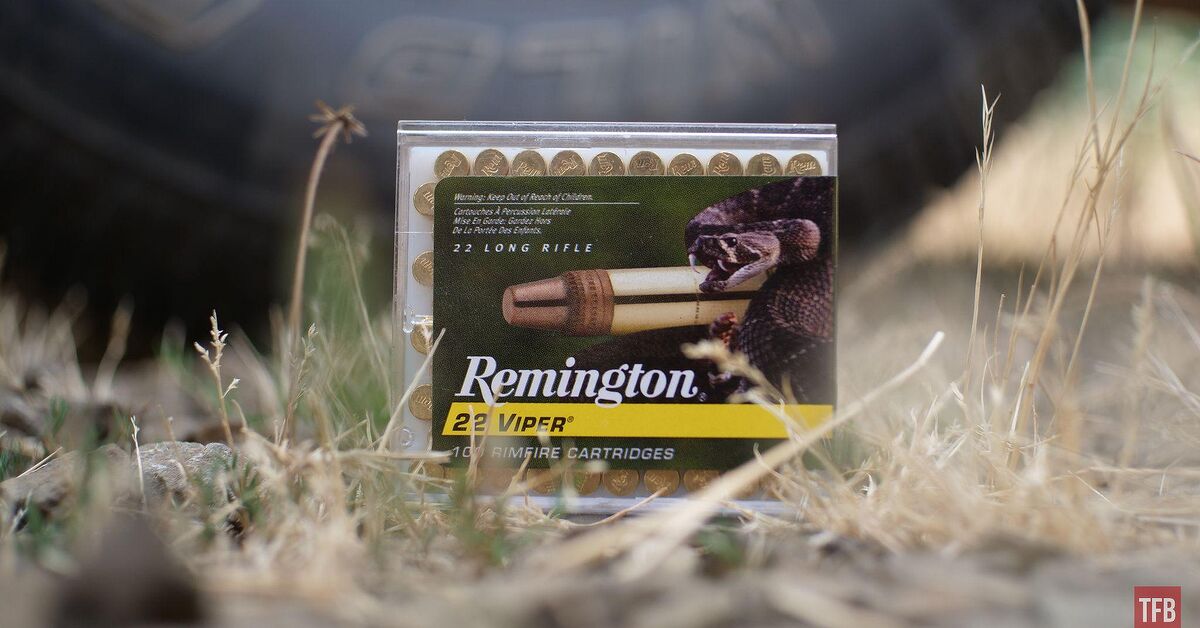
Remington .22 Viper 36gr Tackles Both Small Game and Target Shooting
Remington's .22 Viper 36-grain Copper Plated Truncated Cone ammunition bridges the gap between hunting and marksmanship. Traditionally marketed as a small game round, Remington claims this load performs equally well on the target board. A recent evaluation using the Angstadt RPR tested whether the fast-striking load lives up to dual-purpose claims across velocity consistency, accuracy, and practical utility.
Key Details
- Projectile weight: 36 grains, Copper Plated Truncated Cone design
- Intended use: Small game primary; target shooting secondary
- Test platform: Angstadt RPR (.22 LR)
- Focus areas: Velocity performance, shot-to-shot consistency, target accuracy
Why It Matters for Gun Owners
Rimfire ammunition choices matter. Target shooters and small game hunters operate on razor-thin margins—velocity spread means windage adjustments, shot groups tighten or open up, and marginal hits become misses. A 36-grain load from Remington occupies practical middle ground: light enough for squirrel, rabbit, and pest control without excessive pelt damage, but heavy enough to stabilize properly in most .22 barrels. For competitors running 50-yard benchrest matches or plinking at 25 yards, ammo that performs in both roles saves money and simplifies logistics. The Angstadt RPR testing framework provides real data—not marketing claims—on whether this load actually delivers consistent velocity and groups tight enough to matter downrange.
DownRange Analysis
Rimfire ammunition rarely gets the same critical evaluation as centerfire loads, but it should. The .22 LR remains America's most-shot cartridge by volume, and ammunition quality directly impacts accuracy and reliability. Remington's strategy here makes sense: a single load that satisfies hunters and shooters reduces SKU bloat and production complexity. The Copper Plated Truncated Cone construction suggests attention to consistent ballistics—a 36-grain projectile inherently carries less wind drift than heavier .22 loads while maintaining velocity in shorter barrels. Shooters evaluating this round should focus on the actual velocity spread data and group measurements rather than marketing positioning. If this load prints tight groups and maintains consistent velocities, it deserves shelf space in your ammo can regardless of intended use designation.