

Last year, the FBI reported 1.2 million burglaries in the US. Most happen when nobody's home. But the ones that matter to you—the ones that keep you up—are the 300,000 that occur while someone's inside. That's the scenario you need to plan for. Not the one YouTube tacticians are selling you in 30-second clips.
Home defense content online falls into two buckets: the actually useful stuff (rare), and expensive gear mounted to walls by guys with sponsorships. I'm going to separate them for you.
The Gun Part Is Simpler Than You Think
You need something reliable that you can operate under stress without thinking much. That's it. The gun isn't the bottleneck in home defense—your ability to move through your own house without shooting your family is.
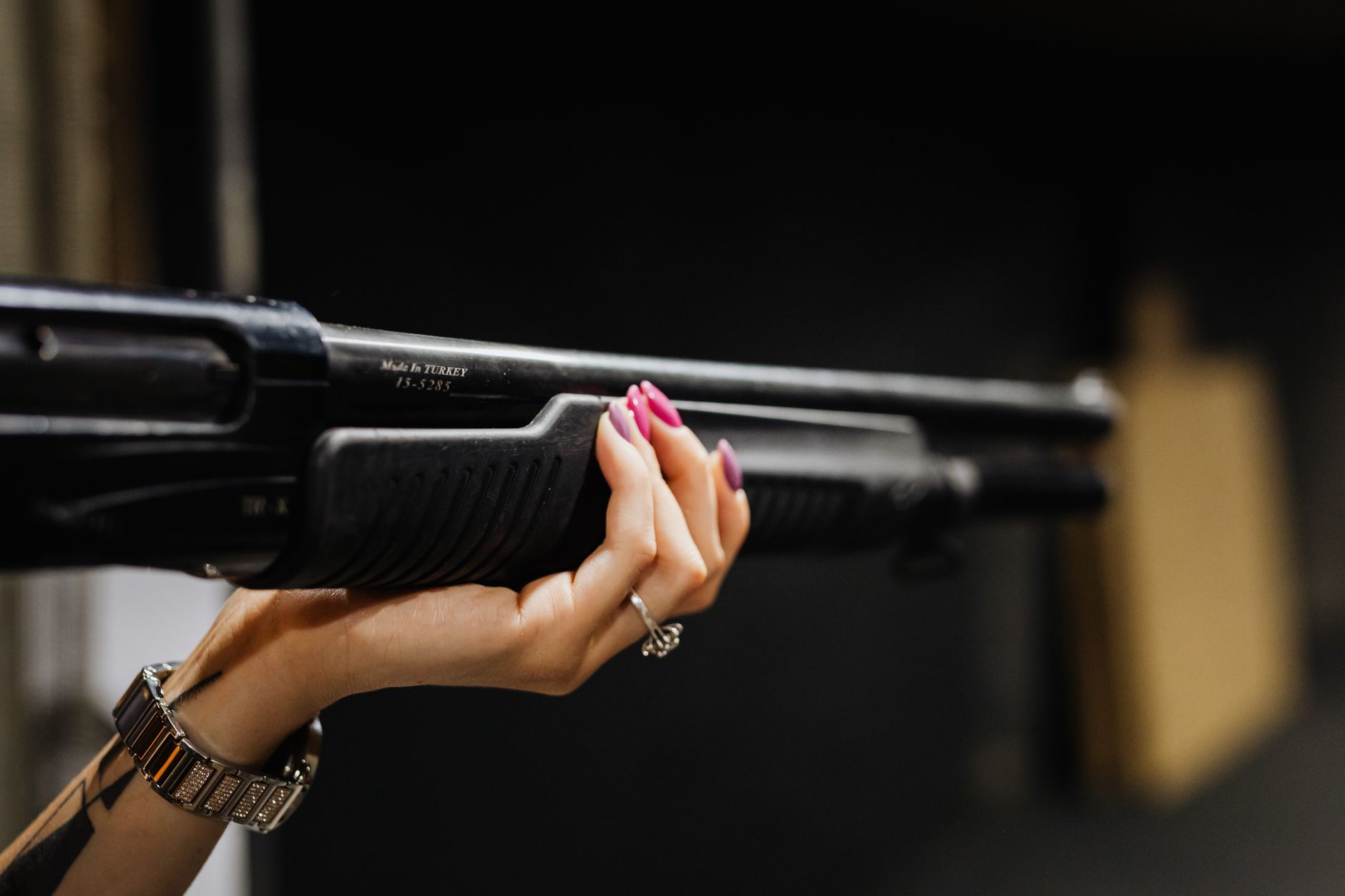
A shotgun with buckshot works. An AR-15 with modern hollow points works. A 9mm handgun works if you practice with it regularly. A .45 ACP works. What doesn't work: picking a gun based on a YouTube review, mounting a light and laser to it, and assuming you're ready. That's theater.
Here's what I actually recommend. Get either a Mossberg 500 or Remington 870 for $250-350, or an AR-15 platform rifle (PSA, Aero, or BCM) for $600-900. If you go shotgun, load it with Federal FliteControl 00 buckshot—$1.50 a round, consistent pattern through drywall and barriers. If you go AR, use Speer Gold Dot or Federal HST in 5.56, which fragments predictably and limits over-penetration compared to ball ammo.
The real point: whatever you choose, you need to shoot it regularly. Quarterly minimum. If you can't group five shots in the center mass of a target at 7 yards without sights, you're not ready. YouTube won't tell you that because it's not sponsorable.
Mounting a Light Changes Everything (But Most People Mount It Wrong)
Here's the fundamental truth about home defense: if you can see the threat clearly and the threat can't see you, you've already won. Flashlights and weapon lights are force multipliers. They're also things I see mounted so poorly that they create more problems than they solve.
Don't mount a light on your shotgun and think you're tactically savvy. A light at the muzzle creates backscatter in tight hallways and blurs your target. If you're running a shotgun, keep a separate flashlight—a SureFire G2X or Streamlight ProTac HL-X ($60-80)—in your support hand or mounted to a chest rig if you train with it regularly.
For an AR-15, mount a quality light 2-3 inches forward of your ejection port on a quality mount (Surefire, Cloud Defensive, or Streamlight ProMount). Use a Surefire M300, M600, or Streamlight HLX at minimum. $150-250. Anything cheaper flickers and dies when you need it.
Most important: practice using it. Activate it from retention. Use it to identify what you're shooting at. Identify what you're not shooting at. This takes time. Monthly low-light practice is the floor, not the ceiling.
Staging and Communication Matter More Than Gear
This is where I see people completely miss the point. They buy expensive optics, spend $1,200 on a rifle setup, then store it in a safe in the master bedroom closet. That's not home defense. That's security theater that makes you feel better at 2 AM.
Home defense only works if your family knows the plan. You need to establish three things: where everyone goes, what the signal is, and what happens after.
Pick a defensible position before something happens. For most people, this is the master bedroom. Make sure your kids know to run there and lock the door. Make sure your spouse knows the communication signal—I use a specific door knock pattern that my family recognizes, so nobody shoots me when I come back to check on them. It sounds paranoid until you realize that stress and adrenaline make everything look like a threat at 3 AM.
Stage a dedicated home defense rifle in your bedroom, or in quick-access safe you can open in the dark. A safe under the bed like a SecureIt or Sentry costs $300-500 and lets you keep your family from accessing your gun while you can get to it fast. Keep ammo stored separately, marked clearly. Keep a flashlight in the same location.
Establish a communication protocol with your family. I use a dedicated radio channel with my wife—a pair of Midland GMRS handhelds ($40-60 each)—so we can stay in touch without giving away positions by yelling through walls. This matters more than your optic.
Lighting Your House Is The Underrated Move
Motion-activated exterior lights are the most cost-effective security measure you can implement. A $25 motion light from Home Depot eliminates the dark corners where someone surveys your house before entering. Install them on every side of your property. Do this today if you haven't.
Interior lighting matters too. Keep flashlights staged in high-traffic areas. I keep a Streamlight ProTac in the kitchen, another on the nightstand, and one in my kid's room. Total investment: $200. Most burglaries and home invasions happen in darkness because the invader controls the lighting situation. Take that control back before anything happens.
Don't rely on your phone's flashlight. Don't assume muscle memory will get you to a light. During the Louisiana home invasion of July 2025, a homeowner who'd invested in staged lighting and had practiced moving through darkness with a flashlight in hand returned fire effectively and stopped a three-person invasion. The homeowner who relied on calling 911 and waiting in darkness did not end well. This is documented in police reports.
Training Separates People Who Own Guns From People Prepared to Use Them
This is the part that costs money and time, so everyone skips it. You can't skip it.
Take a basic pistol course. Take a low-light course. Take a course on moving through your house and communicating with family. Budget for this: $300-500 per class, and you need at least three different classes. Most defensive shooting incidents happen within 7 yards in poor lighting against unexpected targets. That's different from the square range.
Organizations like ILEDC (Illinois Law Enforcement Defensive Combatives), Force Science Institute, and local qualified instructors offer courses that don't involve running and gunning. They focus on judgment, decision-making, and accuracy under stress. That's what matters in your hallway at 3 AM.
After training, dry fire practice weekly. Dry fire in your house, safely, with an unloaded gun and a safe backstop. This isn't expensive. It's essential. Dry fire with your light. Practice with your support hand. Practice weak hand. Practice moving from your staged location to your family. Practice identifying non-threats.
YouTube will never ask you to do this because it requires work and discipline. It's not monetizable. But it's what actually separates people who might survive a home invasion from people who won't.
DownRange Bottom Line: Home defense isn't about the flashiest gear or the most expensive optics. It's about a reliable gun you can shoot, light you can navigate with, a plan your family understands, and the training to execute under stress. Pick a platform, light it properly, practice monthly, and talk to your family before something happens. The $2,000 invested in training and staged equipment beats the $5,000 invested in gear you can't operate. Stop buying YouTube home defense. Start building real readiness.