
Canada's Licensed Gun Owners Stay Shielded Past October 30 Deadline
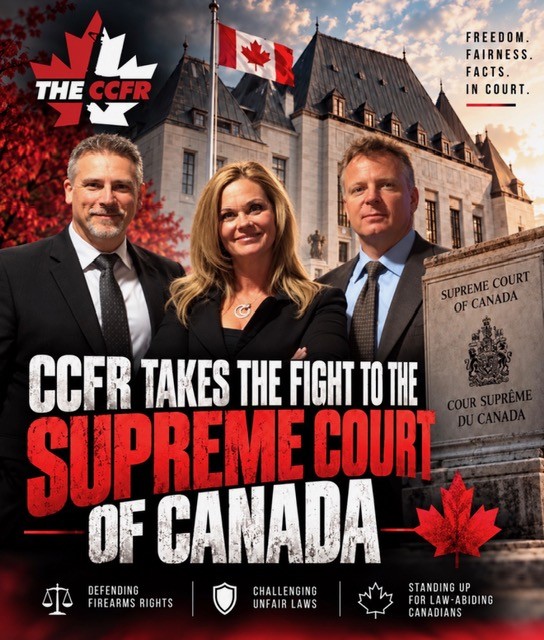
Licensed Canadian gun owners will not face prosecution when the amnesty window was set to close on October 30, 2026. The Liberal government extended the protection indefinitely in March, and it now runs until 90 days after the Supreme Court of Canada issues its ruling on the Canadian Coalition for Firearm Rights (CCFR) challenge to the federal prohibition on listed firearms. The CCFR says that ruling is expected sometime in 2027. The Public Safety Minister had said no further extension would come. The government reversed that position after the CCFR made clear it would seek an injunction to force the issue.
Key Details
The amnesty protects licensed owners from prosecution for possessing firearms the federal government has banned. Until this week, the protection had a hard expiration date. The CCFR's position is that the date no longer matters for anyone holding a license and a listed firearm while the appeal process runs.
- Original end date: October 30, 2026
- Extension announced: March 2026, following news that the Supreme Court would hear the CCFR challenge
- New end point: 90 days after the Supreme Court decision
- Expected ruling window: sometime in 2027, per the CCFR
- Government's earlier stance: the Public Safety Minister said the amnesty would not be extended again
- CCFR's leverage: the group had prepared an injunction to force an extension if the government refused
The CCFR describes itself as Canada's largest gun lobby. It credits its growth and its legal spending to member donations. The group says it fought the matter in the media, in public opinion, and in courts at every level. It has not announced a specific hearing date in its notice, only that the hearing is close.
Background
In May 2020, the federal government used an Order in Council to reclassify more than 1,500 firearm models as prohibited. The move targeted models the government labeled assault-style, and it applied to firearms that had been legal to own and buy for years. Ottawa paired the ban with a buyback program and an amnesty. The amnesty shielded owners who held onto banned models from criminal charges while the government set up compensation and buyback processes.
The government then extended that amnesty several times rather than letting it lapse. Each extension came with the same promise: no more delays. The CCFR argued the ban was an unlawful expansion of executive power and a seizure of lawfully owned property. Its court challenge eventually reached the Supreme Court of Canada, which agreed to hear the matter. That hearing produced the March extension and the current indefinite protection.
Why It Matters for Gun Owners
Any licensed Canadian holding a listed model needs to keep their paperwork in order. That means the firearms license, purchase records, and serial numbers for every affected firearm. Storage and transport rules still apply under existing law, and the amnesty does not authorize new acquisitions or transfers of banned models. Owners should not assume that an extension covers activity the amnesty never addressed. If you are unsure whether a firearm falls under the ban, check the current list and confirm with a Canadian firearms lawyer before you act.
Owners in every province face the same exposure, since the ban and the amnesty are federal. Rural owners, sport shooters, and collectors who hold banned models have the most at stake. Anyone who bought a listed firearm after the ban took effect carries additional legal risk. Watch the Supreme Court docket and CCFR updates for the hearing date and the eventual ruling. The 90-day tail after a decision could be the final window before enforcement resumes, so the timeline matters.
DownRange Analysis
Canada does not have a Second Amendment, and its gun owners cannot cite Bruen. Their arguments run through the Charter of Rights and Freedoms, mainly the sections covering liberty, security of the person, and unreasonable search and seizure. That is a narrower lever than the text-and-history test American courts now apply to firearm laws. The Supreme Court of Canada can still strike down a prohibition, but the outcome depends on Charter reasoning, not on a historical right to arms.
For the market, a multi-year amnesty keeps banned models in private hands and keeps resale values alive in the short term. Prices for listed models could swing sharply after a ruling in either direction. Our advice to Canadian readers is simple. Keep your license current, keep your records clean, and do not buy or sell a banned model on the assumption that the amnesty covers it. American gun owners should read this as a warning. A ban built on executive reclassification can survive for years in court, and the people holding the firearms bear the risk while the lawyers argue.