Three Loaded Guns, Three Arrests, One Hour on Chicago's Red Line
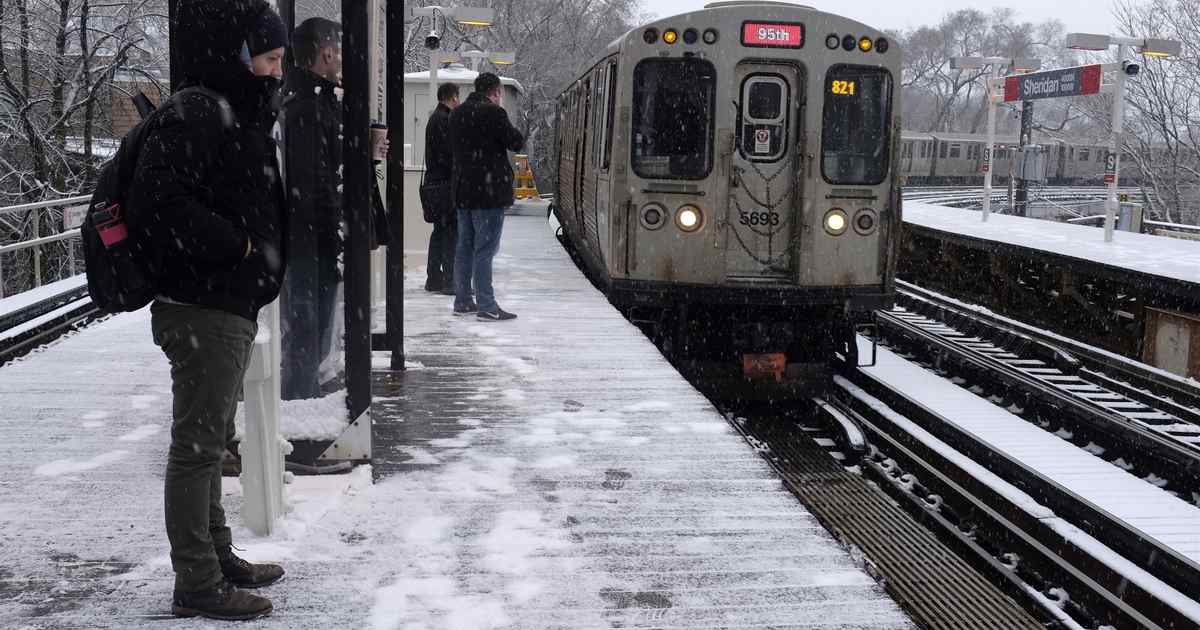
Three men were arrested with loaded handguns on Chicago Transit Authority Red Line platforms on November 2, 2026, between roughly 4:20 and 5:20 p.m. Joseph Tillman, 42, Brandon Brown, 25, and George Salas, 32, each carried a loaded gun. None of them was stopped for the gun. Police encountered each man over a minor offense, then searched him and found the weapon. The CTA bans firearms on its property, and Illinois law backs that ban up, yet all three men carried anyway.
Key Details
The arrests unfolded in sequence on the same afternoon. Here is what police reported:
- Joseph Tillman, 42: Cook County Sheriff's Police arrested him around 4:20 p.m. on the 69th Street Red Line platform. Officers said he was disorderly for playing a portable speaker. The search turned up suspected crack cocaine and a loaded gun. He faces charges of possession of a firearm by a repeat felony offender, aggravated unlawful possession of a weapon, and possession of a controlled substance.
- Brandon Brown, 25: About half an hour later, police arrested him on a Red Line platform for smoking a cigarette. A search allegedly produced a loaded handgun, a set of brass knuckles, and ecstasy. Brown had neither a valid concealed carry license nor a FOID card.
- George Salas, 32: Around 5:20 p.m., police stopped him on a different Red Line platform while he smoked a cigarette. Police say he was carrying a loaded gun. He had no concealed carry license, and his FOID card had been revoked. The report did not say why. He faces aggravated unlawful possession of a firearm and a misdemeanor disorderly conduct count.
Three arrests produced three loaded guns in roughly sixty minutes. Each case began with a low-level contact, not a tip or a visible weapon. That pattern matters, because it suggests police found only the armed people who happened to get stopped.
Background
Illinois has required a Firearm Owner's Identification card to possess a gun since the FOID Act took effect decades ago. The state later created a separate concealed carry license through the Concealed Carry Act of 2013. That law followed the Seventh Circuit's 2012 decision in Moore v. Madigan, which held that Illinois could not ban carrying outside the home altogether. The legislature responded with a licensing system and a list of sensitive places where licensed carry stays off limits. Public transit property sits on that list, which means a licensed holder who rides the CTA cannot carry legally on the train or bus.
The Supreme Court's 2022 decision in New York State Rifle & Pistol Association v. Bruen set the modern test for gun laws. Courts now ask whether the regulation fits the nation's historical tradition of firearm regulation. Bruen also left sensitive-place restrictions in place for now, and that gap has let lower courts uphold transit bans. Bearing Arms reports that the Supreme Court recently denied review of a challenge to the CTA carry prohibition, which leaves the lower-court ruling in force.
Why It Matters for Gun Owners
If you carry in Illinois, the CTA rule covers more than the train car. You cannot carry on the platform, in the station, or on the bus. Many commuters also reach the system after leaving a licensed carry zone, which means they must go unarmed for their entire trip. A licensed holder who commutes from Evanston to the Loop or from Oak Park to the South Side can face felony exposure for a single misstep at a turnstile.
The arrests also show who the ban actually affects. Tillman, Brown, and Salas were not licensed carriers. Brown and Salas had no valid permit, and Salas had lost his FOID card. The prohibition did not stop them. It only guarantees that a law-abiding person boarding the same train has no lawful means of self-defense. Illinois residents should watch whether the state pursues more enforcement against transit riders or simply keeps adding charges to people already caught with guns. Gun owners should also track the lower-court cases that could test whether transit bans survive under the Bruen framework.
DownRange Analysis
Bruen asks whether a modern gun law matches a historical analogue. A ban on lawful carry on public transit has few clear analogues from the founding era or the period of Reconstruction. Courts have often accepted sensitive-place bans anyway, and the Supreme Court has declined to clarify the rule. That leaves the CTA ban standing while the criminals in these three cases ignored it completely.
The market reads these arrests as a signal. Illinois residents who carry daily will keep buying compact pistols and holsters for home and work, then leaving them behind on the train. Carry holders should recheck their license status, confirm FOID validity, and never assume a sensitive-place rule will change soon. If you ride the CTA, leave the gun at home and plan your route accordingly. If you want the courts to act, support litigation and contact your state representative. The three men arrested here show that criminals will always carry. Lawful owners should not be the ones who lose their rights on the train.