The .444 Marlin Fires 240-Grain Bullets at 2,330 fps
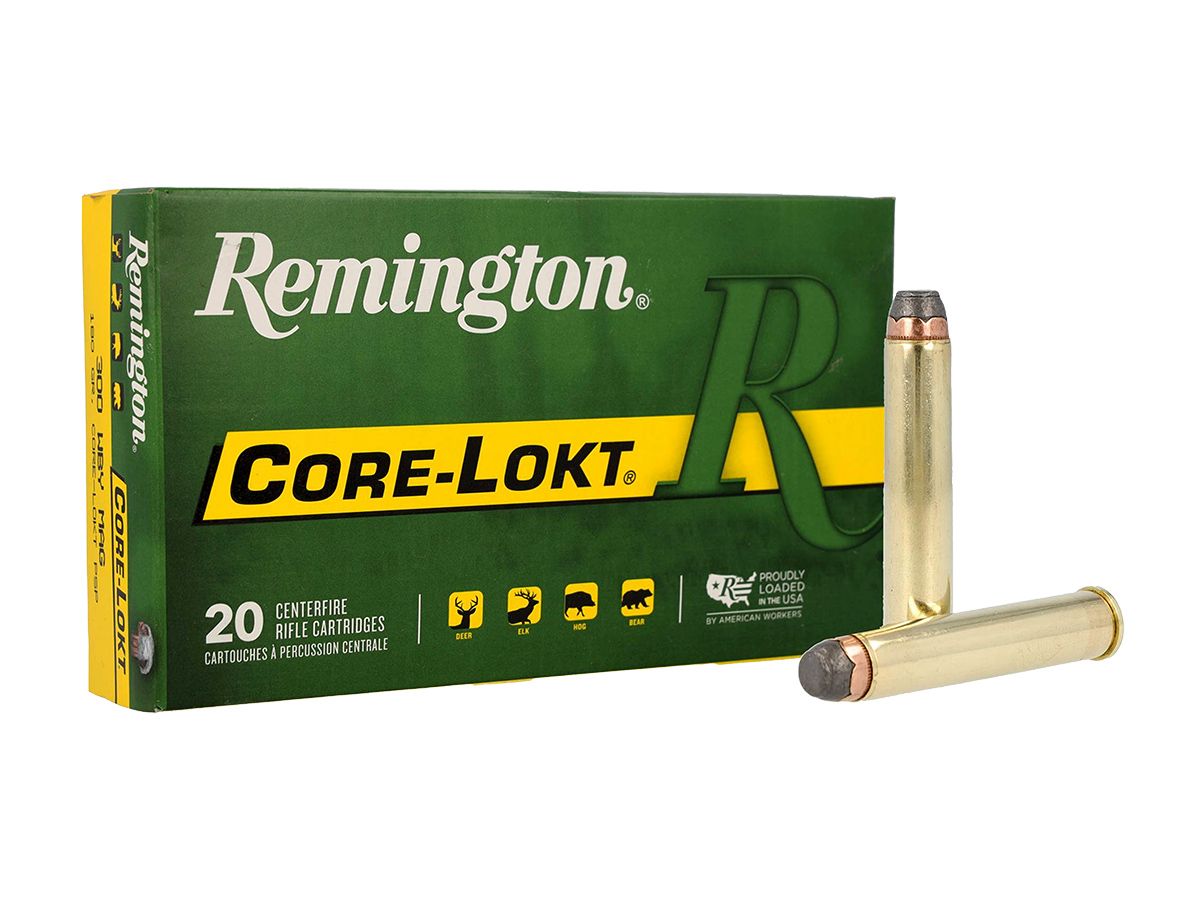
The .444 Marlin hit the public in June 1964 as a lever-action cartridge built for the Marlin Model 336. Its standard load sends a 240-grain soft point out at 2,330 fps, roughly 480 fps faster than the average .44 Magnum rifle. The number matters because the .44 Magnum, a handgun round that became a popular rifle cartridge, drops off fast and runs out of steam on elk and moose past close range. The .444 was designed to fix that. Gun Digest's cartridge history, excerpted from its reference book on world cartridges, lays out the case. Remington loaded the original ammunition. Today Remington, Hornady and Buffalo Bore offer factory loads. For hunters who want one lever gun for big game in the timber, the .444 still makes a strong argument.
Key Details
The source material pins down the core specs and the rifle that launched the round:
- Release: June 1964, with the cartridge designed for the Marlin Model 336 lever-action rifle.
- Original rifle: a 24-inch Micro-Groove barrel, a two-thirds length magazine, and a recoil pad.
- Stock: a straight-grip design with a Monte Carlo cheekpiece.
- Original ammunition: made by Remington.
- Velocity: a 240-grain soft point at 2,330 fps, versus 1,850 fps for the average .44 Magnum rifle.
- Energy: about the same as the .348 Winchester and slightly more than the later .358 Winchester.
- Short-range edge: clearly stronger than the .30-30 and .35 Remington up close.
- Long-range edge: the advantage holds out to about 150 yards. Past that, the better bullet shape and sectional density of the older rounds let them catch up and pass the .444 in retained velocity and energy.
- Former load: a 265-grain bullet once sold as an all-round hunting load.
The source also covers the .44 Van Houten Super. E.B. Van Houten and "Lucky" Wade of Phoenix, Arizona, developed it by necking up .30-40 Krag brass to take a .44 bullet, trimming the case to 2 inches, and turning down the rims. It was built for Marlin 336 or Winchester 94 actions. The .44 VH predates the .444 by at least three years, and the two rounds have nearly identical ballistics.
Background
The .444 story starts with a mismatch. Smith & Wesson and Remington introduced the .44 Magnum revolver cartridge in 1956. Hunters quickly found that a handgun round fired from a rifle carried a lot of drop at distance and hit hard only at short range. The rifle community wanted more energy in a lever gun that handled like a deer rifle.
Lever guns had already faced this problem. The .30-30 arrived in 1895 and remains a reliable deer and black bear round. The .35 Remington and the later .348 and .358 Winchester tried to fill the same gap. Each had short-range strength and fell off by 150 yards. Ballistics tables from that era show why the big-bore lever gun niche stayed open.
The .44 Van Houten Super came first, built on the same Marlin and Winchester actions. Marlin followed with its own .444 for the 336. The company's cartridge filled the space between the .44 Magnum and the heavy-game rounds that needed a bigger rifle. The 1964 release gave lever-gun hunters a real step up in speed without giving up the handy action.
Why It Matters for Gun Owners
If you own a Marlin 336 chambered in .444, this affects your ammo budget and your field plan. Factory loads are fewer than for the .30-30, so buy when you find stock and shoot your rifle's point of impact at the distance you plan to hunt. Confirm the chambering on the barrel before you buy anything. Do not assume a lever gun is .444 because it looks like a 336.
Hunters in states with straight-wall cartridge rules should check that the .444 qualifies for their area. The cartridge's strength and bullet weight make it a go-to for thick brush, and that is exactly where game is hardest to recover. Use bullets built for penetration, and review the published data for trajectory before you commit to a 150-yard shot.
Reloaders have a practical angle here too. Because the .444 fires a 240-grain soft point at a velocity well above the .44 Magnum rifle, you can choose bullets that match your game. Keep the old 265-grain load in mind if you hunt large, thick-skinned animals at close range. Watch the aftermarket for reloading components. Demand for the cartridge will rise and fall with its availability.
DownRange Analysis
This piece is a cartridge history, not a legal fight, so Bruen does not come into play. No court ruling or statute changes what you can buy or carry. The real question is practical: does the .444 earn space in your safe? For a hunter who wants a lever gun with more reach than the .30-30 and more punch than a .44 Magnum carbine, the answer is yes.
The market for .444 ammunition stays narrow. Three major makers offer loads, which keeps prices higher than mainstream deer calibers. Buy a box or two of the load your rifle shoots best, and stock up when the shelves allow.
Read the source with some skepticism. Gun Digest notes that it earns commissions on some links, and this text is an excerpt from a reference book, not a fresh chronograph test. Verify velocity on your own rifle before you plan a hunt around the 2,330 fps figure. Start with a box of factory ammunition and a chronograph session.