Apex Cold Front Waterfowl Loads Target Patterns for $29.99 a Box
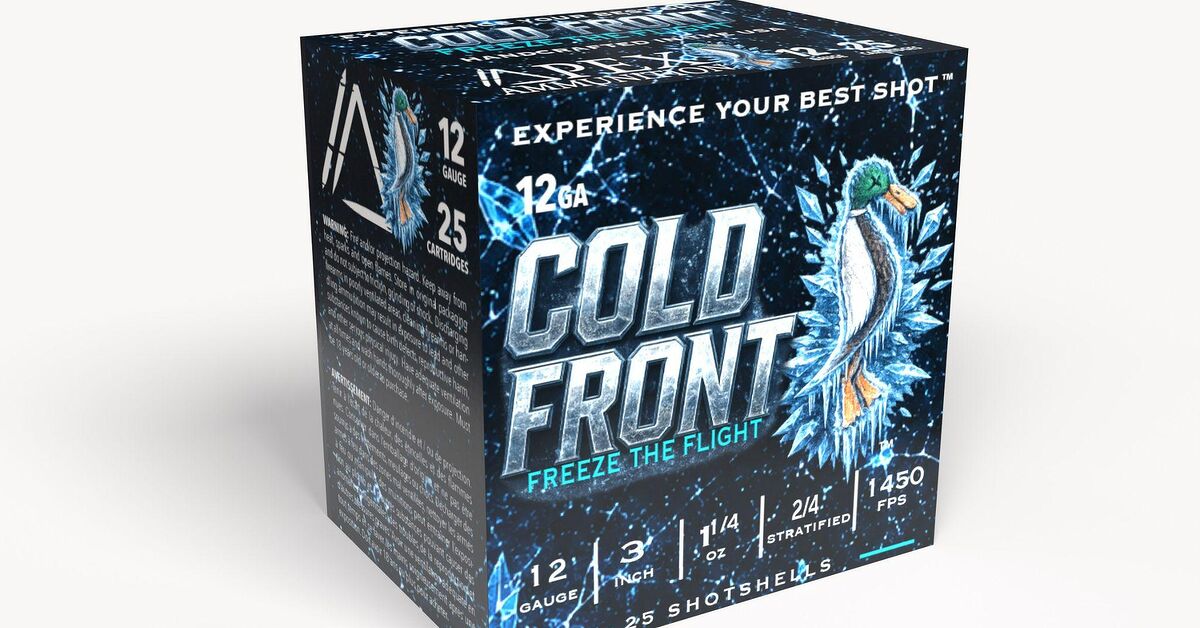
Apex Ammunition and 24.7 Hunt just put a new waterfowl load on the shelf. The Cold Front shotshell comes in 12 gauge and 20 gauge, both in 3-inch format, both loaded with a duplex charge of #2 and #4 shot. The 12-gauge box carries 1 1/4 ounces and sells for $31.99 per 25 rounds. The 20-gauge box carries 1 ounce and sells for $29.99 per 25. Apex built the load around pattern performance, specifically by reducing the friction shot picks up on its way down the barrel. Duck and goose season is open across much of North America, so these shells arrive while hunters still decide what goes in the tube.
Key Details
The Cold Front line is a partnership between Apex Ammunition and 24.7 Hunt. Apex sells the load in two configurations. Both use 3-inch hulls, and both use a duplex stack of #2 and #4 shot. Here is how the two loads break down:
- 12 gauge: 3-inch, 1 1/4-ounce payload, duplex #2 and #4 shot, $31.99 per 25-round box.
- 20 gauge: 3-inch, 1-ounce payload, duplex #2 and #4 shot, $29.99 per 25-round box.
Apex says the shot receives a hardened alloy and a slick coating. The company argues that this combination resists deformation as the pellets travel through the barrel, which should keep the shot column round and the pattern consistent. Apex pairs the shot with an improved wad, which the company credits with protecting the payload during acceleration. Apex makes these performance claims in its own materials. No independent pattern testing appears in the announcement, so buyers should treat the patterning benefits as the manufacturer's claims until they run the ammunition through their own gun.
Background
The overbore barrel has a long track record in shotgunning. Manufacturers bore the barrel wider than the nominal gauge so the shot column meets less friction on its way out. The idea is simple. Less contact with the bore means less pellet deformation and less pressure lost to drag. Mossberg took this concept to an extreme with the 835, which pairs a barrel bored closer to 10 gauge with a 12-gauge chamber and frame. The fact that overbore designs still sell in volume tells you hunters have bought into the principle for decades.
Waterfowl hunting also carries a regulatory history that shapes every shell on the market. Federal rules have required nontoxic shot for migratory waterfowl since the early 1990s, after lead shot was shown to poison birds that ingested it. Steel became the standard, and bismuth and tungsten blends filled the premium tier. Any waterfowl load sold today must meet those nontoxic requirements, so a shell's shot material is the first thing to check on the box, not an afterthought.
Why It Matters for Gun Owners
Waterfowl hunters are the primary audience for Cold Front, and they face a specific set of choices. Anyone shooting migratory birds in the United States needs nontoxic shot, and the Cold Front listing does not settle that question in the excerpted materials. Read the box and confirm the shot composition before you load a single round in the field. Shooters running 20-gauge guns should note the 1-ounce payload is a lighter charge than many 20-gauge waterfowl loads, which matters if you hunt over decoys at longer ranges. Upland and turkey hunters can ignore this release, since the duplex stack is built for ducks and geese.
The price matters too. At $31.99 for 25 rounds in 12 gauge, Cold Front lands at a premium over bulk steel. Waterfowlers who burn through hundreds of shells a season will feel that difference. Buy a box, pattern it at 30 and 40 yards, and compare the results against your current load before committing to a case.
DownRange Analysis
Cold Front is a sensible product, but it does not reinvent anything. Overbore barrels, hardened shot, and slick coatings all exist in the market already. Apex is betting that a combined package of hardened alloy, coating, and wad outperforms the sum of those parts. That bet can pay off, but it needs proof from testers who shoot the load across multiple guns and chokes. Until then, treat the claims as a hypothesis. The shot-and-wad engineering matters more than the marketing, and the only test that counts is a pattern board. Buy one box, run it through your gun, and let the paper decide.