Six States Could Hand Democrats Full Gun-Law Control Tuesday
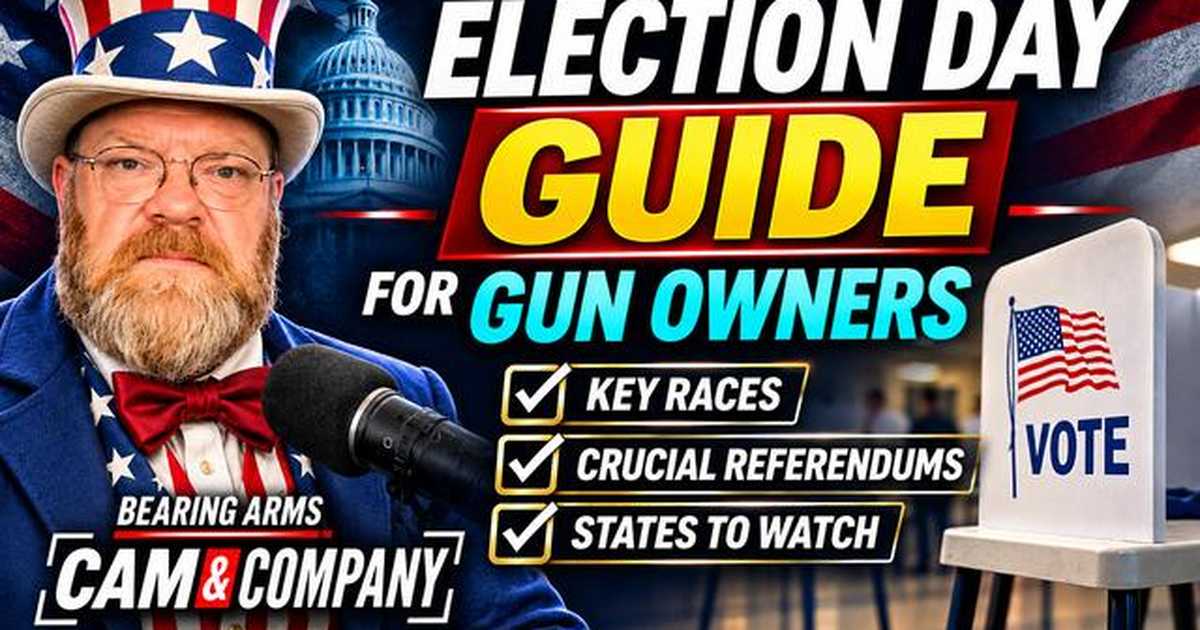
Six states could flip to complete Democratic control of state government when voters go to the polls on Tuesday, November 3, 2026. Cam Edwards at Bearing Arms mapped the contests that matter most to gun owners, including key congressional and gubernatorial races and five statewide referendums. Full trifecta control means one party writes the bills, passes them, and sends them to the governor without a veto fight. That scenario turns a campaign slogan into a signed law within a single legislative session. Your vote this week decides which scenario your state gets.
Key Details
The core facts are simple, and they should drive your planning this week.
- Election Day: Tuesday, November 3, 2026.
- Trifecta watch: Six states where Democrats could gain complete control of state government, meaning the governor's office and both legislative chambers.
- Referendums: Five statewide measures that voters will decide directly. Referendums skip the legislature entirely, so a single ballot question can lock in or strike down a gun rule.
- Races: Key U.S. House and gubernatorial contests with direct consequences for firearms policy, from federal bills to state executive enforcement.
- Source timing: The analysis ran Monday, November 2, 2026, at 12:59 p.m. Eastern, one day before voting begins.
The source names the specific states, races, and referendum questions. Pull those details before you vote. A referendum with a neutral title can still carry sweeping firearms language, so read the full text on your sample ballot, not the headline.
Background
Gun policy in America swings with control of statehouses. The clearest recent example is Colorado. In 2013, Democrats who held the governor's office and both chambers passed universal background checks and a 15-round magazine limit, signed by Governor John Hickenlooper. Voters responded by recalling two state senators who backed the measures, Angela Giron and John Morse. That sequence shows how fast a trifecta can change the rules and how hard the backlash can hit.
The legal yardstick changed in 2022. In New York State Rifle & Pistol Association v. Bruen, decided June 23, 2022, the Supreme Court held that the Second Amendment protects carrying arms in public, and that government must justify gun laws by showing consistency with the nation's historical tradition of firearm regulation. In United States v. Rahimi, decided June 21, 2024, the Court upheld a federal ban on firearm possession for people subject to certain domestic violence restraining orders, while reaffirming the Bruen framework. Every new state law now faces that test in court.
Why It Matters for Gun Owners
Trifectas move fast, and gun owners feel the effects first in the permitting and carry context. A party with full control can add permit-to-purchase requirements, expand background checks, tighten storage mandates, or create new prohibited categories. Those changes hit lawful owners before any court rules on them. If you live in one of the six states, expect bills in the first session after inauguration, and expect them early. Owners who move a firearm out of state, buy a restricted item, or change their residency need to check the current rules before doing so.
Referendums deserve special attention. Ballot measures bypass lawmakers who might otherwise compromise, and voters often decide them on short, emotional summaries. Read the actual text, count the operative provisions, and ask what a sheriff or a state police agency would have to enforce on day one. Also check whether the measure creates a new reporting duty, a registration requirement, or a penalty for common accessories.
DownRange Analysis
Under Bruen, a new restriction does not survive by sounding reasonable. The state must point to a historical analogue, and courts have split on how close that analogue must be. Rahimi tells us the Court will uphold laws that target dangerous individuals, while the broader Bruen test still cuts against sweeping bans on common firearms. A trifecta that writes narrow, historically defensible laws will spend years in litigation. A trifecta that writes broad bans invites a fast injunction and a costly loss for the state.
Market implications follow the politics. When a state's trifecta looks likely, dealers see spikes in purchases of affected models and magazines. Rush buying rarely makes sense, but a planned purchase should not wait until after the election. What you should do right now: confirm your voter registration, read every referendum on your sample ballot, contact your legislative candidates, and keep your receipts and acquisition records in order. Then vote, because the rules that follow will last longer than the campaign.