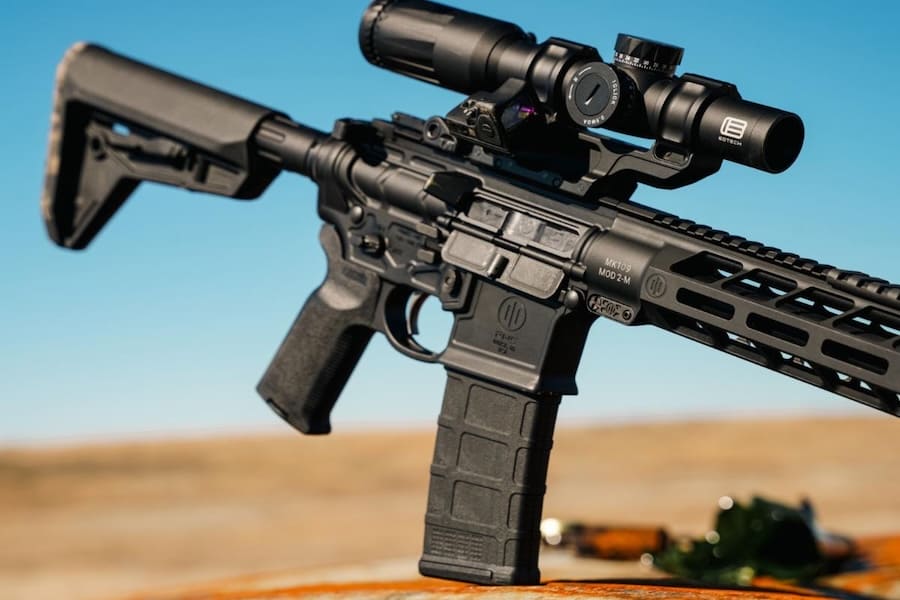
Atrius Hits SAF Platinum Tier as Forced-Reset Selector Draws Scrutiny
Atrius Development Group moved to the Platinum level in the Second Amendment Foundation corporate partner program and donated a rifle package for SAF's November sweepstakes. SAF announced the upgrade from Bellevue, Washington, on November 12, 2026. Atrius builds fire control parts for the AR-15 platform, and its flagship product is the Atrius Forced Reset Selector. That part gives shooters a super-semi mode, a high-speed forced-reset semi-automatic setting. Atrius founder and CEO Ryan Spadafore and SAF Executive Director Adam Kraut both tied the partnership to litigation. The timing matters. Forced-reset technology has sat under federal regulatory fire for years, and this sponsorship puts a litigation organization directly behind a company selling that technology.
Key Details
The announcement and donation break down into specific points that matter for anyone tracking this story:
- Partnership change: Atrius raised its corporate partner commitment to SAF's Platinum level.
- Donation: Atrius gave a rifle package to SAF's November sweepstakes.
- Rifle build: An 11.5-inch AR-Pistol, fitted with an Atrius Standard Ambidextrous Forced Reset Selector and an EoTech EXPS3-0 holographic weapon sight.
- Selector design: A three-position unit with safe, semi and super-semi settings. Atrius says it fits standard AR-15 fire control groups without modification.
- Manufacturing claim: Atrius states that all of its products are made in the USA.
- Spadafore's position: He framed SAF as a defender of constitutional rights and of lawful businesses that build and compete in the firearms market.
- Kraut's position: He said the added funding keeps SAF on the front lines of Second Amendment cases. SAF reports more than 50 active cases, including two “assault weapons” ban challenges pending at the Supreme Court.
- Entry: Readers can view the rifle and enter the sweepstakes through SAF's website. Check the entry rules directly before you enter.
Background
Forced-reset triggers and selectors have lived in a legal gray zone since 2023. That year, the ATF reclassified the Rare Breed Triggers FRT-15 as a machine gun. The company fought the reclassification in court and reached a settlement in 2024. The design works by using the firing cycle to mechanically reset the trigger, so the shooter does not need to release and re-press it between shots. Regulators argued that this mechanism produces automatic fire. Supporters argued each shot still requires a separate, deliberate trigger action.
The Supreme Court addressed a closely related question in June 2024. In Garland v. Cargill, the Court ruled 6-3 that bump stocks are not machine guns under federal law. The majority reasoned that a bump stock does not let a shooter fire more than one shot through a single function of the trigger. That reasoning is the core of the forced-reset argument. Since New York State Rifle & Pistol Association v. Bruen in 2022, courts have also required the government to justify modern firearm rules with the nation's historical regulatory tradition. Those two lines of precedent now frame nearly every fight over these parts.
Why It Matters for Gun Owners
Parts-level products carry the most legal risk. A single ATF classification letter can change a part's status overnight, and the owner who installed it carries the exposure. Anyone who owns a forced-reset selector, or who plans to buy one, should confirm the current ATF classification before making any decision. Keep the original receipts, the manufacturer's documentation, and any classification letters in one folder.
The risk does not stop at federal law. States with strict feature bans, including California, New York, New Jersey and Illinois, can treat an AR-15 with a restricted selector differently than federal law does. A part that is legal under federal rules may still create state-level trouble. Owners in those states should read their state statutes before installing anything. Watch the ATF's public classification list, the dockets in the two pending Supreme Court cases SAF mentions, and any new notices from forced-reset manufacturers.
DownRange Analysis
Atrius wins a sponsorship and a litigation partner. It also takes on a marketing problem. The language about a “high-speed” super-semi mode and a product that “pushes the envelope” reads like the government's exhibit list. In a Bruen challenge, the marketing matters as much as the mechanism. A court looking at a part advertised as a faster-firing mode will not find the argument easy to win, regardless of how the trigger actually cycles.
Gun owners should treat this as a wait-and-verify moment. Do not buy a forced-reset selector on the assumption that the legal question is settled. Do not install one you already own without confirming its current status. Support the litigation that protects lawful ownership, and keep your paperwork in order. Platinum sponsorships are good for SAF's cases. They do not change the ATF's authority or the law on the books.