Beretta's Eight-Shotgun Turret Ran a Live Drone Demo for Denmark
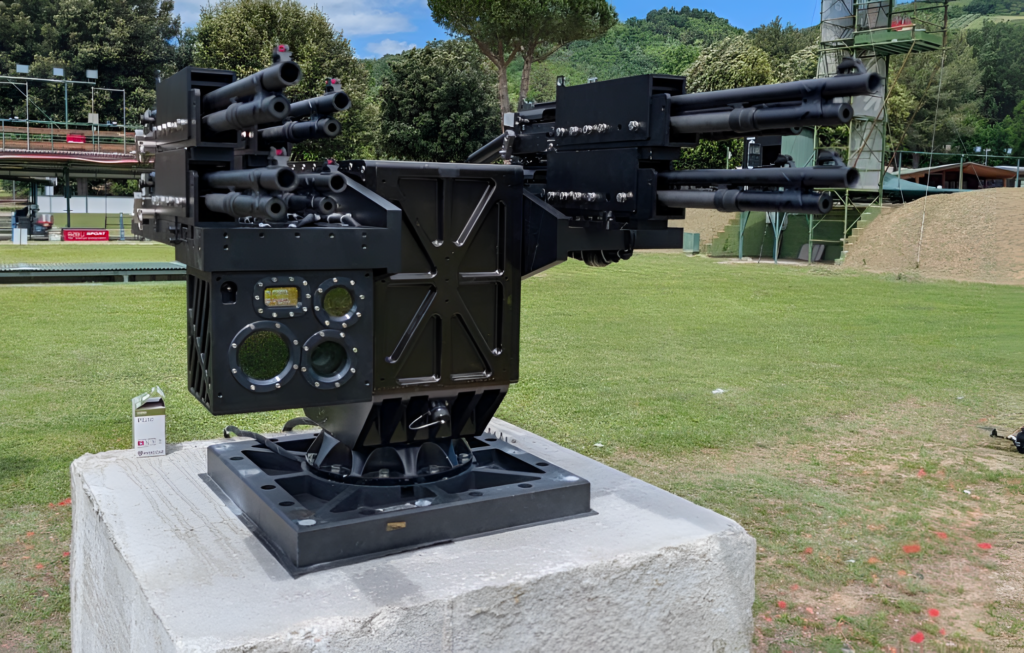
Beretta Defense Technologies and Italian tech firm DUALEE built the LIVET, a remote turret that carries eight Benelli M4 Drone Guardian shotguns on one mount. The system recently ran a live demonstration for the Danish Armed Forces in Denmark. The pitch is simple: small, cheap drones keep threatening expensive equipment and infrastructure, and a shotgun-armed turret answers them with lead instead of electronics. For a gun owner, the design choices tell the story better than the press release does.
Key Details
The LIVET runs as a joint project between Beretta Defense Technologies and DUALEE. Its defining feature is the eight-weapon payload, with every gun based on Benelli's M4 Drone Guardian. The M4 Drone Guardian is a semi-automatic 12-gauge shotgun built for counter-drone work. Reporting by Thomas Newdick covers the recent live demonstration for Denmark's military.
- Platform: Eight Benelli M4 Drone Guardian shotguns on one remote turret
- Action and gauge: Semi-automatic, 12-gauge
- Developers: Beretta Defense Technologies and Italian firm DUALEE
- Ammunition: Programmable airburst rounds
- Fire control: The operator selects the distance at which the payload opens
- Customer demo: Live demonstration for the Danish Armed Forces
The airburst feature separates LIVET from a standard shotgun setup. A conventional shotgun spreads pellets in a pattern set by choke and load, and that pattern grows with distance. Programmable airburst rounds let the operator decide where the payload disperses. The stated goal is to put pellets where a small, agile target is most likely to be, instead of hoping the pattern catches it.
Background
Small drones have changed how militaries think about air threats. Cheap commercial-pattern quadcopters and fixed-wing platforms can carry explosives, scout positions, or hunt high-value equipment. Conflicts since 2022, especially in Ukraine, pushed many armies to field dedicated counter-unmanned aircraft systems. Most of those systems rely on jamming, spoofing, radar, or lasers. Kinetic options such as guns and interceptor munitions also get attention, but they face the hard problem of hitting a fast, small target with few rounds.
Benelli is part of the Beretta corporate family, which explains the shared branding on LIVET. The M4 has a long run as a combat and tactical shotgun, and the Drone Guardian variant adapts that platform for the counter-drone job. Airburst munitions also have a track record in military work, mainly in grenade launchers, where proximity or timed fuzing opens a round at a set point. LIVET applies that concept to shotgun shells. Beretta's pitch depends on putting that fuzing logic in the hands of a remote operator and a turret.
Why It Matters for Gun Owners
You cannot buy a LIVET. It is a military system, sold to government customers, and nothing in the announcement suggests a civilian version. The Denmark demonstration matters for a different reason. It shows that a major Western military now sees shotguns as a serious counter-drone tool. That view will shape procurement, training, and the next round of ammunition development. Civilian shooters often get the trickle-down effect: airburst and specialty loads reach the commercial market years later, if they reach it at all.
If you own a Benelli M4 or any 12-gauge semi-auto, the platform itself is not changing. The civilian M4 is a legal firearm in most states. Shooting drones with a civilian shotgun is a different matter. Discharging a firearm at an aircraft can run afoul of local ordinances, and pellets that fall back to earth can injure neighbors, pets, or people on the ground. Most of the damage from a shot in the air lands somewhere you did not aim. Treat any drone encounter as a reason to call local police, not to load a shotgun.
DownRange Analysis
Bruen governs how courts review civilian firearm regulations. It does not apply to a foreign ministry of defense buying a turret, so LIVET raises no Second Amendment question. Its real value to us is as a signal. Armies are willing to put shotguns on remote mounts and rely on programmable ammunition to defeat cheap aircraft. That approach trades a crowded electronic-warfare problem for a mechanical one, and shotguns have always been good at mechanical problems.
The market implication is simple. Demand for counter-drone hardware will grow, and manufacturers will chase every edge in fuzing and munitions. Expect the rounds to get more specialized, and expect the commercial side to lag. What should a gun owner do right now? Keep your shotgun reliable, know your state and local discharge rules, and never fire into the sky over populated areas. Watch whether the airburst technology reaches civilian catalogs. Until then, LIVET stays a military story.