Revolver Suppressors Work—Here's What Actually Changes
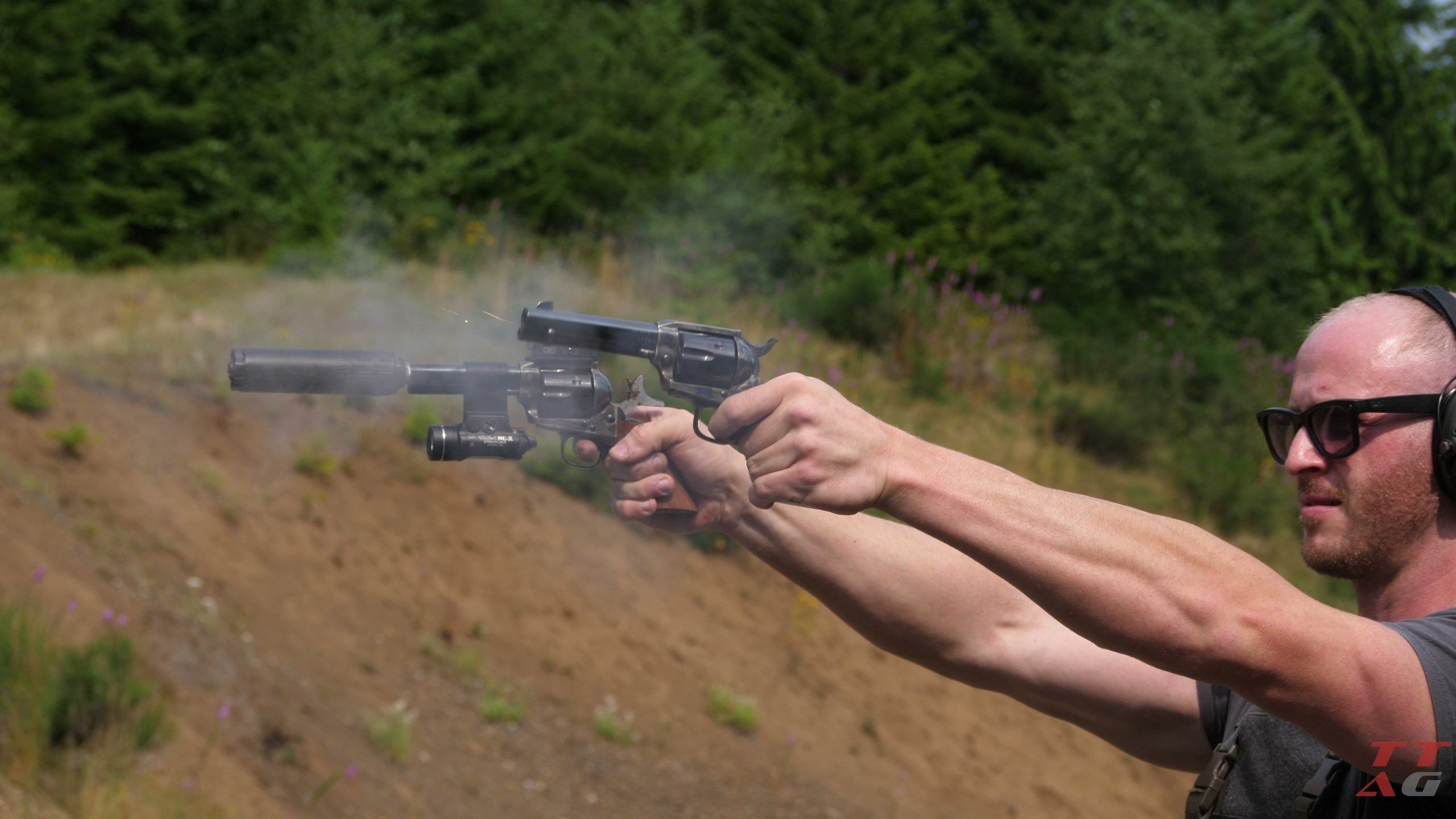
Revolver suppressors are viable. That's the corrected answer after years of dismissing the concept as impractical. A hands-on demonstration with a threaded, light-equipped Uberti .38 revolver revealed that the mechanical and ergonomic barriers gun owners assumed were insurmountable are actually manageable—and the suppressor ecosystem for revolvers is maturing faster than the industry expected.
Key Details
- Threaded revolver barrels are now standard on several production models, including Uberti revolvers chambered in .38 Special.
- Suppressor-compatible holster design has advanced significantly; HUSH Holsters now manufactures models that accommodate both suppressed revolvers and mounted lights.
- Suppressor Shop actively distributes these suppressor-compatible holster options, integrating them into their retail ecosystem.
- The practical limitation of revolvers—cylinder gap energy loss—remains real but doesn't negate suppression effectiveness; it simply demands different expectations than semi-automatic platforms.
Why It Matters for Gun Owners
For carry gun owners, competition shooters, and enthusiasts who prefer revolver reliability, suppressor compatibility removes a genuine equipment disadvantage. A .38 revolver with a suppressor and weapon light becomes a legitimate defensive package rather than a legacy platform. The holster market catching up means carry options no longer require custom work or compromise on light mounting. Revolver shooters have historically accepted louder shots as a trade-off for mechanical simplicity; suppression softens that penalty without adding the complexity of semi-auto platforms. For competition, particularly in matches where revolvers remain competitive, suppression opens scoring advantages. The practical impact: suppressed revolvers transition from curiosity to viable option.
DownRange Analysis
The suppressor market's expansion into revolvers reflects broader acceptance of sound suppression as a standard rather than tacticool accessory. From a Bruen perspective, suppressor-compatible firearm design is constitutionally protected manufacture and sale. The real shift is commercial: manufacturers like Uberti are threading barrels, holster companies are designing carries around them, and retailers are stocking the hardware. This signals confidence in long-term suppressor legality across jurisdictions. Gun owners considering a suppressed revolver should expect identical federal NFA paperwork and state compliance as any suppressor purchase. The cylinder gap issue remains—expect moderate rather than maximum suppression—but modern ammunition and barrel design mitigate that gap more effectively than older revolvers. This isn't a semi-auto replacement; it's a viable alternative that closes the practical gap.