Charter Arms Undercover .38 Special Revolvers Tested Side-by-Side
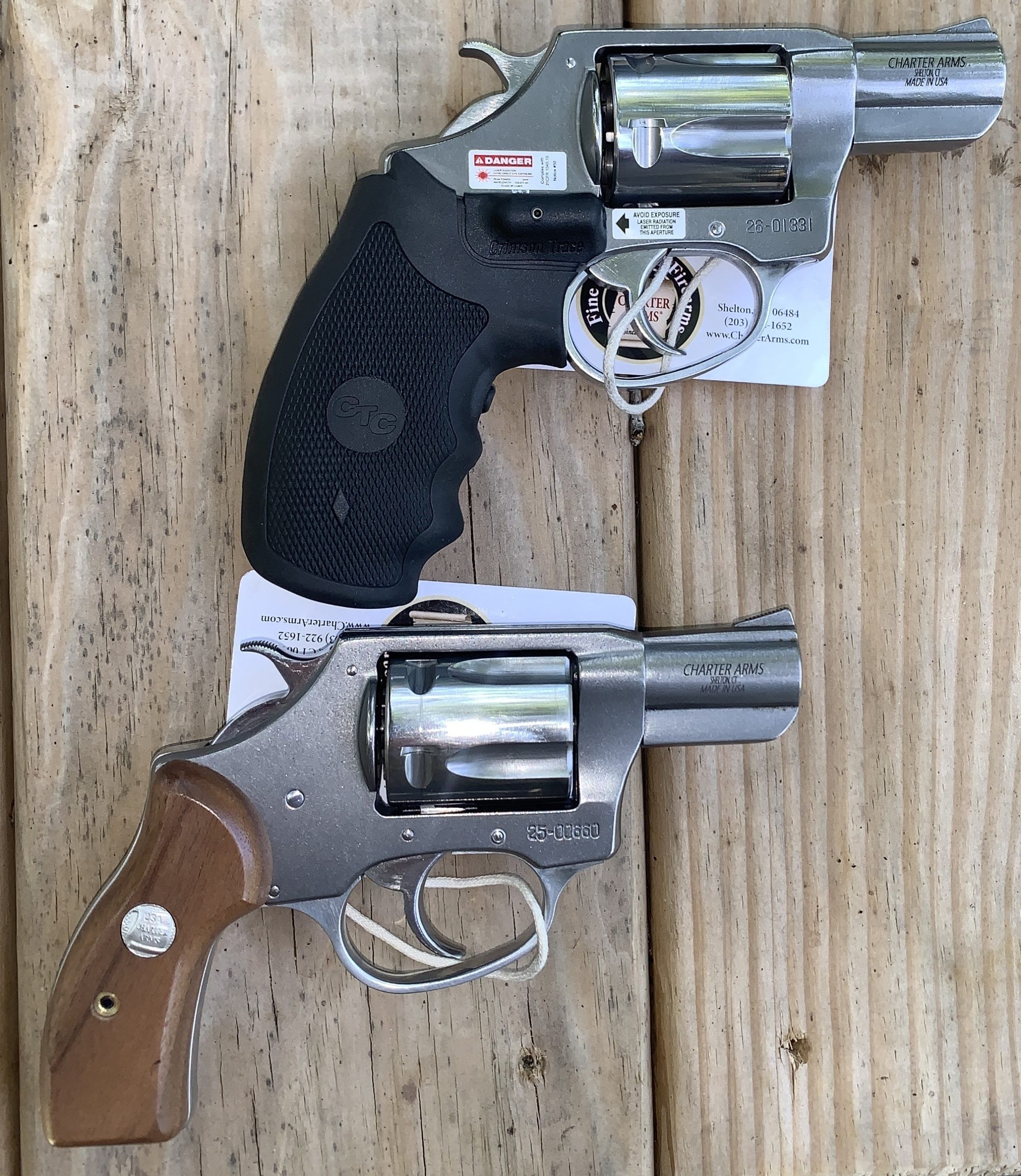
Two Charter Arms Undercover .38 Special revolvers went downrange for direct comparison. The classic wood-grip model faced off against the Crimson Trace laser variant. Both weigh roughly one pound. Both deliver snub-nose reliability in a daily carry package.
Charter Arms built these revolvers for concealed carry from day one. Five-shot cylinders. Two-inch barrels. Fixed sights on the standard model. The Crimson Trace version adds a laser grip that activates on grip pressure. No external switches. No fumbling in low light.
Price separates the two significantly. The standard Undercover runs $350 to $400. The Crimson Trace model jumps to $550-$600. That $150-$200 gap matters for shooters on budget. For professionals carrying daily, the laser version justifies the cost.
Why It Matters for Gun Owners
The .38 Special remains America's most proven defensive cartridge. Modern ammunition—particularly hollow-points from Federal, Speer, and Hornady—delivers proven stopping power from snub-nose barrels. Charter's Undercover delivers this in a package that disappears in an ankle holster, jacket pocket, or ankle boot.
Snub-nose revolvers own specific advantages over semi-automatics for certain carriers. No magazine to lose. No slide to rack under stress. No failures to feed. Trigger control matters more than mechanical reliability because the gun simply works every time.
The laser sight on the Crimson Trace model changes how shooters train. Low-light scenarios demand target acquisition speed. A laser eliminates guesswork when your front sight disappears in darkness. But laser dependency carries risk—batteries fail, and muscle memory trains on technology that won't always be there.
Daily carry demands consistency. These guns weigh identical amounts. Both point naturally from concealment. Both function across temperature extremes. A carrier choosing between them makes a decision about sights and price, not reliability.
Background
Charter Arms began manufacturing the Undercover in 1964. Fifty years of production means proven design and parts availability. The gun survived competition from Smith & Wesson, Ruger, and Taurus. It still sells because it works.
Charter Arms operates from Shelton, Connecticut. American manufacturing remains a selling point for carriers who prefer domestic production. Supply chain interruptions during COVID proved the value of American-made guns from established manufacturers.
The .38 Special cartridge dates to 1898. Militaries adopted it. Police departments worldwide standardized on it. Decades of ammunition development optimized performance. Modern defensive loads achieve 900+ feet per second from two-inch barrels. That velocity matters for expansion and penetration through typical barriers.
Crimson Trace laser grips integrate into the gun's frame. No rail mounting. No aftermarket sights to replace. The laser stays zeroed because nothing moves except the trigger. Battery life runs 4-5 years under normal use.
DownRange Bottom Line
Buy the standard Undercover if you carry every day and shoot regularly. The fixed sights force proper technique. At $350-$400, it costs less than most quality semi-automatics. Train enough that you don't need a laser.
Buy the Crimson Trace version if your job demands low-light target acquisition. Security professionals, plainclothes officers, and night-shift workers benefit from laser aiming. The extra $150-$200 pays for reliability in darkness.
Both guns work. Both earn carry time. The choice depends on your training budget and typical carry scenarios, not on revolver reliability or .38 Special ballistics. Charter Arms built each one to the same standard.