Chiappa's HONCHO LIBERTY Brings Walnut and Trench-Gun Lines Back to Pumps
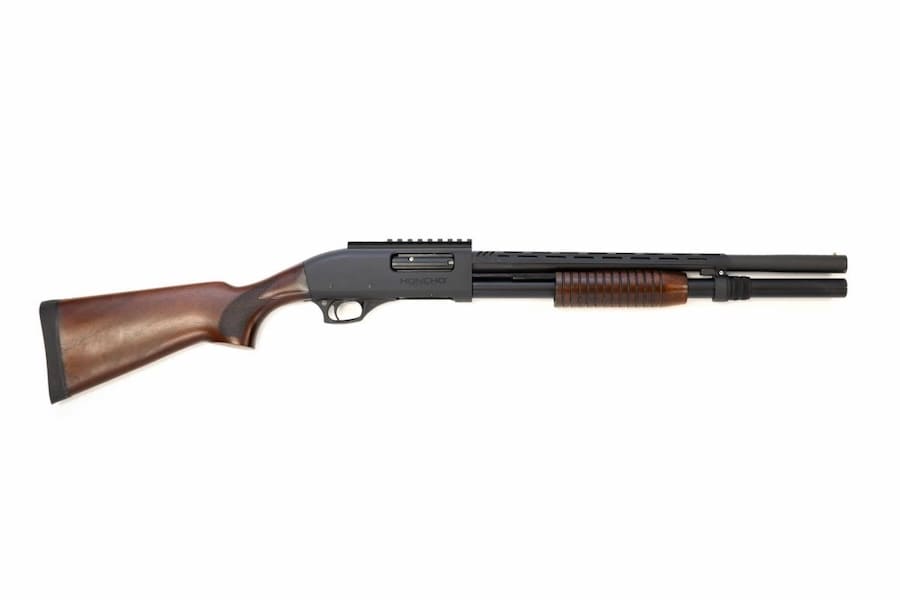
Chiappa USA is now selling the HONCHO LIBERTY, a 12-gauge pump built at its Dayton, Ohio facility. The shotgun dresses in walnut, a corn-cob forend and a brass bead front sight, all borrowed from the trench guns American troops carried in World War II. Under that old-school styling sits a Picatinny rail with a patent-pending RMSc footprint, so owners can run a compact red dot. The product is available now through Chiappa's nationwide dealer network. The launch announcement left out barrel length, magazine capacity and suggested retail price, and buyers will need to ask for those specs directly.
Key Details
The LIBERTY is a 12-gauge pump that accepts shells up to 3 inches. Chiappa finished the stock in walnut and added a rubber buttplate. The forend is a traditional corn-cob design. A ventilated barrel heat shield runs along the barrel, and a brass bead sits at the muzzle.
- Chambering: 12 gauge, 3-inch shells
- Stock: Walnut with rubber buttplate
- Forend: Traditional corn-cob style
- Sights: Brass bead front sight
- Optics: Picatinny rail with patent-pending RMSc footprint for a compact red dot
- Manufacturing: Made in the USA at Dayton, Ohio
- Availability: Now, through nationwide dealers
- Not disclosed: Barrel length, capacity, MSRP
Jay Putnam, general manager at Chiappa USA, tied the LIBERTY to the company's family of builds. He said the platform now takes a classic direction and targets dependable field and home-defense use. Chiappa says the gun pairs Italian design heritage with continued American production.
Background
The trench gun earned its name in the First World War. Infantry units used short, heavy 12-gauge pumps for close work in trench lines. The Winchester Model 1897 became the best-known example, and it carried a heat shield and bayonet lug. Those features made the design a template for military and police shotguns for decades.
Modern tactical pumps moved in a different direction. Most current defensive shotguns use polymer furniture, short barrels and rails for lights and optics. Chiappa's HONCHO line has followed that path. Earlier HONCHO versions came with 14.5-inch and 18.5-inch barrels, and several used pistol-grip configurations. The LIBERTY changes that pattern by offering a full shoulder stock and a longer, more conventional profile. It keeps the compact pump platform but gives it a different shape and feel.
Why It Matters for Gun Owners
Buyers who want a wood-stocked pump for home defense now have another option from a domestic maker. Anyone shopping this category should check the specs before buying. Chiappa did not list the barrel length, so confirm it with the dealer. A pump shotgun with a barrel under 18 inches falls under the National Firearms Act and requires registration and tax payment. An 18.5-inch barrel stays outside that line, but the exact measurement matters. Check the shipped configuration against the stated barrel length before you pay.
Capacity is the next question. The announcement did not state magazine capacity. States with magazine or capacity limits can apply those rules to tubular magazines on shotguns, so owners in restrictive states should confirm the factory capacity and any state-approved plug requirements before ordering. Price is also unknown. Compare the final MSRP with established competitors like the Mossberg 500 and Remington 870 before deciding that the walnut and domestic build justify the premium.
Optics owners should test the RMSc-pattern rail with their own sights. Footprint compatibility does not guarantee a secure mount, so verify fit and zero before relying on the setup for defense.
DownRange Analysis
Under Bruen, the LIBERTY faces no serious legal challenge. A 12-gauge pump is a standard arm in common use, and no court is likely to strike it down based on its furniture or styling. The legal exposure comes from barrel length and capacity rules, not from the trench-gun look. That makes the spec sheet more important than the marketing photos.
The market sees the LIBERTY as a niche product. Most buyers still choose polymer tactical pumps at lower prices. Chiappa is betting that enough shooters want a domestic, wood-stocked pump with optics support. If the price lands close to competitors, the LIBERTY could win on fit and finish. If it lands far above them, the wood stock alone will not carry the sale.
What should a gun owner do right now? Wait for the MSRP and full specs before buying. Call a dealer and ask for the barrel length, magazine capacity and state compliance status. If you already own a HONCHO or a similar pump, the LIBERTY is not a reason to switch unless the walnut and optics mount solve a problem you actually have. Run it on the range with the optic you plan to carry, and test the gun with the ammunition you intend to use for home defense.