Circle K Cut Off an Ohio Clerk Who Fired on Four Robbers
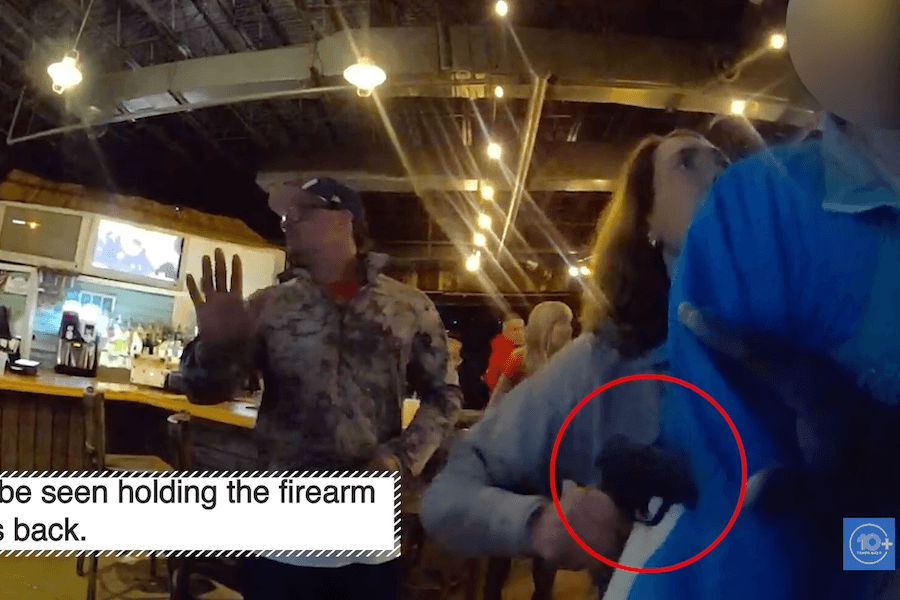
Circle K pulled an Ohio convenience store clerk off the schedule after he fired on armed robbers. Kendrick Watson shot at several suspects after they drove a stolen minivan through the front of his store. Prosecutors did not charge him with a crime. According to Watson, his boss then texted him not to come to work. Watson has now decided not to go back, pointing to the chain's strict "no weapons at work" policy. He worked at the store for six years.
Key Details
The facts below come from Watson's account and earlier reporting by Bearing Arms.
- The robbers crashed a stolen minivan through the storefront where Watson was working. Watson fired several shots at multiple armed suspects.
- No criminal charge was filed against Watson for the shooting.
- Circle K enforces a strict "no weapons at work" policy for its employees.
- The Monday after the incident, Watson received a text from his boss telling him not to come in and that he was off the schedule. His hours dropped to zero.
- After two more days with no work and no update, Watson believed he had been fired.
- Watson was later told he could return. He questioned how he could work under the weapons policy and chose to stay away.
- Watson spent six years at the store before leaving.
- Watson says he hopes other workers take the incident as a reason to prepare to defend themselves.
- A Colorado woman was allegedly fired for fighting off a knife-wielding attacker with her bare hands.
- An Atlanta convenience store clerk was shot and killed on Tuesday of this week.
- Last week, a 66-year-old woman working behind the counter at a Hawaii convenience store was allegedly stabbed to death by a customer.
Background
Ohio became a permitless carry state when HB 99 took effect in June 2022. That law lets adults who can legally own a firearm carry it without a state license. Ohio residents can now carry on the street, in the car, and at work, unless a property owner or employer restricts it. The Supreme Court's decision in New York State Rifle & Pistol Association v. Bruen, issued the same month, struck down New York's "proper cause" licensing requirement. It also set a new test for gun laws: the government must show the regulation fits the nation's historical tradition of firearm regulation.
Neither ruling reaches private businesses. The Second Amendment restricts government action, not the rules a private company sets for its workplace. A store can ban firearms on its property, and an employer can discipline or fire staff who violate that rule. Workers who carry against company policy take on that risk. Watson's case shows how that plays out in a convenience store, where a single employee often works alone overnight. Bearing Arms had already documented other workers disciplined for acting in self-defense, which is why this story drew attention.
Why It Matters for Gun Owners
If you work retail, gas station, or late-night service jobs, read your employer's weapons policy before your next shift. Get it in writing. Ask HR how the policy applies to carrying in your state. Many workers never ask, and they learn the answer only after something goes wrong. Ohio's permitless carry law does not override a private employer's rule, so the state's law alone will not protect your job.
The risk falls hardest on people working alone at night. Gas stations, convenience stores, and pharmacies in Ohio, Georgia, and Hawaii all have late-shift staff who face robbery. Colorado and other states have their own employment rules, so check local law where you live. If your employer bans firearms, you need a plan that does not depend on a gun at your hip. Look at radio or phone check-in procedures, a panic button, and lighting and cash-handling practices that reduce your exposure. If you do carry at work against policy, know that you may lose the job, and document what happened if you do.
DownRange Analysis
Bruen gives this fight no help. The test it created asks whether a government regulation matches history, and a private employer's handbook does not count as a government regulation. Any relief for workers will come from state legislatures that protect employee carry rights or from civil claims tied to wrongful termination. Those routes exist in some states. They are slower, and they are not guaranteed.
Circle K's policy is a business decision, and its owner can make it. The company, part of Alimentation Couche-Tard, will keep counting on workers who accept the rule. The market sends a clear message to job seekers: ask about weapons policies before you accept the offer. Watson's choice to walk away is reasonable, and it may be the strongest message a worker can send. Right now, if you work a late shift, confirm your employer's policy, plan for the worst-case scenario, and know your state's carry laws before you need them.