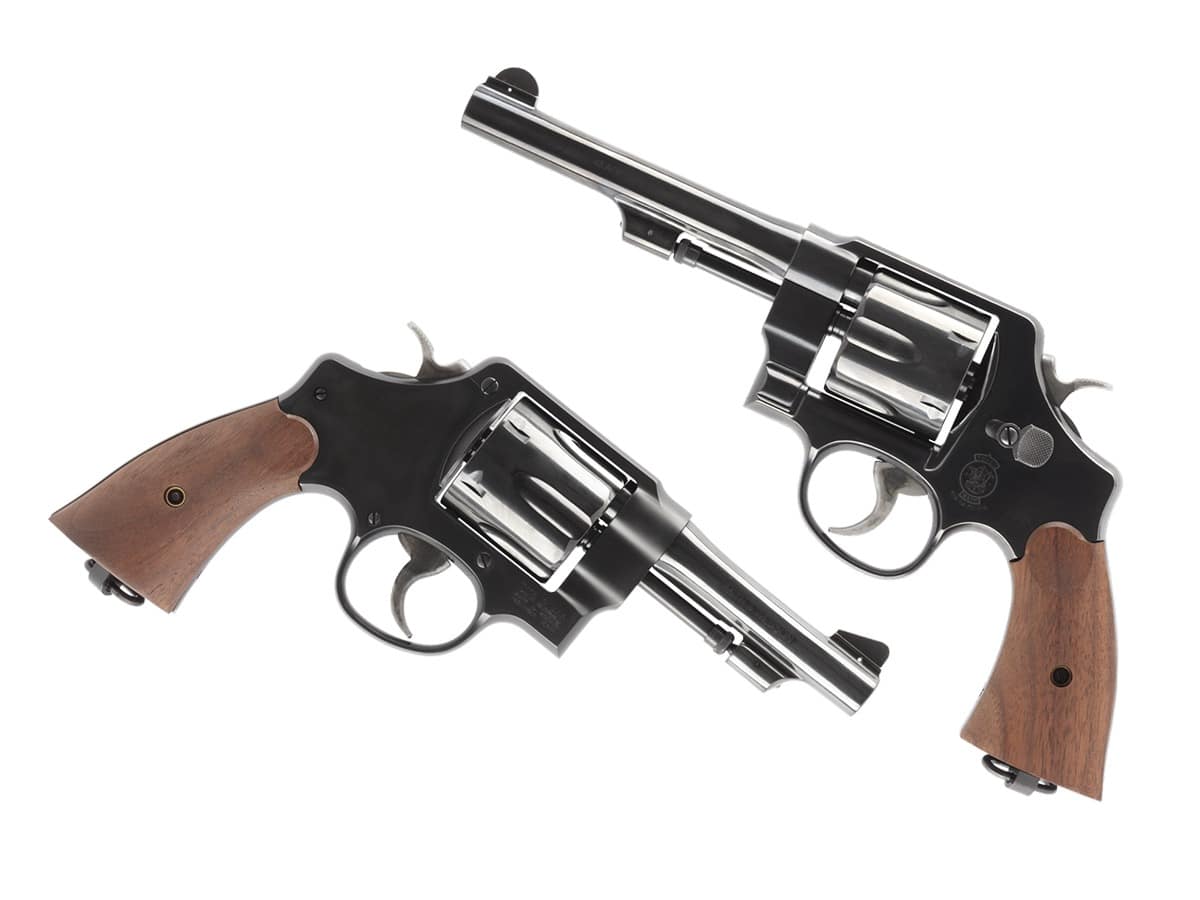
Smith & Wesson Revives Two .45 N-Frame Classics for 2026
Smith & Wesson is reintroducing two large-frame .45-caliber revolvers: the Model 22 of 1917 Classic and the Model 22 Classic. Both are six-shot double-action/single-action wheelguns built on blued N-frames, and both carry the look of the company's original designs. The details came out through Recoil Magazine's first look, published November 6, 2026. The split between the two comes down to chambering. The 1917 Classic shoots only .45 ACP, loaded on moon clips. The Model 22 Classic accepts .45 ACP on clips and .45 Colt loaded straight into the cylinder. Smith & Wesson builds both with modern manufacturing and quality control.
Key Details
Smith & Wesson lists the following specifications for the pair, as reported by Recoil:
- Frame and action: Large-frame N-frame, double-action/single-action, six-shot cylinder, blued finish on both models.
- Caliber: .45 caliber across both guns.
- Model 22 of 1917 Classic: Chambered in .45 ACP only. The cylinder is cut for moon clips and accepts both half-moon and full-moon clips. Barrel length is 5.5 inches.
- Model 22 Classic: Chambered in .45 ACP (using moon clips) and .45 Colt (loaded directly in the cylinder). Barrel length is 4 inches.
- Front sights: The 1917 Classic uses a half-moon front sight. The Model 22 Classic uses a serrated ramp front sight.
- Shared features: Smooth walnut grips and a lanyard loop on both.
Recoil frames the 22 Classic as the more practical gun. Its dual-chambering and shorter barrel give it broader range use than the single-caliber 1917 version. The 1917 Classic keeps the longer 5.5-inch barrel and the period-correct half-moon sight. Neither model carries a published price or ship date in the source material, so check with dealers and the manufacturer before you plan a purchase.
Background
The N-frame is Smith & Wesson's large-frame revolver platform, built to handle heavy service loads. The original Model of 1917 used the .45 ACP cartridge and was produced for U.S. Army contracts during World War I. Because the cartridge is rimless, it needed half-moon clips to headspace and extract properly from a revolver cylinder. That history explains the moon-clip cut in the 1917 Classic's cylinder and why the design still draws collectors and shooters who want a traditional wheelgun.
Smith & Wesson has repeatedly returned to classic N-frame styling in recent years, pairing historical lines with current production methods and tighter tolerances. The Model 22 Classic adds .45 Colt, a cartridge with a long history in single-action revolvers. Dual-chambering is the practical upgrade. A shooter can run a moon-clip load for .45 ACP or a standard .45 Colt load without swapping guns. The modern build is the selling point: older guns required more hand fitting and more care, and buyers today expect a revolver that runs reliably with factory ammunition.
Why It Matters for Gun Owners
If you shoot .45 ACP, the 1917 Classic is a niche purchase with a clear use. Moon clips add a step to every reload, and the gun ties you to the clip system. Plan on buying enough clips and practicing the load-and-unload drill before you take it to the range. Half-moon and full-moon clips both work in the 1917 cylinder, which gives you options if you already own clips.
The Model 22 Classic makes more sense for the shooter who wants one revolver for two loads. Keep in mind that .45 Colt and .45 ACP are not interchangeable in a single cylinder without clips, and mixing them carelessly is a good way to create a malfunction. Label your ammunition and keep the two loads separate in storage.
Revolvers of this type are generally treated as ordinary handguns under federal law, and the two models do not raise a new regulatory question on their face. Before you buy, check your state's handgun roster rules. States such as California and Massachusetts require new handgun models to be listed before they can be sold, and a new model may not appear on those lists right away.
DownRange Analysis
Revolvers like these sit comfortably inside what the Supreme Court described in New York State Rifle & Pistol Association v. Bruen (2022). Handguns are in common use for lawful purposes, and a six-shot .45 revolver falls squarely in that category. Nobody is going to get a Bruen challenge out of a classic-styled wheelgun. The legal fight over handguns, if one comes, will focus on carry and storage rules rather than the design of a revolver.
The market signal is more interesting. Buyers keep asking for classic-looking guns built to modern tolerances, and Smith & Wesson is betting that a historically themed N-frame will sell to both collectors and range shooters. Expect the Model 22 Classic to outsell the 1917 version because the .45 Colt option opens more doors. Watch for dealer allocations and first-run pricing.
What should you do right now? If you want one, put it on your list and wait for pricing and state roster status to settle. If you already own moon clips, you have a head start. If you do not, buy clips before the gun ships. Then take the gun to the range and shoot it. These are working revolvers, and a safe queen is a waste of a good N-frame.