.243 Winchester Proves Effective Beyond Hunting Applications
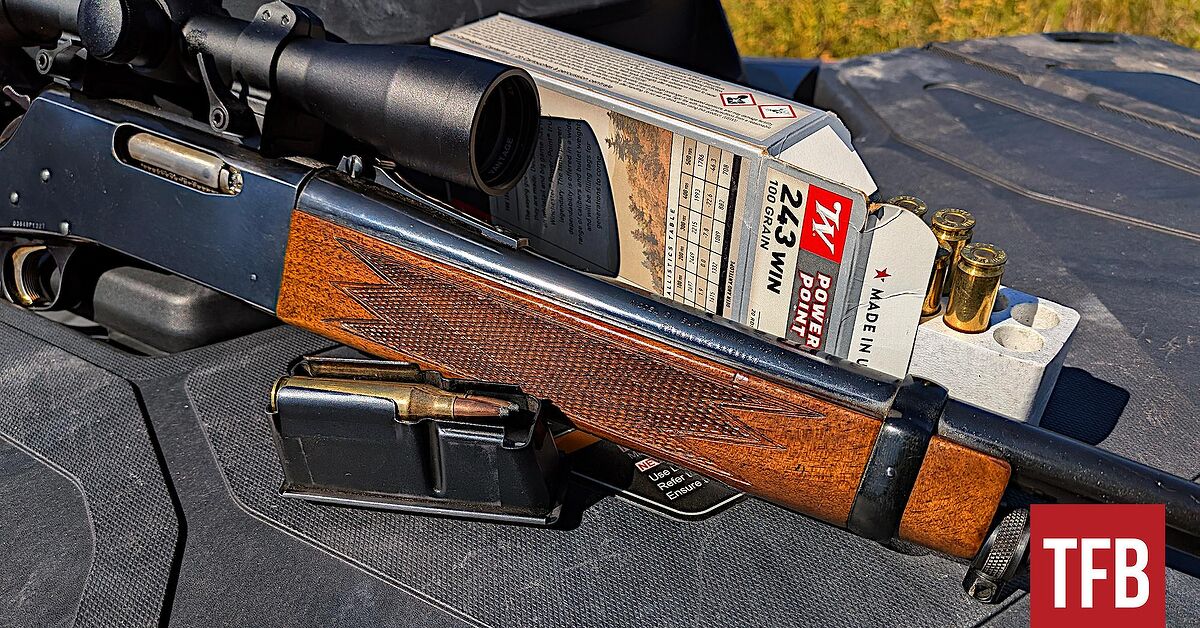
The .243 Winchester remains one of America's most underrated cartridges among tactical shooters and daily carriers. Developed from wildcatter experiments dating to the 1940s, this round delivers flat trajectories, minimal recoil, and genuine stopping power at distance. Warren Page's early .243-caliber experiments preceded Winchester's official 1955 release, yet modern shooters dismiss it as purely a hunting round.
Modern .243 loads push 85-grain bullets to 3,200 feet-per-second. That ballistic profile outperforms common intermediate cartridges at 300+ yards. Factory ammunition runs $0.85-$1.20 per round from quality manufacturers. Recoil impulse sits roughly 40% lower than .308 Winchester, enabling faster follow-up shots and superior accuracy under stress.
Why It Matters for Gun Owners
Shooters fixated on .308 Winchester and 6.5 Creedmoor overlook the .243's practical advantages. Bolt-action rifles chambered in .243 weigh two pounds less than comparable .308 platforms. This matters during extended field operations or when carrying defensive rifles daily.
Ammunition scarcity affects .243 less severely than premium tactical calibers. Winchester, Federal, and Hornady manufacture .243 rounds continuously for the hunting market, ensuring availability during shortages. Your local gun shop stocks .243 ammunition when shelves empty for trendier calibers.
Barrel life extends significantly. .243 rifles shoot 3,000+ rounds before accuracy degradation occurs. Compare this to .308 Winchester at 1,500-2,000 rounds. Shooters replacing barrels spend $300-$600 per swap; the .243 delays this expense substantially.
Target acquisition speeds improve with reduced recoil. Female shooters, older marksmen, and new gun owners maintain better sight picture recovery with .243 ammunition. Training costs drop when participants spend fewer dollars managing heavy recoil.
Background
The .243 Winchester emerged from post-World War II ballistic innovation. Winchester engineers necked down the .308 Winchester case to .243-inch bore diameter, creating a cartridge balancing power and shootability. The 1955 introduction targeted deer and varmint hunters.
Savage, Mossberg, and Ruger chambered .243 rifles immediately. Winchester offered the Model 70 in .243, cementing the cartridge's legitimacy. By 1960, the .243 Winchester represented mainstream rifle ammunition, not experimental oddity.
Cold War-era shooters recognized .243's potential for defensive applications. Military arsenals never adopted it—geopolitical priorities favored 7.62 NATO. However, civilian shooters understood that flat-shooting, low-recoil rifles improved hit probability during defensive encounters.
Modern rifle manufacturers continue offering .243 options. Ruger American Rifle, Mossberg Patriot, and Savage Axis rifles ship in .243 caliber. These factory rifles sell for $400-$700, undercutting comparable .308 platforms by $150-$300.
DownRange Bottom Line
Dismissing the .243 Winchester as obsolete overlooks genuine tactical advantages. This cartridge delivers precision rifle performance without the noise, cost, or recoil associated with modern tactical calibers. Shooters seeking effective 300-yard capability, reduced training costs, and practical ammunition availability should seriously evaluate .243 Winchester platforms.
Your next rifle doesn't require trendy branding. Choose the .243 Winchester, and you choose a cartridge proven across seven decades of American shooting culture.