Haga Defense Ditches Side Handles for Vertical-Only Saraid Top Notch
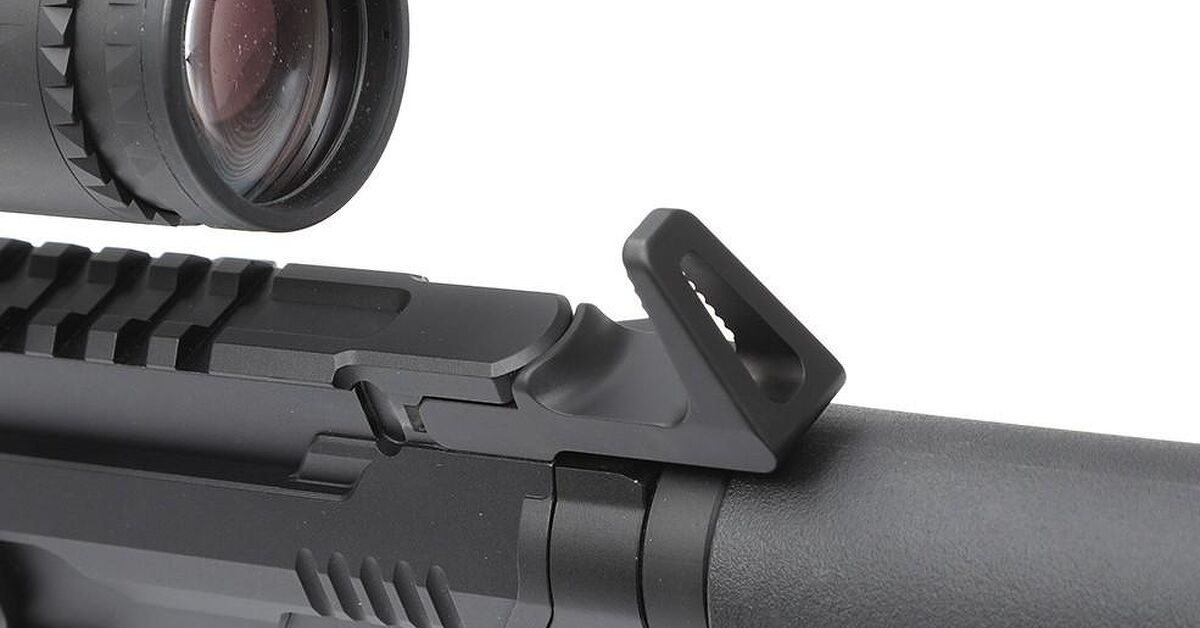
Haga Defense rejected the industry standard of refining side-mounted charging handles and instead eliminated them completely. The new Saraid Top Notch AR-15 charging handle abandons the bilateral design most manufacturers iterate on—different lengths, shapes, textures, ambidextrous options—and commits to a vertical-only layout. The move represents a fundamental departure from how the market has evolved charging handle design for two decades.
Key Details
Instead of redesigning side handles through ergonomic tweaks or aesthetic changes, Haga Defense removed them entirely from the Saraid Top Notch design. The vertical configuration stands alone as the primary manipulation point. This approach bypasses the incremental improvements (ambidextrous versions, textured grips, length variations) that dominate current AR platform charging handle offerings. The design files suggest a single-profile solution rather than modular or adjustable components.
Why It Matters for Gun Owners
Vertical charging handles force your grip discipline and hand positioning. Shooters accustomed to ambidextrous or side-mounted handles need to adapt their support-hand technique. Left-handed shooters lose the convenience of ambidextrous operation—a real issue if you're weak-side trained or run both shoulder positions. Competitors and defensive shooters who manipulate the handle under stress benefit from one consistent point of contact. The trade-off: simplicity and reduced snag points versus familiarity and flexibility. AR builders prioritizing minimalism or reliability over ergonomic variety will test this against established designs from Radian, Geissele, and BCM.
DownRange Analysis
Vertical-only charging handles survived the market before (see A2 forward assists), but modern shooters expect ambidextrous features as baseline. Haga Defense is betting that eliminating options actually improves the design—fewer failure points, lower cost, cleaner lines. The Saraid Top Notch will appeal to purists and shooters who run a standard grip method consistently. But it won't dethrone ambidextrous designs in competitive or duty contexts. Pricing and material specs remain unreleased; if this costs significantly less than premium ambidextrous alternatives, it gains traction in budget-build segments. Otherwise, it remains a niche choice for shooters willing to sacrifice ergonomic flexibility for architectural simplicity.