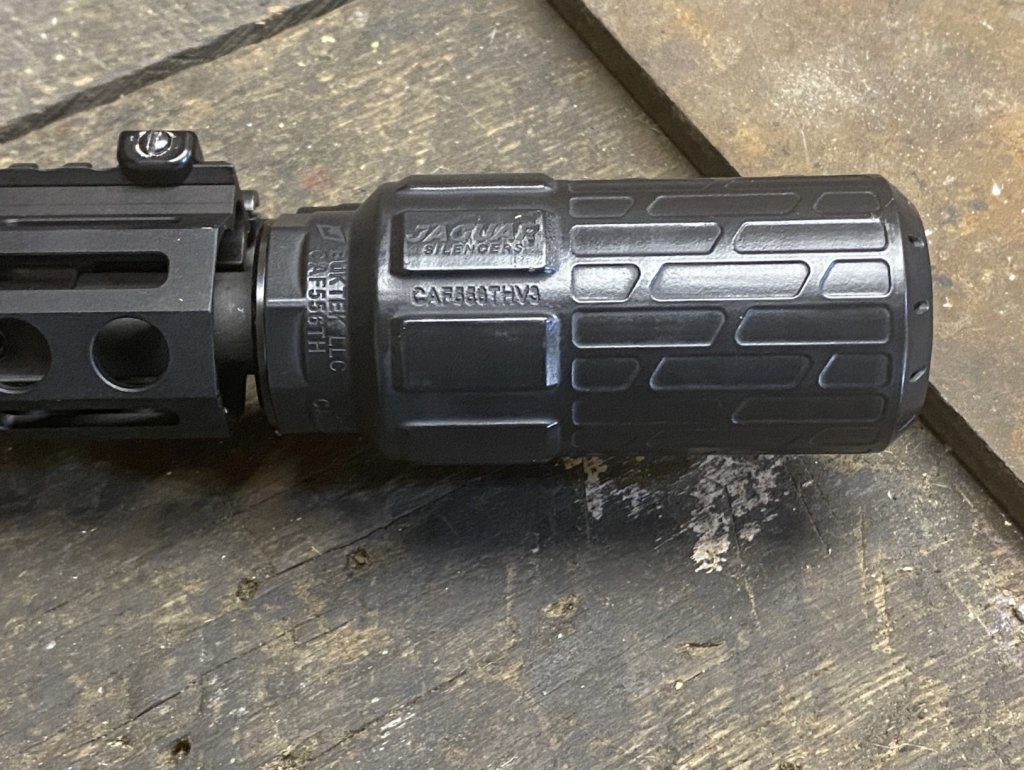
Jaguar's Intermittent Flow Technology Redirects Propellant Gas for Lower Backpressure
Jaguar Silencers introduced Intermittent Flow suppressor technology to solve a recurring problem: suppressors that reduce backpressure without simply venting propellant gas straight through the tube. Most commercial suppressors trade off between sound reduction and operational reliability. Jaguar's design changes that equation.
Intermittent Flow diverts gas flow patterns inside the suppressor body. Instead of a direct path through expansion chambers, the system interrupts and redirects propellant gases. This method keeps sound attenuation high while pushing less backpressure into the bolt carrier group and action. The result: less wear on springs, carriers, and buffers during extended shooting sessions.
The technology works across multiple calibers and action types. Semi-automatic rifles, bolt guns, and pistols all benefit from the design. Jaguar built Intermittent Flow into rifle suppressors rated for .223 Remington through .308 Winchester, plus dedicated pistol models in 9mm and .45 ACP.
Why It Matters for Gun Owners
Backpressure wears out your gun. Every round fired sends gas backward through the action. High backpressure accelerates bolt carrier tilt, batters buffer springs, and induces premature failures in critical components. Shooters running suppressors often accept this trade-off as the cost of hearing protection. Intermittent Flow shifts that burden.
Carriers and daily shooters see immediate benefits. Lower backpressure means your rifle cycles longer without maintenance intervals. Gas tube ports stay cleaner. Buffer springs maintain their strength through more rounds. For people running 5.56 NATO or 308 Winchester regularly—whether at the range, in competition, or in duty roles—component lifespan directly affects reliability when you need it.
Sound reduction remains competitive with conventional suppressors. Jaguar rates most Intermittent Flow models between 134 and 140 decibels on supersonic rifle rounds. That matches or beats legacy suppressor designs without the backpressure penalty.
Shooters training with suppressors also notice reduced recoil impulse. Backpressure fights against the action's rearward cycle. When Intermittent Flow cuts backpressure, the rifle's natural recoil signature becomes more predictable. Faster sight tracking on follow-up shots improves. Faster target transitions in multi-shot drills become easier.
How Intermittent Flow Works
Traditional suppressors chamber gas inside an expansion tube. The can contains baffles arranged to slow and cool gas. Gas flows forward into each chamber, then backward through a center tube to exit behind the muzzle. Simple. Effective. But all that backward flow pressure pushes on the bolt carrier.
Intermittent Flow adds internal gas routing that prevents straight-through flow. Baffles and chambers work together to redirect gases laterally and at angles. Gas spends more time inside the suppressor body. The can absorbs energy more completely. Less gas pressure escapes backward into your receiver.
Jaguar engineered this design for standard 1.375-inch mounting threads. Rifles using ASR, KeyMo, Plan B, or quick-detach mounts all work with Intermittent Flow suppressors. Installation remains identical to conventional cans—thread them on, time them for optimal dwell, and run them.
DownRange Bottom Line
Jaguar Intermittent Flow suppressors deliver real gains for working gun owners. Lower backpressure extends component life. Sound attenuation stays competitive. Recoil becomes more controllable. Daily carriers and frequent shooters should test this technology against their current setups. Intermittent Flow represents actual engineering progress in suppressor design—not marketing language, but measurable performance improvement where it counts.