Podcaster Says 'Pistols Firing' at JD Vance. Where's the Line?
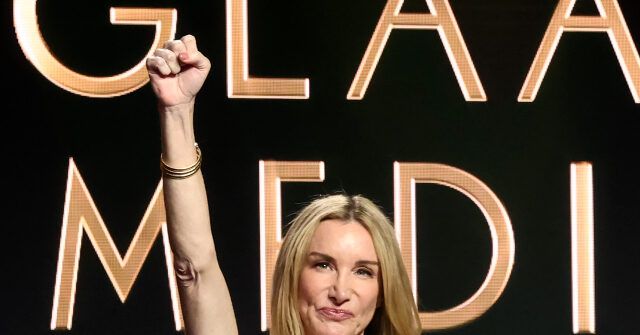
Podcaster Jennifer Welch told her audience that the country should keep "firing — pistols firing at all times towards this guy," a reference to Vice President JD Vance. Breitbart's 2A section ran a column on the remarks on October 22, 2026, and treated them as a call for political violence. The column says Welch made the comments on a broadcast and that she has interviewed prominent Democrats. Neither the column nor the excerpt we reviewed includes the full episode, so the complete context of the line is not public in this summary. The remark still deserves a close read because it is explicit, it names a sitting official, and it sits on a platform with a real audience.
Key Details
The column pulls several specific statements from Welch's broadcast. Each one is quoted or paraphrased below.
- Target: Vice President JD Vance, who the column describes as a husband and father of four.
- Labels used: Welch called Vance a "white supremacist," "Antichrist," and "sociopath," and said he is "not fit to be a father." She also called him a "failed drag queen."
- Core line: "We need to keep firing... pistols firing at all times towards this guy."
- Stated concern: The column says Welch framed the remarks around Vance becoming president in about two years, which points to the 2028 cycle.
- Timing: Breitbart says the remarks came roughly two days after Sen. Elissa Slotkin (D-MI) discussed deterring young people from working in the Trump administration. Slotkin said she wants people who would consider such jobs to think, "Lord, that might be buying myself a ton of problems," and called this a "deterrence message."
- Agency mentioned: The column says the remarks should draw attention from the U.S. Secret Service, which protects the vice president.
Background
Threats against federal officials fall under federal law, and courts have drawn a line between protected political speech and true threats. In Virginia v. Black (2003), the Supreme Court held that true threats fall outside First Amendment protection. In Counterman v. Colorado (2023), the Court ruled that prosecutors must show the speaker acted with at least recklessness about the threatening nature of the words. That standard makes the inquiry turn on the speaker's mental state, not only on how the words sound. The backdrop is also painful. Thomas Crooks fired on Donald Trump at a rally in Butler, Pennsylvania, in July 2024. Federal prosecutors later charged Ryan Wesley Routh for an armed effort against Trump at his West Palm Beach golf course in September 2024. Political figures on both sides have seen rhetoric and violence move in tandem, and the courts and law enforcement have to sort out which words cross the line.
Why It Matters for Gun Owners
This story lands on gun owners in a specific way. Any firearms reference in a political argument now gets scrutinized, and gun owners are the first group people blame after a shooting. A broadcast that uses the word "pistols" to describe firing at a named official gives critics a ready example. Gun owners who talk about firearms online should understand the difference between a rhetorical flourish and a statement that a listener could read as a call to act. Keep the language about defense, voting, and law. Stay away from jokes that describe shooting real people, even when the target is a politician you oppose. Watch for two things over the next few weeks. Watch for whether any federal agency confirms a review of the broadcast. Watch for whether lawmakers use this episode to push for new limits on firearms ownership or on online speech. Both would reach ordinary owners who have nothing to do with the remarks.
DownRange Analysis
Bruen does not decide this question. New York State Rifle & Pistol Association v. Bruen (2022) set the text-and-history test for public carry restrictions. It does not reach threat law or speech limits. The First Amendment analysis runs through Black and Counterman, and Welch's remarks are hard to defend as ordinary political opinion because they name a sitting official and use a firearms image. Whether a prosecutor could prove recklessness is a separate question that depends on the full broadcast and its context. Breitbart's column has its own heated language, and a fair reader should check the transcript before drawing conclusions. The practical point holds regardless. Threats against officials draw federal attention, and that attention spreads across the political spectrum. If you want the gun community to keep its credibility, condemn the language that calls for shooting people and keep the debate on policy. Do not repost clips like this one without the full context. Report credible threats to the U.S. Secret Service or local law enforcement. Then go back to the real fight, which is over carry rights, state permitting, and the courts.