North Korea Responds to Trump Peace Talks With Missile Launch
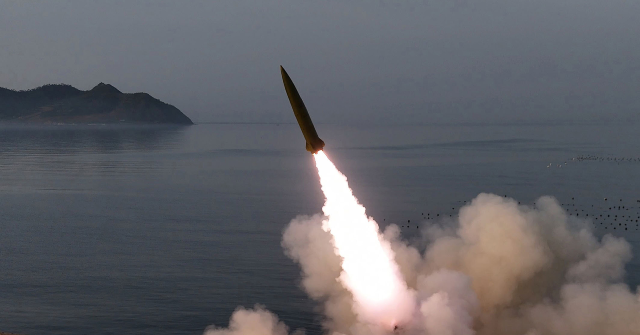
North Korea fired roughly a dozen short-range ballistic missiles into the Sea of Japan on Thursday afternoon, according to South Korean intelligence. The barrage came within hours of President Trump announcing scaled-back U.S.-South Korean joint military exercises and publicly offering direct negotiations with dictator Kim Jong-un. The timing signals Pyongyang views reduced military pressure as an opening to test U.S. resolve rather than an invitation to dialogue.
Key Details
- 12 SRBMs launched into the Sea of Japan; South Korean military tracked the test
- Launch occurred Thursday afternoon, same day Trump announced de-escalation of joint U.S.-ROK exercises
- Trump's stated goal: direct talks with Kim Jong-un on denuclearization
Why It Matters for Gun Owners
This incident reinforces why Second Amendment protections matter domestically. When adversaries test U.S. credibility abroad, national security weakens at home. Gun owners understand that individual rights depend on a stable, strong country capable of defending itself. Reduced military readiness or perceived weakness invites aggression—a lesson applicable to personal security and the principle that an armed citizenry serves as a check against tyranny. If diplomatic overtures are read as weakness by hostile regimes, similar messaging domestically could embolden those who seek to weaken constitutional protections.
DownRange Analysis
Trump's gambit assumes economic incentives and direct talks can move Kim, but Pyongyang's immediate response suggests the regime interprets scaled military exercises as negotiating weakness, not good faith. For Second Amendment advocates, the pattern is instructive: appeasement rarely produces the desired outcome. Dictatorships probe. If the U.S. military posture retreats without clear strategic gains, adversaries escalate. That logic applies to gun rights domestically—any retreat in constitutional protections signals vulnerability that anti-2A forces will exploit. Watch how this plays out; it will inform broader assessments of whether de-escalation strategies work with actors motivated by power, not compromise.