PKM's Adjustable Headspace Outperforms Western Rifle Systems in Combat Conditions
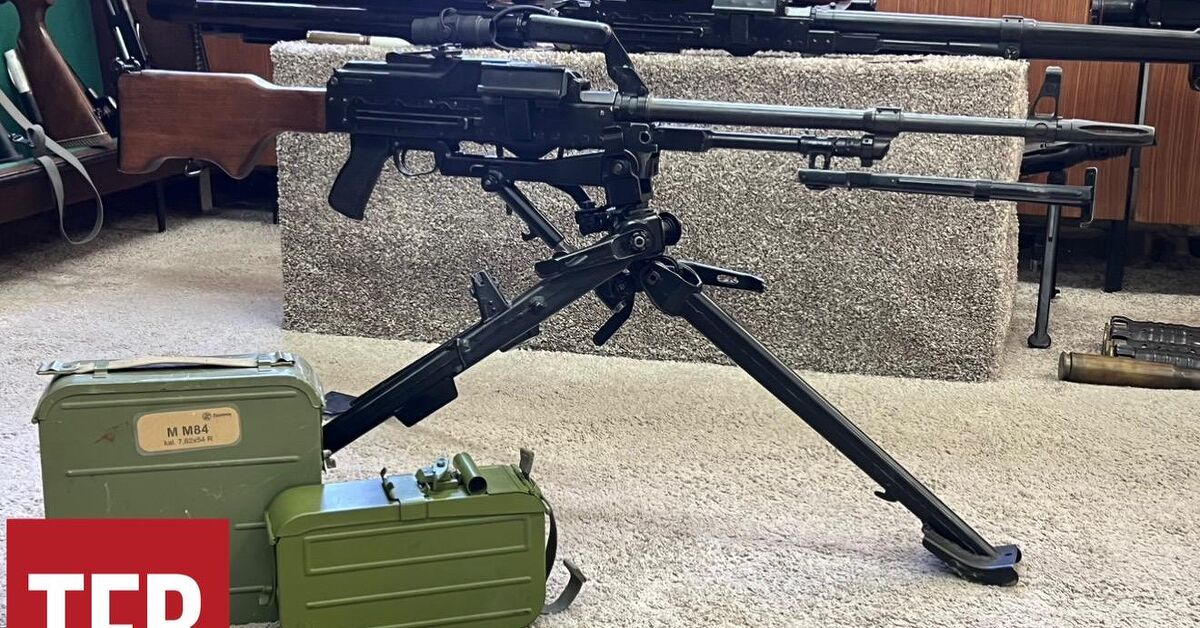
The PK series machine gun delivers a maintenance advantage most Western and competing Soviet-era weapons lack: adjustable headspace. This single feature transforms field repair in austere environments where gunsmith tools and replacement parts vanish fast.
Headspace—the gap between bolt face and cartridge chamber—sits tight on most rifles. Tolerances run measured in thousandths of an inch. Wear it out, and your rifle either misfires or explodes. Western designs like the M240 demand precision tools and factory parts. The PKM accepts worn components and lets you dial it in with hand tools.
Maintainers supporting partner forces in Africa, the Middle East, and Asia see this difference daily. A PKM gunner can keep his weapon running with basic wrenches. An M240 gunner without proper parts becomes a rifleman.
Why It Matters for Gun Owners
The PKM's design philosophy differs fundamentally from Western engineering. We build precision into our weapons. The Soviets built durability. If you carry a rifle for protection, the PKM's adjustable headspace teaches a hard lesson about maintenance expectations.
Most American gun owners never service headspace. You buy ammunition, shoot, clean, repeat. You trust factory tolerances to hold. That works until they don't—usually far from a gunsmith. The PKM forces field operators to understand their weapon's critical measurements.
For daily carriers managing AR-15s or other modern rifles, this isn't direct concern. Your rifle features fixed headspace. But understanding why military forces choose the PKM over Western alternatives reveals how maintenance demands drive platform adoption. Reliability matters more than precision when you're fighting in sand, jungle, or mountains without resupply.
The PKM's adjustability also explains its sixty-year service life across dozens of nations. American M240s require depot-level maintenance. PKMs operate indefinitely with field adjustment.
Background
Mikhail Kalashnikov designed the PK machine gun in the 1950s. It entered Soviet service in 1961. The 7.62x54R cartridge powered original versions; modern PKMs fire the same round with minor modifications.
The weapon's simple gas piston, rotating bolt, and adjustable headspace system proved revolutionary for sustained-fire weapons. Unlike the M240's complex headspace adjustment requiring specialized tools, the PKM's design allows operators to modify headspace using only a punch and hammer.
Partner forces adopted PKMs across Africa, the Middle East, and Central Asia. Military advisors supporting these forces quickly learned the advantage: wounded or worn PKMs returned to service within hours. Western weapon systems often required evacuation to rear maintenance areas.
This practical difference shaped doctrine. Forces equipped with PKMs operate independently longer. Forces equipped with M240s remain tethered to supply chains.
The PKM fires 600-750 rounds per minute from a belt-fed system. It serves as squad-level support weapon, helicopter door gun, and vehicle-mounted option. The Russian military still employs PKMs despite newer weapons available.
DownRange Bottom Line
The PKM's adjustable headspace reflects a design philosophy—durability over perfection—that influenced global military procurement for sixty years. For daily carriers, the lesson cuts clear: understand your weapon's maintenance requirements before crisis forces you to learn them. Your rifle's precision means nothing if you can't keep it running when tools and parts disappear.
Western rifles remain superior choices for trained operators with supply access. But in austere environments, the PKM's field-serviceable design wins every time.