British Army Fields Mossberg 590M Against Drone Threats
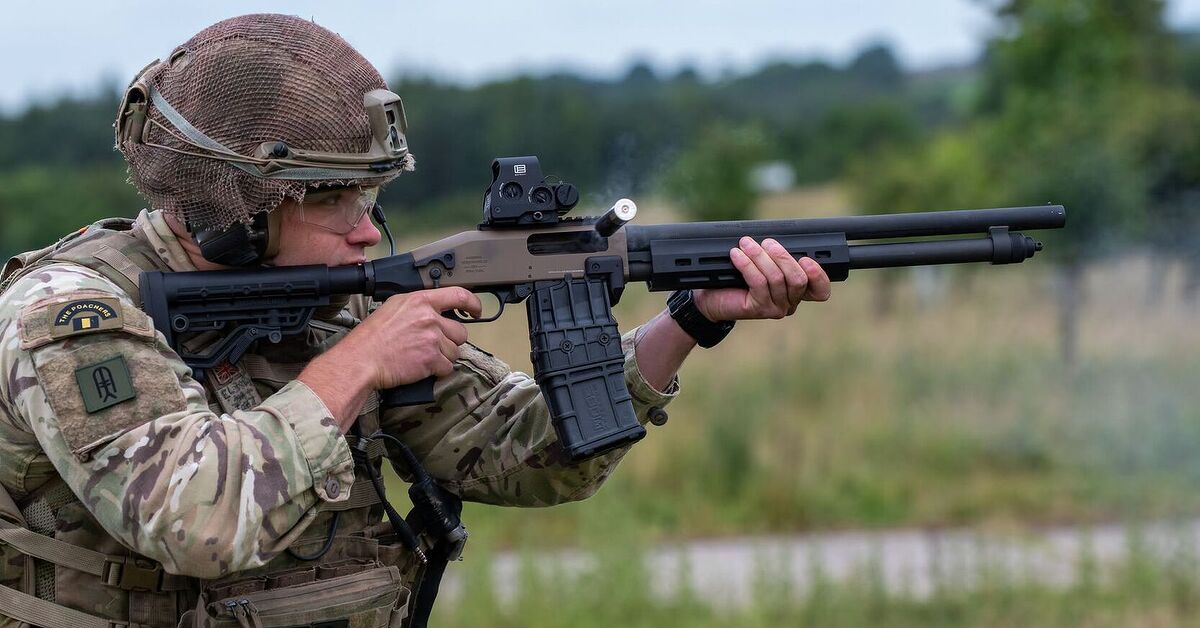
D Company, 2nd Battalion, Royal Anglian Regiment is evaluating the L351A1—the British military designation for the Mossberg 590M shotgun—as part of active counter-unmanned aircraft systems testing. The platform serves as a rapid-response air defense tool for ground units facing low-altitude drone operations. Testing began in August 2026 as militaries worldwide confront emerging threats from small UAS in contested environments.
Key Details
- Platform: Mossberg 590M 12-gauge semi-automatic shotgun, designated L351A1 by British forces
- Unit: D Company, 2nd Battalion, Royal Anglian Regiment conducting live evaluations
- Operational Focus: Close-range air defense against small unmanned aircraft at low altitude
- Role: Tactical counter-UAS capability for rapid ground-level response to drone threats
Why It Matters for Gun Owners
This adoption signals serious military interest in semi-automatic shotguns as multi-role combat tools. The 590M's fast follow-up shot capability and minimal training curve make it practical for unexpected threats. While U.S. forces haven't formally adopted shotguns for drone defense, this British trial validates what armed civilians already know: semi-auto 12-gauge shotguns deliver speed and versatility in unpredictable scenarios. The Mossberg 590M remains commercially available in most U.S. markets—a proven platform now battle-tested by NATO allies. Gun owners following military doctrine trends should note that militaries are moving toward accessible, reliable firearms for emerging threats rather than exotic solutions.
DownRange Analysis
The British Army's choice of a commercial Mossberg platform over custom air-defense systems reflects practical reality: proven, maintainable guns outperform specialized equipment in field conditions. The 590M's 10-round magazine capacity and semi-automatic operation give troops sustained suppressive fire capability against multiple targets. This doesn't replace air defense systems, but it fills a critical gap when drones operate below radar coverage. For civilian shooters, this validates the utility of quality semi-auto shotguns beyond sport and hunting. Expect other NATO forces to follow Britain's lead, potentially driving innovation in shotgun ergonomics and reliability. The commercial market benefits when military testing validates existing civilian platforms.