Alphonse de Neuville's Painting Captures Final Ammunition at Bazeilles
Alphonse de Neuville's 1870 oil painting "Les Dernières Cartouches" depicts French marine and artillery troops making their final stand inside the Bourgerie inn during the Battle of Bazeilles. August 31-September 1, 1870 marked one of history's most desperate defensive actions. French soldiers fought with dwindling ammunition against overwhelming Prussian forces during the Franco-Prussian War. The painting immortalizes troops running out of rounds while holding ground against repeated assaults.
The artist captured raw combat reality without romanticism. Soldiers sprawl across rubble-strewn floors. Powder smoke fills the inn's interior. Weapons lay scattered. Bodies pile in corners. De Neuville painted what cartridge-counting looks like when the count reaches zero.
Why It Matters for Gun Owners
Bazeilles reminds modern shooters that ammunition discipline determines firefights. The French troops didn't fail from poor training or weak firearms. They failed because ammunition ran dry. No resupply. No reinforcement. Just spent brass and empty magazines.
Gun owners today carry specific round counts for self-defense and duty carry. Your daily defensive load carries maybe 120-150 rounds total—chamber plus magazines. Most civilian gunfights end in seconds. But defensive scenarios aren't always simple. Bazeilles demonstrates that ammunition scarcity becomes critical when defenders cannot retreat or resupply.
The lesson cuts both ways. First: carry enough ammunition for your threat environment. Second: know your firearm's actual accuracy and lethality at distance. Third: understand when you're holding indefensible positions. The French marines at Bazeilles chose to stand. That decision cost them everything.
Modern carriers should study this. Know your exit routes. Know your ammunition capacity. Know when fighting becomes futile. De Neuville's painting forces that calculation.
Background
The Battle of Bazeilles occurred during Prussia's invasion of France. German forces outnumbered French defenders roughly three-to-one. The Bourgerie inn became the focal point of fighting on the second day. French marines and artillery troops occupied the position. They received orders to hold at all costs.
Prussian infantry attacked repeatedly. Each assault met rifle and artillery fire. French defenders inflicted heavy casualties. But Prussian artillery and fresh troops kept coming. Ammunition consumption accelerated. Cartridge boxes emptied faster than hoped.
By afternoon on September 1, French troops had fired thousands of rounds. Ammunition reserves dropped critically low. Officers distributed final rounds to best marksmen. Soldiers fixed bayonets. The last assault came against defenders armed primarily with edged weapons.
De Neuville painted the action in 1873, three years after the battle. He consulted with survivors to ensure accuracy. The resulting canvas measures 2.9 meters by 3.6 meters. It hangs in the Musée de l'Armée in Paris. The painting captures the exact moment when cartridges truly became "the last ones."
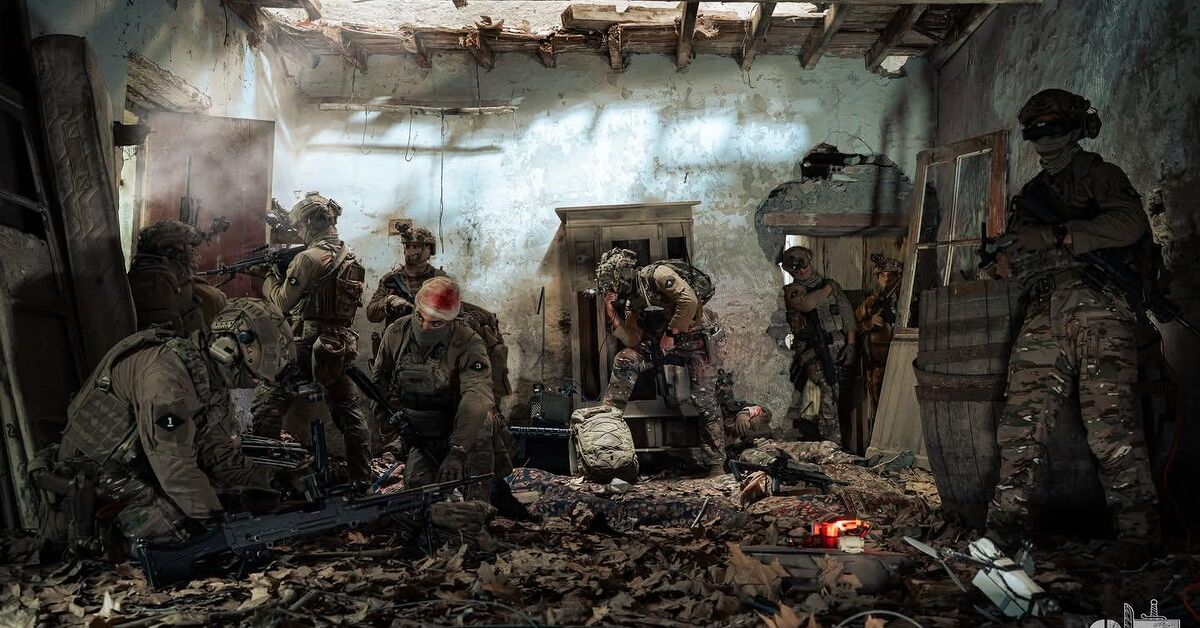
Modern photographers have recreated the scene using period uniforms and weapons. Comparing de Neuville's composition with contemporary photography reveals his technical accuracy. Gun angles match. Soldier positions align. The painter understood small arms behavior under stress.
DownRange Bottom Line
Bazeilles 1870 remains relevant to armed citizens. Ammunition matters more than most shooters acknowledge. Your carry gun performs only as well as your ammunition supply permits. De Neuville's canvas and modern recreation both hammer this point home. Carry enough rounds. Know your limits. Understand when positions become indefensible. The French marines at Bazeilles didn't lose because they fought poorly. They lost because they ran dry.