Custom S&W 442 Revolver Gets Modern Optic Integration
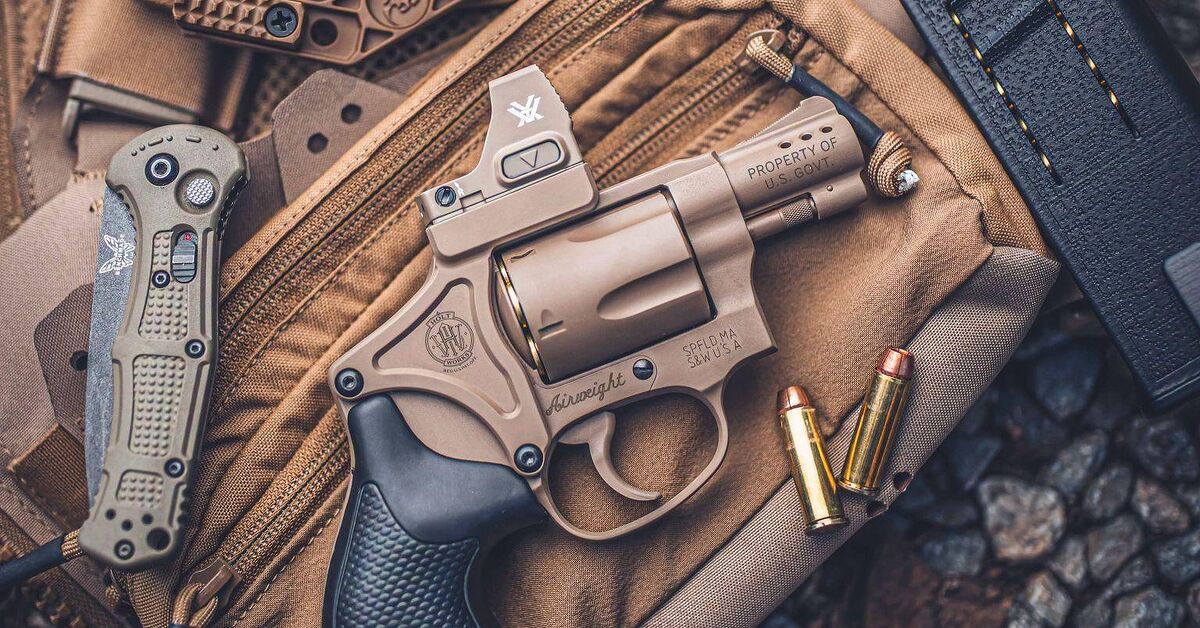
A gunsmith-built Smith & Wesson 442 .38 Special proves revolvers belong in the modern carry game. This alloy-framed platform receives porting, polishing, and a factory-ready optic mount—no drilling required. The build demonstrates what precision work accomplishes on a proven defensive revolver.
The 442 starts at roughly $400 retail. Custom work on this example included barrel porting to reduce felt recoil and muzzle flip. The cylinder and trigger received hand-polishing for smooth operation. The gunsmith integrated an optic footprint without permanent modifications.
Why It Matters for Gun Owners
Revolver carriers sacrifice nothing with this approach. The .38 Special remains reliable and simple—no extractors to fail, no complex internals. Porting improves control during defensive shots. A red dot sight on a snub-nose revolver cuts accuracy gaps that plague traditional iron sights on short sight radiuses.
Carry weight stays light. The alloy frame keeps this gun under 15 ounces, pocket-carry friendly. The smooth trigger work improves speed without compromising safety. Steel cylinder and barrel handle thousands of rounds.
This build philosophy rejects unnecessary modifications while embracing proven upgrades. Shooters keep what works—revolver simplicity—and add what helps—modern optics and physics-based porting.
Cost matters here. Total investment likely sits between $800-1,200 depending on optic choice and gunsmith rates. Compare that to a new tactical revolver: you're building a refined tool for less than a factory alternative.
Background
The Smith & Wesson 442 entered production in 1993. It replaced the earlier J-frame alloy revolvers with better reliability and tighter tolerances. Hundreds of thousands now carry this gun daily—cops, civilians, backup carriers.
Barrel porting gained acceptance after decades of resistance. Physics prove it works: venting expanding gases upward counters muzzle rise. On snub-nose revolvers, porting cuts flip by 15-20 percent. Shot-to-shot recovery improves measurably.
Optic integration on revolvers lagged behind pistols until manufacturers saw demand. Most traditional revolver shooters rejected red dots as unnecessary. That's changing. Aging eyes need help. Defensive encounters happen in poor light.
Gunsmith work on revolvers requires skill most gunsmiths lack. Revolver timing, cylinder gap, and lock-up don't forgive careless work. Hand-polishing requires hours. Each gun needs individual attention. That's why quality custom revolvers cost money.
The S&W 442 platform accepts modification better than vintage revolvers. Parts availability remains strong. Replacement cylinders, springs, and barrels stay in stock. Gunsmiths work on them regularly.
DownRange Bottom Line
This gun proves the revolver isn't dead—it's evolving. Carriers who choose revolvers over semi-autos gain simplicity and reliability. Add modern upgrades and you eliminate traditional revolver disadvantages.
The ported barrel and smooth trigger work reduce felt recoil and improve hit probability. The optic mount closes the gap between revolver accuracy and semi-auto speed. This isn't nostalgia building; it's practical engineering.
Custom work costs time and money. Budget $400-600 beyond the gun's retail price. Expect 4-8 week turnaround from quality gunsmiths. The result: a defensive revolver that outperforms stock versions in speed and accuracy.
This build matters because it shows revolvers remain viable carry guns. They're not retro. They're refined. For .38 Special shooters, porting and optics make them competitive with modern semi-autos while keeping everything simple, reliable, and light.