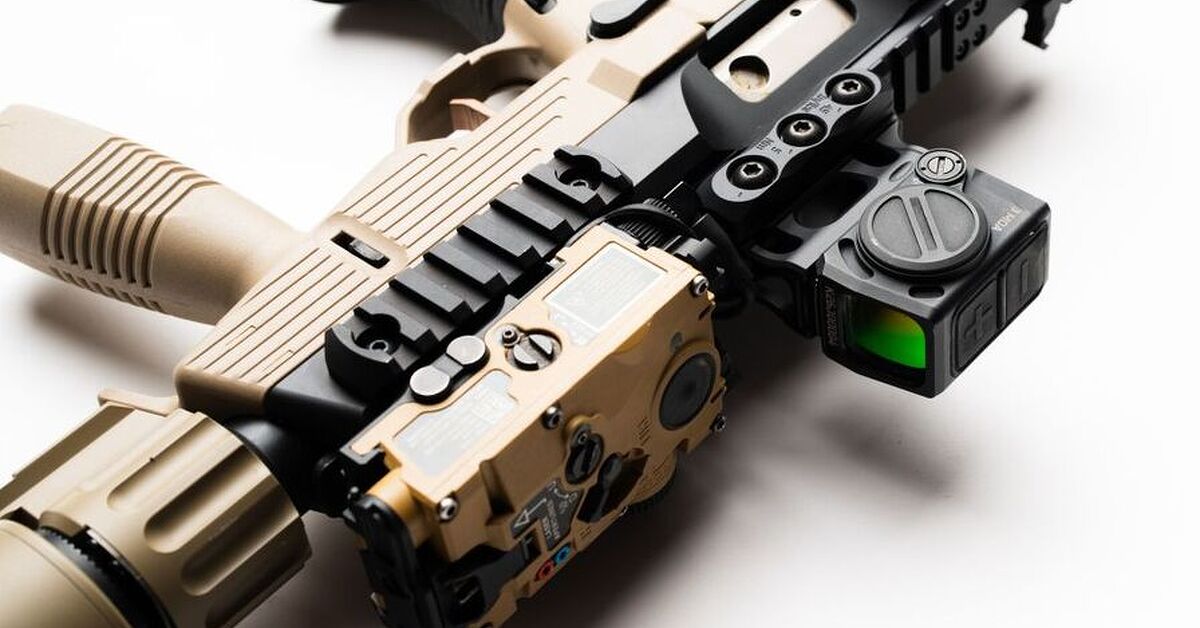
Colt's MRS-1 Puts a Micro Red Dot on a B&T TP9
Colt Optics' MRS-1 micro red dot now appears on a B&T TP9 and a short AR-15 in a photo published by The Firearm Blog on November 17, 2026. The optic weighs about 2 ounces and uses the Acro mounting footprint. It projects a 3 MOA dot powered by a single CR2032 battery that the maker rates for up to 75,000 hours. That works out to roughly eight and a half years of runtime, a number that will need independent testing before anyone trusts it. The photo makes a simple argument: a small gun should stay small, even with a sight on it.
Key Details
The published specs and photo describe the following:
- Optic: Colt Optics MRS-1 micro red dot
- Host guns: B&T TP9 and a short AR-15
- Weight: about 2 ounces
- Mount: Acro footprint
- Reticle: 3 MOA dot
- Power: one CR2032 battery, rated by the maker for up to 75,000 hours
- Activation: motion sensor wakes the optic when the gun moves
- Brightness: 12 settings, four of them designed for night vision
- Controls: large top-mounted buttons sized for gloved hands
The writer's core point is profile. The MRS-1 is built to sit low and slim on compact platforms, and the author argues it still adds far more capability than iron sights. The post links to Colt Optics' product page for the full specification sheet, and that page is the place to confirm any figure before you rely on it.
Background
The Acro footprint traces back to Trijicon's ACRO, which became a common mounting pattern for compact optics across pistols and carbines. Many manufacturers now build their optics or mounts to that pattern, so a single optic can move between different host guns with the right plate or adapter. The pattern matters here because it lets a small optic fit a pistol-caliber carbine and a short AR-15 without custom hardware.
Optic-ready pistols moved from niche to mainstream after Glock introduced its MOS system in 2017. Manufacturers followed with factory cuts and plates for pistol-mounted red dots. Before that, a red dot on a handgun meant aftermarket milling, gunsmithing, or a gun that never left the bench. Since then, the pistol optic has shifted from a range toy to a practical carry question, and the battery and mounting details now drive buying decisions as much as the glass does.
Why It Matters for Gun Owners
If you carry a compact pistol, you face a real tradeoff. A red dot adds a sight picture that most shooters can use faster than iron sights at distance, but it adds height, weight, and a new failure point. The MRS-1's slim profile and 2-ounce weight address the first two concerns. The battery and activation design address the third, but only if the claims hold up in your hands.
Motion activation deserves close attention. A sensor that wakes the optic when the gun moves can help the battery last in a bag or safe, yet it also means the dot may turn on inside a holster, a range bag, or a vehicle console. Test how the optic behaves when it jostles in your carry setup. Check whether the holster covers the optic or leaves it exposed to rain, dust, and impact.
Anyone running a 9mm pistol or a short AR-15 should also check mounting compatibility. A footprint standard does not guarantee that every optic will seat correctly on every host. Confirm the plate, screw torque, and zero retention before the gun leaves the house.
DownRange Analysis
This is product news, not a legal ruling. Bruen does not touch a red dot. The Second Amendment protects your right to keep and bear arms, and a sight choice sits well inside that protection. Nobody needs a court to bless a micro optic on a carry gun.
The market signal is clear, though. Makers now design optics around the compact pistol first and the rifle second. That trend pushes prices down and forces buyers to compare batteries, housings, and mounting systems, not just reticle options.
Treat the 75,000-hour rating as a marketing figure until you see independent testing. Buy a spare CR2032, log the brightness setting you use most, and run the optic through a month of normal carry before you trust it. If it holds zero and wakes when you need it, you have a useful tool. If not, you have a lesson that cost you less than a failed carry gun would.