Hungarian Army Adopts Szép M1 Bullpup for Live-Fire Training
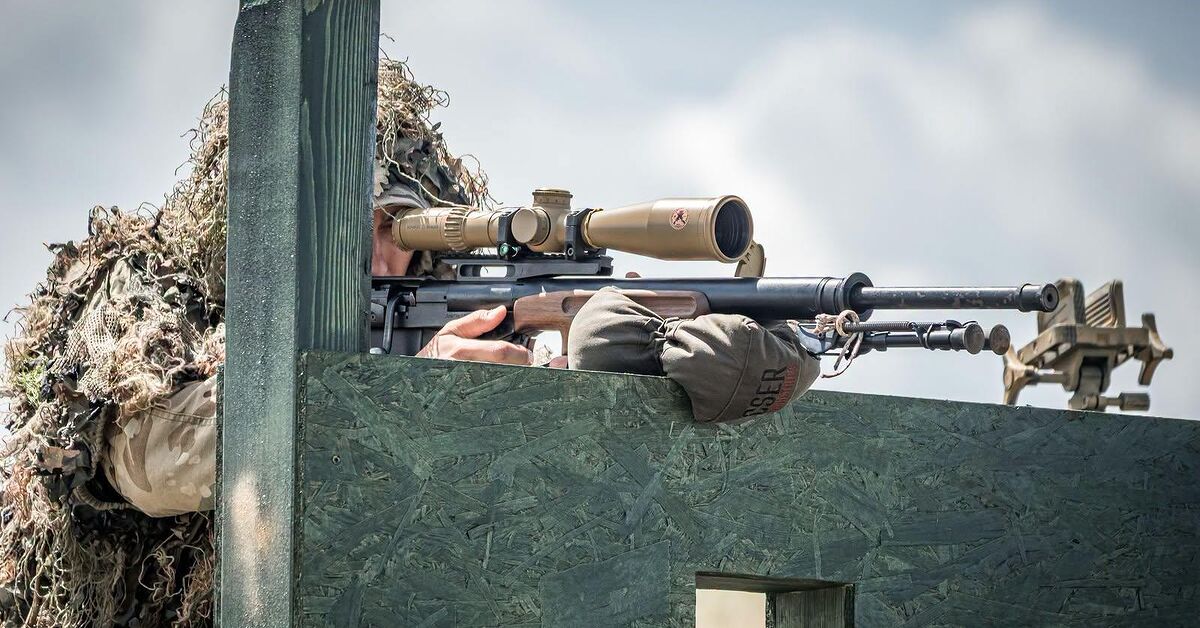
Hungary's military selected the Szép M1 bullpup rifle for field training operations, marking broader European interest in compact precision platforms. Designed in 2008 by Hungarian Army officer Ferenc Szép and manufactured by Bátori-Épszol Ltd., the M1 chambers 7.62x51 NATO and employs a rotary bolt with three frontal lugs. The bullpup configuration reduces overall length while maintaining full rifle barrel length and ballistic performance—a balance that appeals to militaries operating in confined spaces or mounted operations.
The rifle's design reflects post-2000s tactical thinking: maximize firepower in compact packages without sacrificing accuracy or reliability. Rotary bolt systems dominate modern military rifles because multiple locking lugs distribute firing pressure evenly across the bolt face. Three frontal lugs mean faster lock time and inherently stable bolt rotation under rapid fire.
Why It Matters for Gun Owners
The Szép M1 signals European manufacturers' confidence in bullpup ergonomics for serious applications. American shooters often dismiss bullpups as novelties, but Hungarian military adoption proves these layouts function reliably in high-round-count training. European armies don't experiment with unreliable weapons.
For daily carriers and precision rifle shooters, the M1's design teaches valuable lessons. Bullpups concentrate weight toward the shooter's body, reducing felt recoil during sustained fire. The 7.62x51 NATO chambering delivers terminal performance identical to M14 or FAL platforms—proven military calibers with decades of combat documentation. Training troops on the M1 means Hungary maintains ammunition interoperability with NATO allies, critical for logistics and supply chain stability.
The M1 also demonstrates that precision doesn't require piston systems or adjustable gas blocks. Rotary bolts paired with proper spring tuning produce sub-MOA accuracy without additional complexity. Fewer moving parts means fewer failure points during deployment.
American manufacturers should note Hungarian success. U.S. military special operations command periodically evaluates foreign designs for small-scale procurement. If Hungarian forces report high reliability and low maintenance costs, U.S. units might follow. That shifts market perception, influencing which rifles gun owners consider for duty or competition use.
Background: Szép M1 Development and Hungarian Military Needs
Ferenc Szép designed the M1 around 2008, when NATO militaries were transitioning from battle rifles to intermediate-caliber carbines. Hungary, however, maintained 7.62 NATO platforms for specific roles: designated marksman rifles, precision support weapons, and training systems for conscript armies. The M1 filled a gap—precision capability at intermediate range without the weight or cost of full sniper systems.
Bátori-Épszol Ltd. produces the M1 in small batches, limiting export availability. Hungarian military procurement favors domestic manufacturers when possible, supporting local defense industry. This strategy keeps technology and manufacturing expertise within national borders.
The bullpup layout became practical once ergonomic safety systems matured. Early bullpups suffered from awkward magazine changes and uncomfortable charging handles. Modern M1 controls position ambidextrous safeties and charging mechanisms forward, reducing operator fatigue during extended training cycles.
Hungarian Army training doctrine emphasizes marksmanship fundamentals over volume of fire. The M1's ergonomic design supports this philosophy—extended range work demands shooter comfort and precise control, not rapid cycling.
DownRange Bottom Line
The Szép M1 proves bullpup rifles deliver combat-grade reliability when properly engineered. Hungary's adoption validates rotary bolt systems and 7.62 NATO for precision applications. American shooters shouldn't dismiss foreign military rifles—they often outperform commercial copies. Watch for potential U.S. military interest; if it surfaces, the M1 becomes a reference design for civilian precision platforms.