Polish wz.43 Bent-Barrel Machine Gun Surfaces at Wrocław Museum
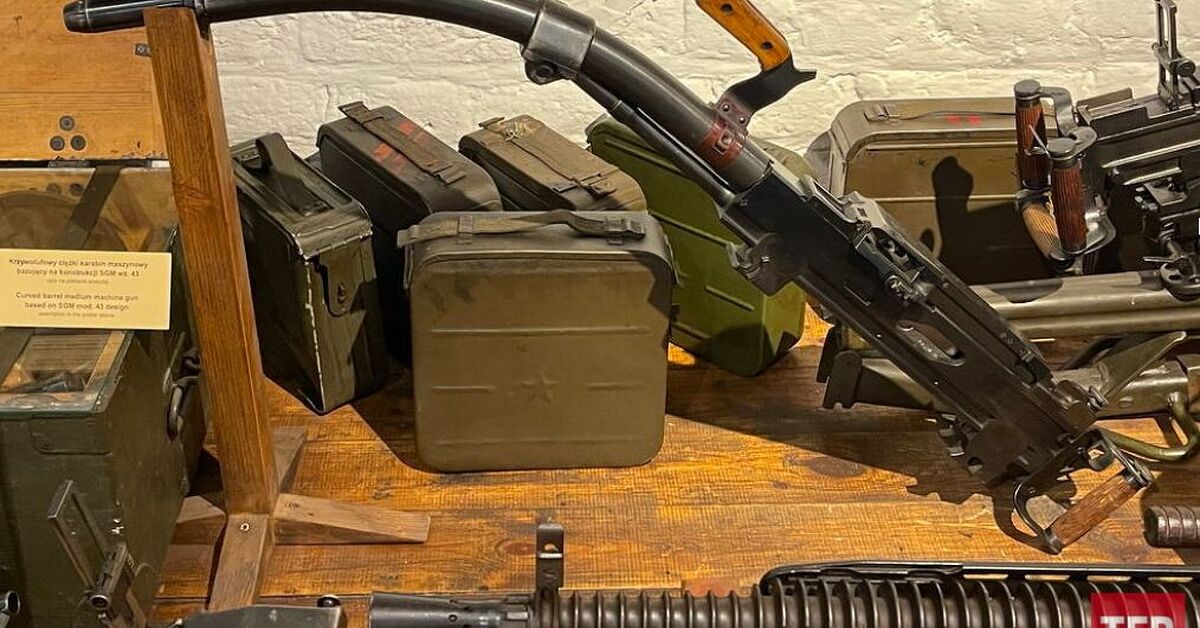
A rare Polish wz.43 machine gun with a deliberately bent barrel emerged at the Military Museum in Wrocław. The firearm is Poland's licensed production variant of the Soviet SG-43 Goryunov, chambered in 7.62×54mmR. This specific example departs radically from standard configurations, revealing purpose-built engineering for specialized tactical applications during or after World War II.
The wz.43 fired the standard Soviet rifle cartridge of its era. This specimen features a bent or angled barrel, distinguishing it sharply from conventional production models. Engineers designed the variant for firing around obstacles or through confined spaces—tactics employed in urban and bunker warfare scenarios where conventional shooting positions exposed gunners to enemy fire.
Why It Matters for Gun Owners
Bent-barrel firearms represent a largely forgotten chapter in machine gun development. Engineers across Soviet, German, and other nations explored this concept during the mid-20th century to enable gunners to fire from protected positions without exposing themselves. The wz.43 variant demonstrates how Warsaw Pact forces adapted captured and licensed weapons for specific combat demands.
The bent barrel principle sacrifices accuracy for tactical flexibility. Barrel bending degrades precision, increases wear on the barrel and bolt carrier, and creates significant manufacturing complexity. The wz.43 likely traded long-range accuracy for the ability to deliver suppressive fire from behind cover. Modern equivalents include corner-shot systems and periscope-fire attachments, though these external solutions avoid modifying the barrel itself.
For collectors and firearms historians, documented examples like this one grow increasingly rare. Original Warsaw Pact arsenals are dispersed, melted down, or destroyed. The Museum's acquisition preserves evidence of how desperate or innovative combat forces adapted existing platforms when new designs weren't available. The variant shows engineers working under material constraints and wartime pressure to solve immediate tactical problems.
Background on Polish Machine Gun Production
Poland manufactured the wz.43 under Soviet license after World War II. The Goryunov design was rugged, reliable, and chambered in the widely available 7.62×54mmR cartridge. Polish factories produced thousands of these weapons for the Polish People's Army and Warsaw Pact allies.
The bent-barrel variant never achieved widespread adoption across Soviet or Polish forces. Standard wz.43 production continued unchanged. This suggests the bent-barrel example was either an experimental prototype, a field modification tested by a specific unit, or a specialized variant produced in extremely limited numbers for specific applications.
The 7.62×54mmR cartridge remains in use today among Russian forces and some Warsaw Pact holdout nations. Understanding how engineers modified earlier platforms reveals the practical constraints and solutions military designers faced during the Cold War.
DownRange Bottom Line
The bent-barrel wz.43 demonstrates that even during peak industrial production, military forces tested unconventional solutions to tactical problems. The design never replaced standard configurations because the trade-offs—reduced accuracy, increased complexity, accelerated wear—outweighed the benefits for most applications.
Gun owners studying military history should recognize that innovation often fails for good reasons. The bent barrel solved specific problems in specific scenarios. Modern tactical solutions, from mounting systems to modular designs, accomplish similar goals more effectively without degrading reliability. The wz.43 variant remains valuable primarily as historical evidence of how military engineers approached the challenge of providing covering fire from exposed positions.