Remington Targets Suppressor Owners With Three New Cleaning Products
Remington has launched three new suppressor cleaning products and brought back its shotgun sweep sticks. The lineup includes the Remington Suppressor Cleaning Kit, standalone Suppressor Cleaning Tubes, and Suppressor Cleaning Fluid. The Firearm Blog reported the release on November 12, 2026. Remington pitches the gear at silencer owners, a group that has grown fast since suppressors lost most of their federal paperwork burden. Remington is not the only company chasing this market, but it is one of the few legacy names putting a full maintenance line behind it. Here is what each product does, what it costs you in practice, and where the paperwork claim needs a second look.
Key Details
Remington built its suppressor line around fouling removal and quick, repeatable cleaning. The details that matter:
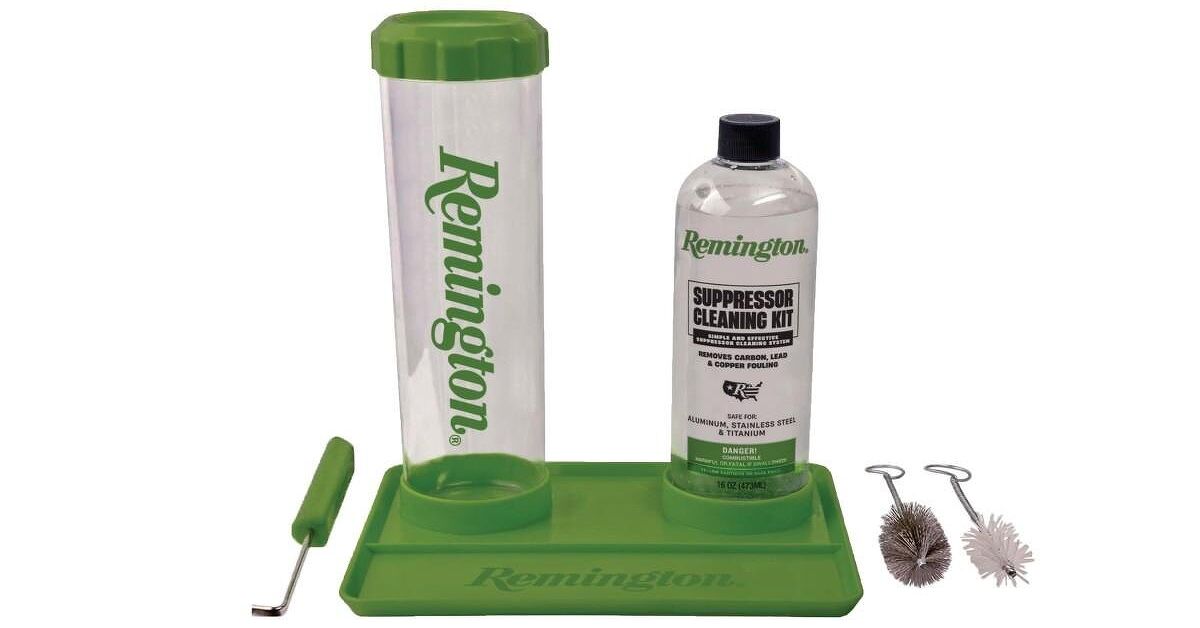
- Suppressor Cleaning Kit: One bottle of custom cleaning fluid, one cleaning tube, a cleaning tray, two brushes, and a pick. Remington says the components fit most suppressors.
- Suppressor Cleaning Tubes: Sold separately. You submerge the suppressor in a self-contained tube filled with solvent that loosens fouling and carbon buildup. Each tube handles three suppressors at once.
- Suppressor Cleaning Fluid: Sold in packs of two bottles. The fluid targets rimfire, handgun, and rifle suppressors.
- Sweep sticks: A long-handled brush for shotgun barrels, returning to the Remington lineup.
- Universal cleaning kits: Lightweight all-in-one kits for rifles in 22 LR, .25, .270, and .30 caliber; shotguns in 12, 20, and .410 bore; and pistols in 22 LR, 9mm, .40, and .45 caliber.
- Universal kit hardware: Aluminum T-handle rods with Mil-Spec 8-32 threading, brass brushes, cotton mops, nylon jags, patch loops, cleaning patches, adapters, and barrel muzzle guards.
- Dehumidifier: A mini-dehumidifier joins the gun care lineup for safe storage and humidity control.
The source describes buying suppressors with a simple 4473 and a standard federal background check. Treat that as a summary, not a legal checklist. The product details above are the verifiable part.
Background
Suppressors have been regulated under the National Firearms Act since 1934. For decades, buyers filed an ATF Form 4, paid a $200 transfer tax, and waited for federal approval. That tax made suppressors expensive to buy and slow to acquire. The One Big Beautiful Bill Act, signed July 4, 2025, cut the NFA tax on suppressors, short-barreled rifles, and short-barreled shotguns to zero, effective January 1, 2026. Congress did not repeal NFA registration. The tax change removed the $200 stamp, but the federal registration framework still governs how these items change hands. That distinction explains why the source's paperwork claim needs verification. Suppressor sales have climbed since the tax change, which explains why accessory makers like Remington are now chasing silencer owners with dedicated maintenance products.
Why It Matters for Gun Owners
If you own a suppressor, this release matters because cleaning is where most owners fall behind. Rimfire suppressors foul quickly, and baffle stacks lose efficiency when carbon and lead build up. A soak tube lets you clean the can without disassembling it on the bench, which saves time and reduces the chance of damaging baffles. Check the fluid against your suppressor manufacturer's instructions before soaking, because some makers warn against specific solvents and soak times. Buy the right kit for your calibers. A 9mm pistol kit will not clean a 30-caliber rifle can properly, and a rimfire-focused fluid pack may leave heavy fouling behind on a centerfire suppressor. Shotgun owners should look at the sweep stick and the 12, 20, and .410 bore coverage. Hardware owners should note that the 8-32 Mil-Spec threading matches the standard most cleaning rods use, which means your existing accessories may still work with the new rods.
DownRange Analysis
Cleaning products do not raise Second Amendment questions, but the regulatory context around them does. The Supreme Court's Bruen decision requires the government to point to historical tradition when it restricts arms. Suppressor regulation under the NFA has survived constitutional challenges so far, and cleaning accessories sit outside that fight entirely. The business story is simpler. Remington is betting that suppressor owners want one brand for fluid, tubes, and rods, and that the tax cut has created a larger buyer pool. Our advice is practical. Confirm your suppressor's current registration status and transfer paperwork before you assume a 4473 covers everything. Keep receipts for every NFA item and every accessory you buy. Match your kit to your calibers and your suppressor's maker instructions. Skip the marketing claims and read the label.