SIG's Kilo Warp 6K Ranged Past Its 1,700-Yard Deer Rating
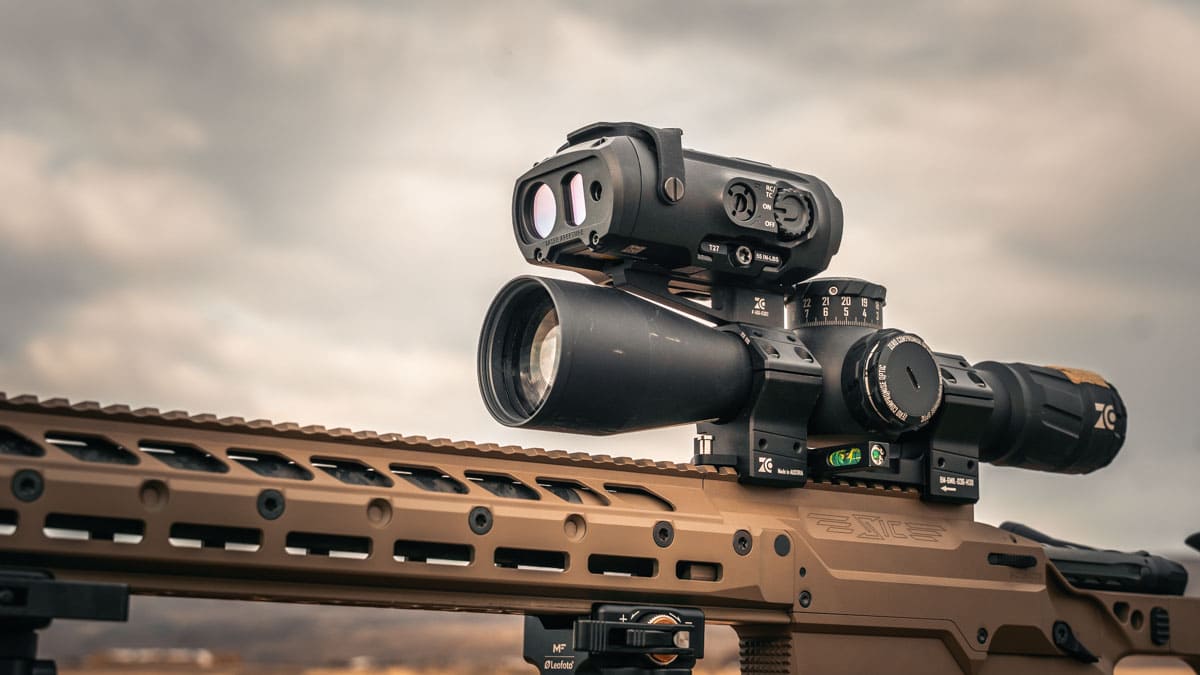
SIG Sauer's Kilo Warp 6K returned readings on black cattle beyond 1,700 yards during a GunsAmerica Digest field test. The reviewer mounted the weapon-mounted laser rangefinder on a Seekins Precision SIC rifle with a ZCO 4-20 riflescope, and the review went live on November 15, 2026. The unit combines an Applied Ballistics Elite solver with full onboard atmospherics. Its 1.8-inch daylight display sits on top of the rifle, so the shooter reads the range without lifting the gun from the shoulder. The reviewer's key finding is that the Warp reaches farther than its deer rating and still returns ranges fast. The 905 nm version is the one most hunters and precision shooters will buy.
Key Details
The review centers on the 905 nm Warp. Its beam measures 1.9 x 0.3 MRAD, which the reviewer confirmed with SIG and matched under night vision. Key specifications and test results:
- Reflective maximum: 6,000 yards in ideal conditions.
- Non-reflective ratings: 2,000 yards on trees and 1,700 yards on deer.
- Range response: 0.25 seconds, per SIG's rating.
- Scan mode: HyperScan refreshes four times per second, even past a mile.
- Close-range resolution: A tenth of a yard under 100 yards.
- Engine: LightWave DSP Gen II.
- Field test span: 478 to 1,028 yards.
- Steel and dirt: Instant readings out to roughly 1,450 yards.
A skyline target at 478 yards gave the reviewer trouble. The first press failed, and holding a hair lower on the target returned the correct range. Black, long-haired cattle absorb the beam and did not read every time, but the unit still returned ranges beyond the 1,700-yard deer figure. The reviewer also compared the Warp to a competing 2K weapon-mounted rangefinder under night vision. That rival's beam looked wider and dimmer, though the reviewer has not yet tested its ranging performance head-to-head.
SIG also offers a 1550 nm SWIR version. SIG rates its non-reflective range at roughly 4,000 yards, with 1 MRAD beam divergence and both Bluetooth and a wired remote option. The reviewer puts its price near $10,000.
Background
SIG has developed this rangefinder for more than five years and went through several design iterations. The reviewer reports that the Warp shipped after roughly two years on backorder. A housing problem on one version contributed to the delay. Both SIG models share the same software and menus. Only the laser changes between them.
The 905 nm wavelength is the standard for consumer rangefinders. It sits in the near-infrared band, so image-intensified night vision picks it up. The 1550 nm wavelength falls outside that band, so night vision will not show it. The 1550 also handles bright sun better, because solar washout degrades 905 nm units to some degree. Laser safety limits cap the energy a unit can emit through its objective. Within that cap, a smaller beam requires more power, a tighter stripe, or longer optics. SIG's own Kilo 10K line carries a tighter beam than the Warp, which the reviewer attributes to the tradeoff between size and divergence.
Why It Matters for Gun Owners
Anyone running a ballistic solver on a rifle will feel the difference this device makes. A rangefinder that mounts on the gun removes the handoff between a handheld unit and the trigger. The shooter ranges, reads the solution, and adjusts without breaking position. That matters in the field, where stalking shots often come at odd angles and short windows. Hunters who chase western big game past 1,000 yards will find the most value here. Owners of AR-platform and bolt-action precision rigs will also benefit, especially those already running Applied Ballistics software.
Buyers should watch three things. First, check whether the mount and scope combination clears the device's controls and display. Second, verify the ranges at known distances before you rely on them for a hunt. Third, read the rating table closely. The 6,000-yard figure applies only to reflective targets in ideal conditions. Deer and tree ratings matter far more when you plan a real shot.
DownRange Analysis
A rangefinder falls outside the scope of Bruen. Courts measure restrictions on arms against the Second Amendment's text and historical tradition. A ranging device does not bear arms, so no court will treat it as a firearm restriction. The regulatory risk that matters is laser output and export classification, and neither the review nor the spec sheet raises a current legal problem. The market case looks stronger. SIG's two-year backorder suggests real demand for integrated long-range hardware, and the 905 nm price point will test whether shooters pay for on-gun ranging over a handheld unit. Right now, a gun owner should do three things. Confirm the device fits your rifle and scope setup. Run the ranging at known distances before you hunt. And hold off on the SWIR model unless your work demands its bright-sun performance and extra range. For most shooters, the 905 nm version does the job.