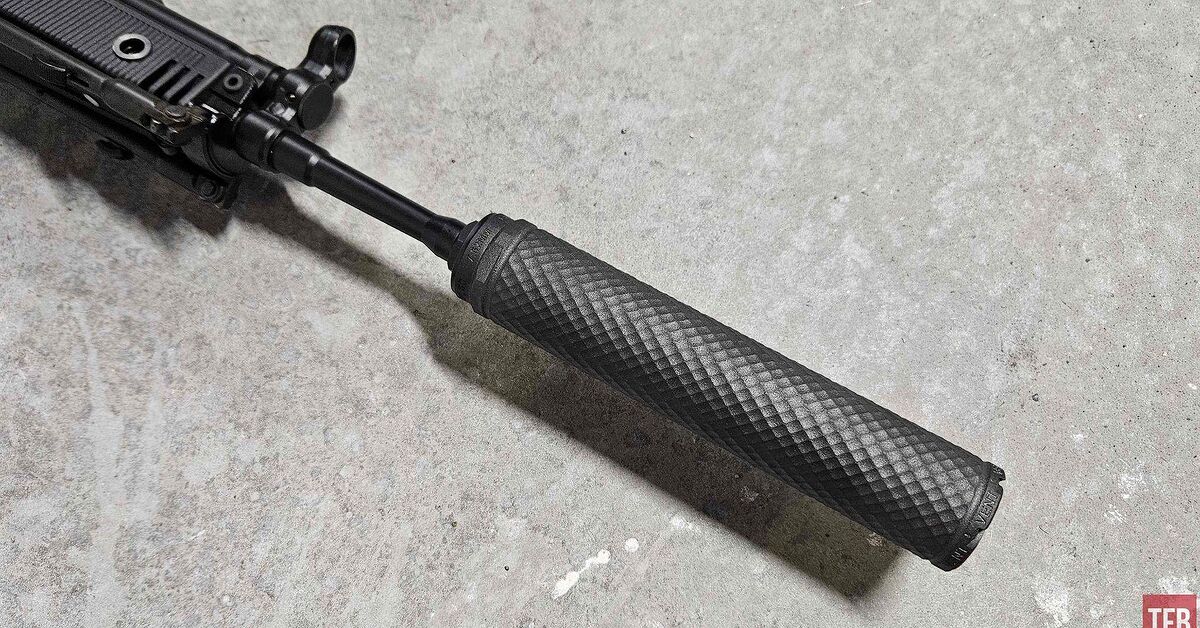
PTR's 3D-Printed Vent 1 Suppressor Jams on Its First Range Test
PTR's Vent 1 suppressor went onto a PTR91 for its first real range session, and a fired round stayed stuck in the chamber. It did not extract or eject. The test came from The Firearm Blog's Silencer Saturday series, published November 7, 2026. The reviewer ran the can late at night, in cold, rainy conditions, using Fiocchi 308 ammunition he had never run through that rifle. The 3D-printed can's internal design drew attention when PTR announced it. Yankee Hill Machine sponsors the series, and the reviewer says the malfunction involved several variables, not just the suppressor.
Key Details
The Vent 1 is a black metallic tube that looks like most other cans from the outside. Its difference sits inside. PTR builds the Vent series through a process called purposely induced porosity, or PIP, which varies the density of internal passages to meter gas flow. The reviewer compares it to layers of sponge, steel wool, or pumice, each allowing gas through at a different rate.
- Model: PTR Vent 1, first look, Silencer Saturday #457
- Manufacturing: Additive manufacturing (3D printing) using PIP
- Host rifle: PTR91, a roller-delayed rifle chambered in .308 Winchester
- Thread pitch: 5/8 x 24, which the Vent 1 threaded onto without issue
- Ammunition used: Fiocchi 308
- Malfunction: One fired round stuck in the chamber and did not extract or eject
- Sparking: Noticeable on a new titanium can, but far less than a second new titanium suppressor tested at the same time
- Maintenance: Light cleaning every 1,500 rounds, deep cleaning every 5,000 rounds, per PTR's manual
- Preferred cleaning: Ultrasonic cleaner and CAT 206 solution
The reviewer previously tuned the PTR91 for suppressed use with a specific locking piece. That piece also suits heavier bullets in the 168- to 175-grain range. He fired two shots before unloading. The bolt cycled hard enough that he worried about damage, which he says is common with roller-delayed guns running high-back-pressure cans. He plans to clean the rifle and retest with ammunition that has run reliably in it before.
Background
The PTR91 descends from the Heckler & Koch G3 family, which dates to late-1950s German design work. Roller-delayed actions depend on timing. Roller diameter and the angle of the locking piece set when the bolt unlocks. Factory calibration assumes unsuppressed use with 147-grain NATO-spec ball. Add a suppressor and the gas system changes, and the timing can shift with it. That is why owners often swap locking pieces and watch for dents in the receiver after firing.
Earlier, the reviewer ran a SilencerCo Spec War 762 on the same rifle. That can was a older, heavy steel design with numerous baffles and no back-pressure reduction features. The Vent 1 represents a different approach. PIP is not practical with conventional machining, which relies on drilled passages and defined flow routes. Additive manufacturing lets the printer build porous internal structures in one run. The tradeoff is cleaning. Clogged internal passages reduce the can's ability to move gas, so maintenance intervals matter.
Why It Matters for Gun Owners
Owners of roller-delayed rifles, including PTR91s, G3 clones, and MP5 variants, should pay close attention to any suppressor's back pressure. A can that runs too hot or too restrictive can overwork the bolt and stress the receiver. Owners of any suppressed rifle should understand that this first test did not clear the Vent 1 for general use. It also did not condemn it. A single jam with dirty ammunition in cold, wet conditions proves little on its own, but it proves enough to warrant caution.
Buyers considering 3D-printed or PIP-based cans should track maintenance. PTR's recommended interval of light cleaning every 1,500 rounds and deep cleaning every 5,000 rounds sets a higher bar than many shooters expect from a suppressor. If you run one of these cans, keep the cleaning kit close and document your round count. Gun owners in every state that permits suppressors face the same federal NFA paperwork and purchase process. The Vent 1's performance question matters more to the people who buy it than to any regulator.
DownRange Analysis
A jam on the first session does not sink a suppressor. The reviewer's own list of variables is real: dirty ammunition, a wet rifle, a new cartridge brand, and cold conditions. Still, a roller-delayed rifle has less margin for error, and the Vent 1 needs more shots before anyone calls it reliable. The sparking comparison is encouraging, but it does not address the feeding failure.
The market should watch the PIP design closely. If additive manufacturing delivers consistent back-pressure control at scale, it changes what shooters can expect from cans. If owners must clean at 1,500-round intervals to stay reliable, the convenience case weakens. Right now, if you own a Vent 1 or plan to buy one, run it on a known-good load in a dry rifle, clean it on schedule, and log every malfunction. Wait for full testing before you trust it with a hunting rifle or a defensive setup.