Taurus TX22 Braced Ships Folding Brace, No Manual Safety
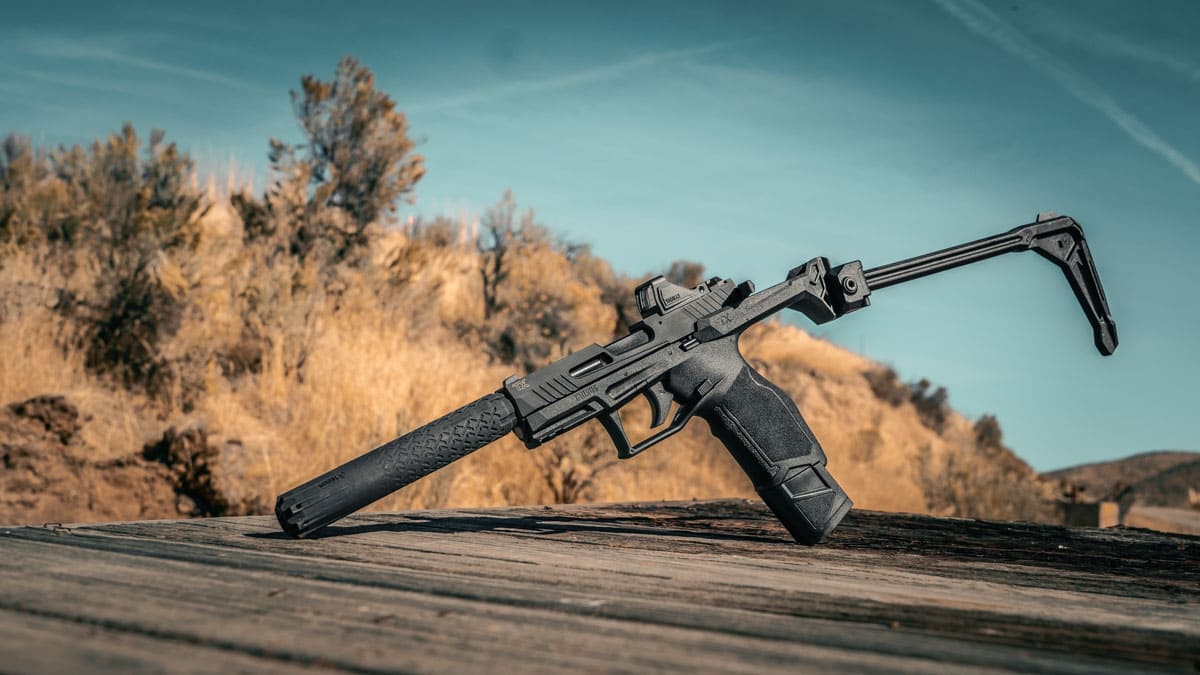
Taurus ships the TX22 Braced with a Strike Industries FSA Lite folding brace already mounted from the factory. The .22 LR pistol keeps an optics-ready slide, a reshaped lower and a rear extension that ends in a Picatinny rail. GunsAmerica Digest ran the gun through several hundred rounds and found it reliable on cheap ammunition. The reviewer also found two real problems: no manual safety and a collapse button that takes effort to press. Taurus offers the same platform brace-ready without the brace, and it sells a matching TTX22 suppressor.
Key Details
The review lays out the hardware and the range results. These are the facts that matter for a buyer:
- Brace: Strike Industries FSA Lite, folding, thinner than earlier Strike designs, installed from the factory.
- Rail adjustment: A Torx screw moves the brace up or down the Picatinny rail. The reviewer counts three positions.
- Magazines: One 22-round magazine with an extended base pad and one flush-fit 16-round magazine.
- Slide: Aluminum, with serrations, lightening cuts on both sides and a top window. It is cut for RMSc-pattern optics and comes with a cover plate.
- Sights: White dot front and serrated black rear.
- Charging handle: Fully ambidextrous, protruding on both sides.
- Controls: No manual safety. The collapse button is stiff, and the brace was tight to lock out of the box until it broke in.
- Optic performance: The reviewer mounted a Viridian green dot. The window collected carbon and became hard to see through after 300 to 400 rounds.
- Suppressor: The companion TTX22 is a titanium unit with a $299.99 MSRP.
Background
The original TX22 built Taurus's rimfire reputation. It runs a straight blowback action, which keeps the parts count low and helps reliability with cheap .22 LR. The Braced model extends that platform with an accessory rail and a folding stabilizing brace.
Braces rose to prominence after 2012, when ATF approved pistol braces for stabilizing pistols that shooters could fire from the shoulder. The agency later tightened its stance. Its 2023 rule that reclassified many braced pistols as short-barreled rifles was struck down in federal court, and the legal fight over braces has continued since. Brace-to-stock conversions carry their own legal risk, and ATF has issued guidance on that question that the reviewer calls worth reading closely.
Suppressor paperwork also changed. The 2025 federal reconciliation law reduced the $200 NFA tax on suppressors to zero for transfers after the effective date. Suppressors still require registration with ATF under the National Firearms Act, and the change lowered the cost of the process, not the requirement itself.
Why It Matters for Gun Owners
Buyers of braced .22 pistols face a practical question before they face a legal one: which configuration they will keep. A folding brace makes the TX22 Braced easy to carry and shoot, but it also creates a regulatory decision each time the owner changes the setup. Anyone who converts the gun to a stock needs to understand federal rules first. Then they need to check state law, because several states restrict short-barreled rifles and certain attachments independently of federal rules.
Owners in strict-law states should treat this gun as a pistol unless they have confirmed their status under local law. California and New Jersey, for example, regulate rifles and accessories tightly enough that a brace change can create problems that federal guidance does not address. Owners elsewhere should keep the parts needed to return the gun to its original configuration. Store the factory brace, the rail hardware and the magazines together. Document the purchase and the configuration. Watch for updates from ATF and from courts, since this area changes faster than most gun law.
DownRange Analysis
A removable brace on a rimfire pistol is a thin legal target. The Second Amendment question is simple: a pistol chambered in .22 LR for ordinary target and plinking use falls within the right to keep and bear arms. Under Bruen, the government must show that its regulation fits within the nation's historical tradition of firearm regulation. Short-barreled rifle classification of a braced pistol has no clear historical analog, and that gap is where courts have pushed back on ATF. The regulatory risk comes from classification and configuration, not from the pistol itself.
The market signal is clear. A factory brace, an optics-ready slide and a $299.99 suppressor in the same lineup tell buyers that the rimfire segment now sells as a complete system. Ignore the marketing and focus on the function. Test the magazines, the optic mount and the brace lockup before you trust the gun for defense training. Buy the TX22 Braced in pistol configuration, keep everything needed to restore it, and confirm your state's rules before you change anything.