TKX22 Costs $58 Over Its Parts — But Hollow Points Fail to Feed
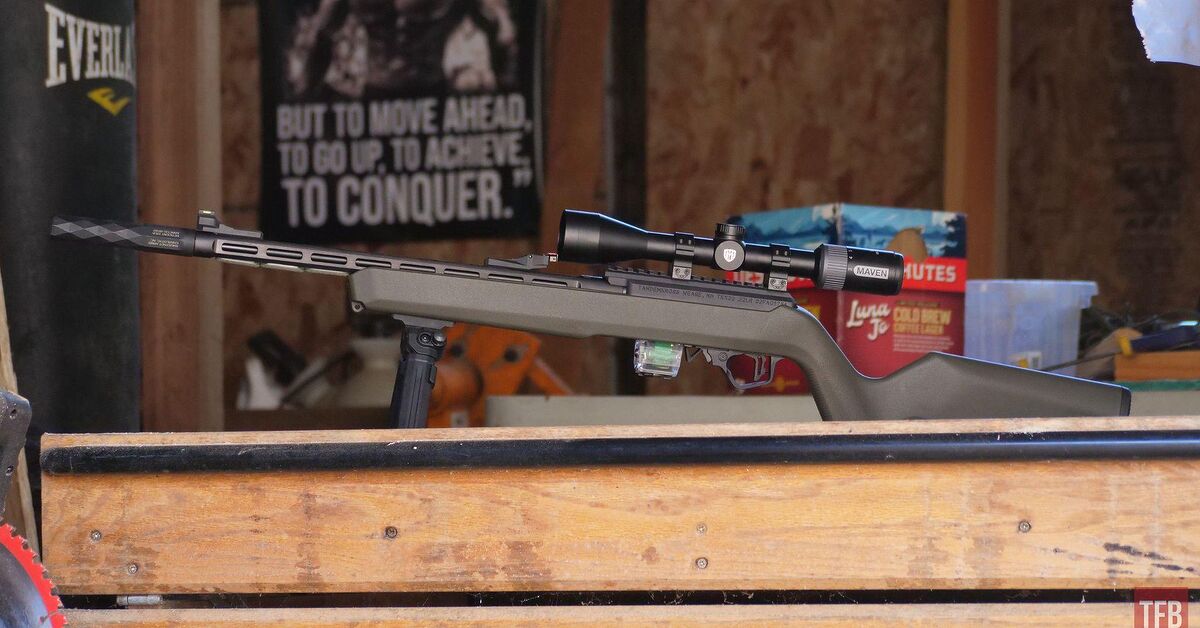
TANDEMKROSS priced its TKX22 Light Rifle at $1,449.99 MSRP, and online retailers already list it near $1,299.99. At that street price, the complete rifle costs about $58 more than buying its major components one at a time. The Firearm Blog's reviewer has fired roughly 2,500 rounds through it, and the most important finding is a feeding problem. Round-nose loads cycled from every magazine he tried. Hollow points did not. The rifle first appeared in April at Gunsite Academy in Arizona, where the reviewer shot first-production samples loaded with ammunition TK supplied, mostly CCI Standard Velocity and Mini-Mag. Since then, he has put more than 1,000 rounds through a rifle of his own, testing accuracy, accessories, and overall feel at home. This is TK's first complete rifle, and the central question is simple: what does $1,450 buy in a 10/22?
Key Details
The numbers that matter are the component total, the barrel, the trigger, and the feeding results.
- Pricing: MSRP is $1,449.99. Street pricing sits near $1,299.99. Current retail for the individual parts totals $1,241.88, before the V-block, pins, springs, and assembly labor.
- Weight: The Spitfire Lightweight barrel brings the rifle to 3 lbs 6 oz. TK sells that barrel separately for about $380 to $410, depending on length and coating. The shorter Comet barrel is aimed at builders converting to an SBR.
- Barrel design: A thin stainless core sits under tension inside an aluminum shroud, and the M-LOK slots are cut into that shroud.
- Trigger: The trigger adjusts from 2.5 to 5 lbs. The reviewer measured it at about 3 lbs on his scale and left it there.
- M-LOK fit: Slots are shallower than on a typical AR-15 handguard. Short hardware works. A KDG Kinect mount carrying a Garmin Xero C1 chronograph attached cleanly, and vertical foregrips fit. A SureFire light on an M-LOK adapter would not mount because the hardware contacted the barrel.
- Point of impact: With accessories installed, the reviewer saw little shift. TK's Spitfire notes warn that some fasteners may need shortening.
- Ammunition tested: CCI Green Tag, CCI Target Mini-Mag 40gr, Aguila Super Extra 40gr, CCI Clean-22 Suppressor 45gr, Remington Subsonic 40gr, a 500-round box of Remington Thunderbolt, and a 525-round box of Federal Champion 36gr copper-plated hollow points.
- Feeding: Round-nose loads fed from every magazine tested. Hollow points struck the rear of the chamber instead of feeding when run through the DoubleKross magazine shipped with the rifle, and the same happened in the reviewer's other 10/22s.
- Other magazines: Remington Subsonic and Federal Champion hollow points also had feeding trouble in Ruger BX-15 magazines, though less often than with the DoubleKross.
Background
Ruger introduced the 10/22 in 1964, and it became the most widely modified semi-automatic rimfire rifle in America. Its aftermarket is enormous. Builders swap triggers, bolts, barrels, stocks, and magazine releases constantly, and many own drawers full of parts for that purpose. Factory-complete versions of the platform have never been cheap relative to the basic rifle, which is why the parts-versus-complete math drives so much conversation. TANDEMKROSS is betting that buyers will pay a premium for a rifle assembled, fitted, and warranted as one unit, with components that are individually sold. The company's Spitfire barrel is the centerpiece. Its tensioned design differs from the usual floating handguard, and that design sets the limits on what can be mounted. The reviewer's feeding results show that the magazine ecosystem matters as much as the barrel. A rifle can look right on paper and still choke on hollow points if the magazine and bullet profile do not cooperate.
Why It Matters for Gun Owners
Three groups should pay attention. First, anyone deciding between building a 10/22 and buying this one. At $1,299.99 street, the $58 premium is modest, but the reviewer's feeding results mean a buyer should not assume every factory-style load will run. Second, anyone running hollow points for home defense or carry in a rimfire. Rimfire hollow points are a legitimate choice for some shooters, and this review shows that a rifle can fail to feed them even when round-nose ammo runs clean. Third, owners building an SBR around the Comet barrel. Any short-barreled rifle requires an NFA tax stamp and ATF approval before you cut or assemble it. Plan the paperwork before the parts arrive. Finally, anyone mounting a light, a chronograph, or a foregrip. Check fastener length before tightening anything. The shallow M-LOK slots limit what you can hang on the shroud, and a fastener that touches the barrel can change the rifle's behavior, or at least the rifle's zero, over time.
DownRange Analysis
Bruen does not touch this rifle. Nothing about a $1,300 rimfire raises a Second Amendment question, and the market decides whether TANDEMKROSS sells enough of them. The business case rests on convenience. You get a tuned trigger, a light barrel, and a rifle assembled and tested by one company, and the premium over parts is roughly the cost of a weekend of your own labor and a few mistakes. That is a fair deal for some buyers and a poor one for the builders who already own parts. Our advice is practical. Before you carry or depend on this rifle, run your intended hollow point through it and through every magazine you own, and write down what fails. If the round-nose ammo runs and the hollow point does not, load what runs. Shorten any M-LOK hardware before you install it, and keep heavy optics and lights off the shroud. Verify your zero after each accessory change. The rifle is well made on the evidence here. The feeding limits are the part you need to know before you trust it.