Shaw Barrels Delivers Custom .350 Legend AR With Regional Character
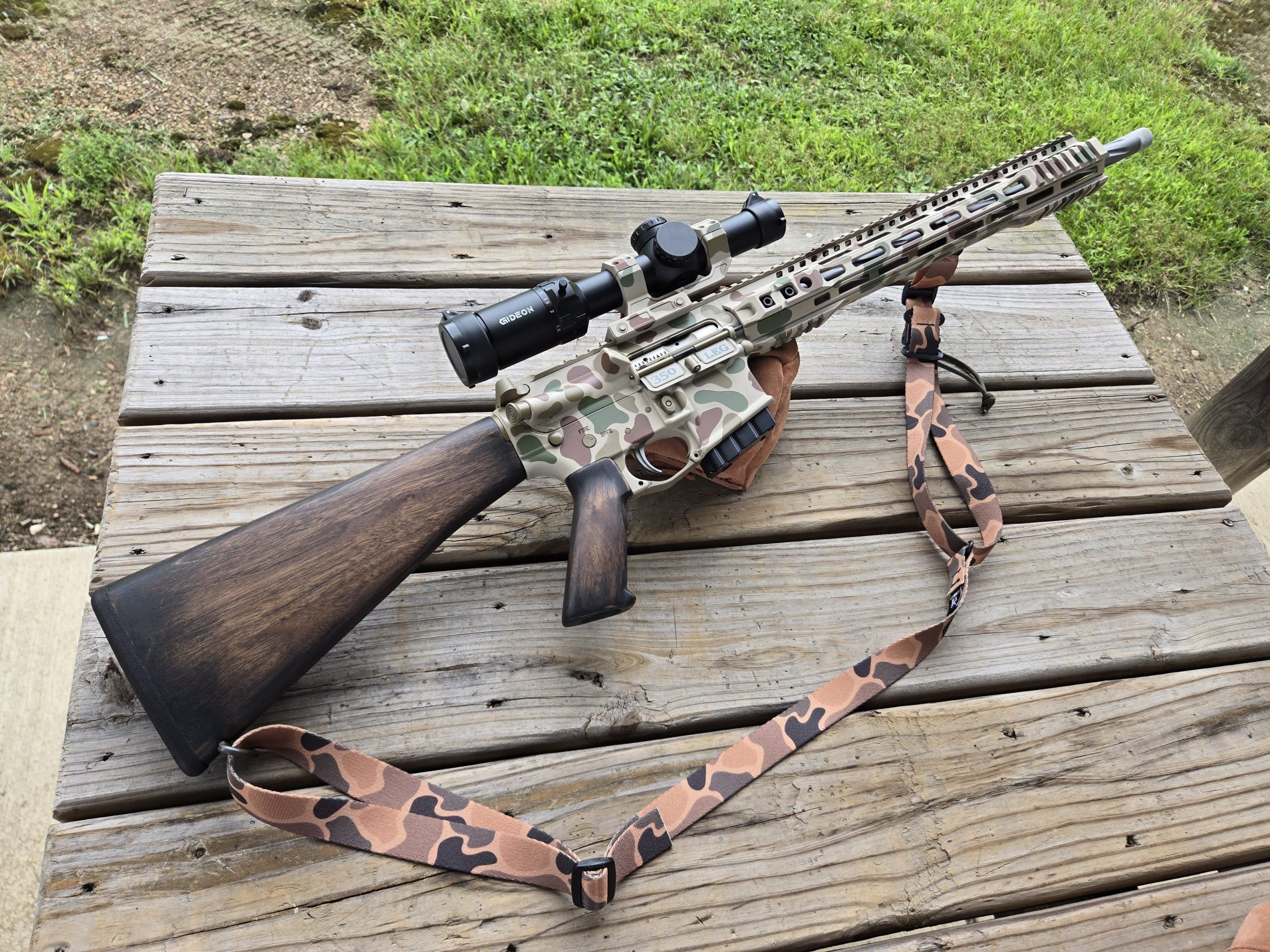
A Pennsylvania gunsmith built a fully functional .350 Legend AR-15 using Shaw Barrels components and vintage furniture. The build centers on a discontinued Shaw lower receiver paired with a modern Shaw upper chambered in .350 Legend. Frog Skin Cerakote finish and walnut grips give the rifle distinctly regional character absent from factory offerings.
The .350 Legend cartridge—released by Winchester in 2020—remains underutilized among AR owners despite ballistic advantages over .300 Blackout in certain applications. This custom rifle proves the caliber deserves serious consideration from hunters and target shooters seeking something beyond mainstream options.
Why It Matters for Gun Owners
Factory .350 Legend rifles remain scarce. Most shooters encounter the cartridge through specialty builds or custom gunsmiths. This Shaw example demonstrates that builders can execute professional-grade .350 Legend AR platforms without exotic parts or extended timelines.
The .350 Legend delivers 1,835 foot-pounds of energy at the muzzle—exceeding .45 ACP performance. Subsonic loads remain controllable in AR platforms without adjustable gas systems. Recoil impulse matches .308 Winchester in terms of shooter comfort, making the rifle suitable for extended range sessions.
Ammunition availability still lags mainstream calibers, but Winchester maintains consistent production. Reloaders find .350 Legend brass straightforward to process. Custom rifles like this Shaw build encourage ammunition manufacturers to invest in .350 Legend supply chains.
The choice of walnut furniture signals shifting aesthetics among serious AR owners. Polymer and aluminum dominate modern platforms, but wood-equipped rifles project different messages—traditional, purposeful, uncompromising. A Pennsylvania builder recognizing that market gap created a rifle with identity.
Background
Shaw Barrels operated for decades as a respected manufacturer of AR-15 components. The company produced quality uppers and lowers without mass-marketing campaigns, relying instead on word-of-mouth among precision shooters.
This particular build utilized a Shaw lower receiver no longer in production. Discontinued components often appeal to collectors and custom builders seeking rare elements. Pairing vintage lowers with current-generation uppers requires knowledge of dimensional standards and compatibility—skills that separate competent gunsmiths from novices.
Frog Skin Cerakote—a textured finish mimicking frog skin—provides superior grip texture without aggressive sharp edges. The finish resists corrosion and maintains color under UV exposure. Application requires proper masking and oven curing, meaning this rifle received professional finishing work.
The .350 Legend represents Winchester's attempt to establish a modern intermediate cartridge for AR-15 platforms. The round fits standard .223 magazines and operates at standard AR pressures. Barrel length optimization occurs around 16 inches, where .350 Legend achieves near-maximum velocity with manageable noise signatures.
Pennsylvania's hunting regulations accept .350 Legend for deer hunting in rifle zones. Some states still prohibit the cartridge, citing age of adoption or unfamiliarity. As custom rifles like this Shaw build gain visibility, state game commissions may reconsider restrictions.
DownRange Bottom Line
Custom AR builds prove manufacturers' design choices sometimes miss genuine market demand. This Shaw .350 Legend rifle exists because one gunsmith recognized shooter interest in the caliber and the appetite for rifles with character beyond tactical polymer aesthetics.
Niche calibers require niche ammunition and acceptance from the hunting and shooting community. As more professional builders produce quality .350 Legend platforms, ammunition manufacturers gain confidence investing in production capacity. Custom rifles accelerate that cycle.
The walnut and Cerakote combination differentiates this rifle from clone builds and factory options. Shooters increasingly want rifles reflecting personal identity and regional character. Pennsylvania gunsmithing tradition meets modern cartridge engineering in this Shaw example—proving that thoughtful custom work still drives the firearm industry forward.