A $260 Enclosed Vortex Venom Now Undercuts the Viper
Vortex lists its new enclosed Venom Micro Red Dot at $259.99, which is $110 less than the $369.99 Viper it sits beside on the shelf. GunsAmerica Digest published a 2026 buyer's guide on October 27, 2026, that pits the Viper, Venom, Razor, SPARC AR, and AMG UH-1 Gen II against each other. The guide starts from a simple premise: these five optics do not all solve the same problem. Two are slide-mounted reflex sights, one is a rifle tube, one is a large carbine sight, and one is a holographic unit that the guide treats separately. The price spread runs from $259.99 to $599.99, so the right pick depends on which gun needs the dot.
Key Details
The guide breaks down each optic by price, dot size, and intended platform. Specs below come from the manufacturer listings the guide cites.
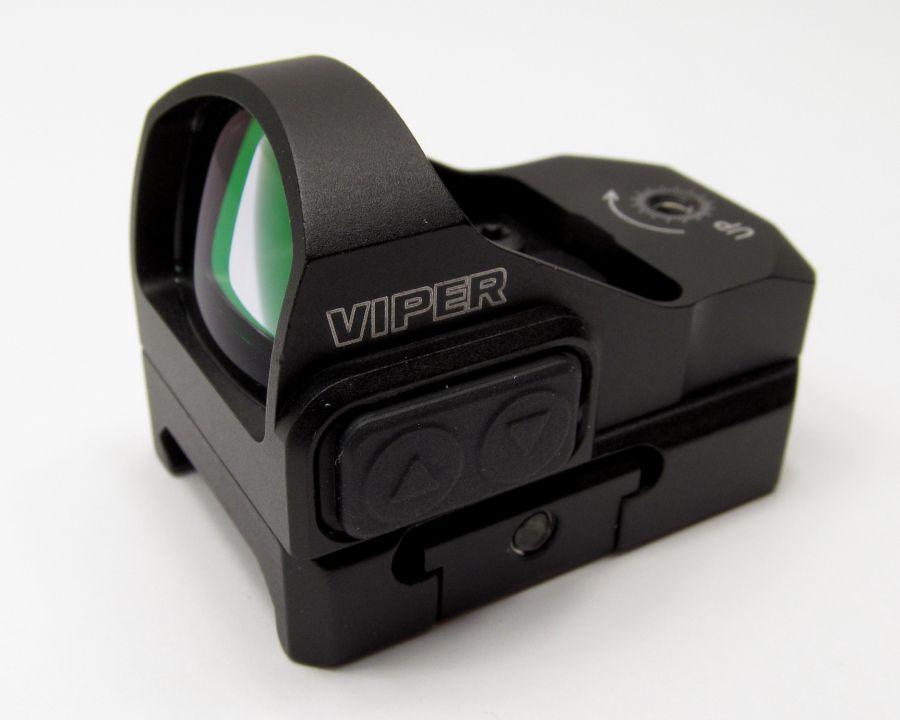
- Vortex Viper: $369.99 MSRP, 6 MOA dot, 1.8-inch overall length, CR2032 battery, 1 MOA click adjustments, and 120 MOA of total elevation and windage travel. The guide lists the optic at 1.03 ounces, while the original test spec of 1.1 ounces included the battery.
- Vortex Venom: $369.99 MSRP for the traditional model, offered with a 3 MOA or 6 MOA dot. Rated battery life runs up to 150 hours on the highest setting and up to 3,000 hours on lower settings.
- Venom Micro Red Dot: $259.99 MSRP, enclosed emitter.
- Vortex Razor: $599.99 MSRP, 3 MOA or 6 MOA dot, side-loading battery tray. Weight is 1.3 ounces without the included low Picatinny mount and 2.4 ounces with it. Vortex currently lists it as limited distribution.
- SPARC AR: $279.99 MSRP, 2 MOA dot, runs on a common AAA battery, rated at 50,000 hours. Ships with absolute co-witness and lower 1/3 co-witness mounts. Automatically shuts off after about 12 hours of inactivity.
- AMG UH-1 Gen II: a 1x holographic carbine sight. Larger than the others and not a conventional LED red dot.
Background
Red dots measure aim points in minutes of angle, or MOA. One MOA subtends roughly one inch at 100 yards. A 6 MOA dot therefore covers about six inches at that distance. That is why the Viper's big dot works well inside handgun distances and loses precision on a rifle at range. A 2 MOA dot, like the one on the SPARC AR, gives a finer aiming point for rifle work. Open reflex sights expose the emitter and lens to rain, mud, and debris. Enclosed designs add a shroud around the emitter, which trades some simplicity for protection. The Viper started as the low-profile handgun optic in this family. The Venom followed as a larger-window alternative, and the Razor sits above both. The Micro Red Dot added an enclosed option at a lower price than the traditional Venom, which changes the value math across the line.
Why It Matters for Gun Owners
If you carry a compact pistol with a slide-mounted optic, the Viper and Venom Micro are the two numbers to compare. The Viper gives you the lowest profile and a fast 6 MOA dot for defensive distances. The Micro gives you enclosed protection for $110 less, but check the dot size and window before you buy. If your pistol runs a 3 MOA dot and you already trust the open design, the traditional Venom's finer aiming point may matter more than the price gap. Anyone buying a Razor should expect to pay nearly $600 for a sight that Vortex says is in limited distribution. Check stock before you plan a build around it. For AR owners, the SPARC AR's $279.99 price and AAA battery make it the easiest rifle optic in the group to run and replace. Confirm the co-witness height on your carbine before you order. Mounting a pistol optic to a rifle or a rifle optic to a pistol gives you the wrong tool for the job. Read the mount specs first.
DownRange Analysis
Red dots are accessories, not regulated arms. Bruen does not touch the Viper or the SPARC AR, and no court will rule on a 2 MOA dot in the near term. The real questions are mechanical and practical. A cheap enclosed sight only earns its price if the seal holds in the rain and the battery lasts through a training season. The Micro at $259.99 puts Vortex's enclosed design in a price range that competes directly with budget brands, and that pressure will push other manufacturers to tighten their own pricing. For buyers, the move is simple. Pick the dot size first, then the housing, then the price. Mount the optic, zero it, and log the battery change date. Run the dot through a full cycle of drills before you trust it on a carry gun. A red dot you have not tested under rain, recoil, and a dead battery is still a guess.