SIG's P226 Went From SEAL Sidearm to Modern P226X Optics Cut
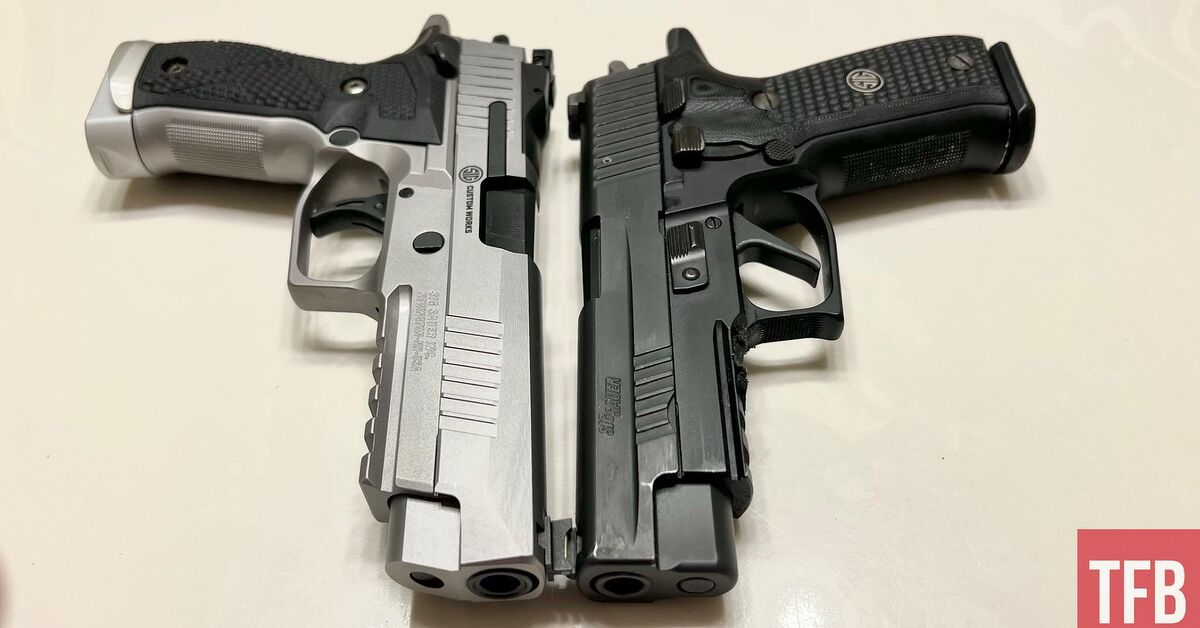
The Navy SEALs carried the SIG Sauer P226 as their standard sidearm from 1989 to 2015, when the Glock 19 replaced it on cost and modularity. The P226 started in the late 1970s as a double-stack sibling of the 9mm P220. It lost the Army's XM9 competition to the Beretta 92 on price, and the Army adopted the Beretta 92FS as the M9. Naval Special Warfare still picked the P226 for its operators, where it became the MK25. Its legacy now runs through the new P226X line, which adds an optics-ready slide and a Romeo X Pro option.
Key Details
The P226 history is full of numbers that matter to anyone who owns one or wants one. Here are the specifics from the source:
- 1986: A live-fire demonstration reportedly cracked and sheared the slide of a Beretta 92, which pushed Naval Special Warfare back to the drawing board.
- Selection criteria: Saltwater corrosion resistance, a chrome-lined barrel, and passing a 30,000-round test without mechanical failure.
- Glock comparison: Naval Special Warfare said at the time that the Glock was not durable enough for its needs.
- Trigger system: The standard P226 runs DA/SA with a decocker and no manual safety. The double-action pull typically sits between 8 and 10 pounds, depending on spring and configuration.
- DAK variant: A lightened double-action-only version with a 6.5-pound trigger, which feels closer to a modern striker-fired gun.
- Magazine: The original models shipped with a 15-round double-stack magazine and a flush-fitting base plate.
- P226 X-Five: The competition flagship with a heavier frame, a higher cut to lower the bore axis, and a single-action-only trigger.
- P226X: The new line borrows X-Five traits, offers an optics cut, and comes with a Romeo X Pro optic on some models.
Background
SIG developed the P220 in the late 1970s around a locking breech that set it apart from many contemporary designs. The P226 followed as its double-stack variant and became the pistol that gained real attention during the 1980s and 1990s. The XM9 trials put it head to head with the Beretta 92, and the Army's choice of the 92FS as the M9 is the reason most American service members of that era carried a Beretta rather than a SIG. The SEAL adoption gave the P226 its reputation for toughness. The Firearm Blog's writeup frames the gun's popularity as a function of that durability plus a crisp double-action trigger that many shooters preferred over the Beretta. Its earlier coverage of the Smith & Wesson 5906 drew the same pattern: a 1980s and 1990s 9mm that built a following on reliability, not marketing.
Why It Matters for Gun Owners
If you own a legacy P226, the most important issue is your magazine. The original 15-round magazines are legal in most of the country, but California, New York, and New Jersey cap magazines at 10 rounds. Owners in those states need compliant magazines or a configuration that complies with local law before they take the gun to the range or carry it. Buyers of used P226s should also confirm the variant. A DAK or DA/SA model with a decocker handles differently than a SAO X-Five or a P226X, and the trigger weight changes how you train. Anyone shopping for the P226X should check whether the optics cut matches the mounting plate they plan to use. Mounting a red dot on a slide without the correct plate is a common and expensive mistake. Finally, if you carry a P226 for duty or defense, shoot it with the magazine you plan to carry. The 8 to 10 pound double-action pull changes your first shot, and you should train that transition until it's automatic.
DownRange Analysis
The P226's story is about reliability, and that story does not depend on the courts. Under Bruen, the constitutional question is about the history and tradition of firearms regulation, and a pistol's military pedigree does not change the magazine analysis. A 10-round cap on a handgun that was built around 15-round magazines remains the real legal fight in these states. The market story is simpler. The P226X line gives buyers a modern, optics-ready duty gun with a known record, and that makes the used legacy models more valuable for shooters who want the original trigger feel. What should you do right now? Check your magazines against your state's law. If you own a P226, verify which trigger system it uses and train on it. If you're buying a P226X, mount your optic on the correct plate and run a full reliability test before you trust it for defense.