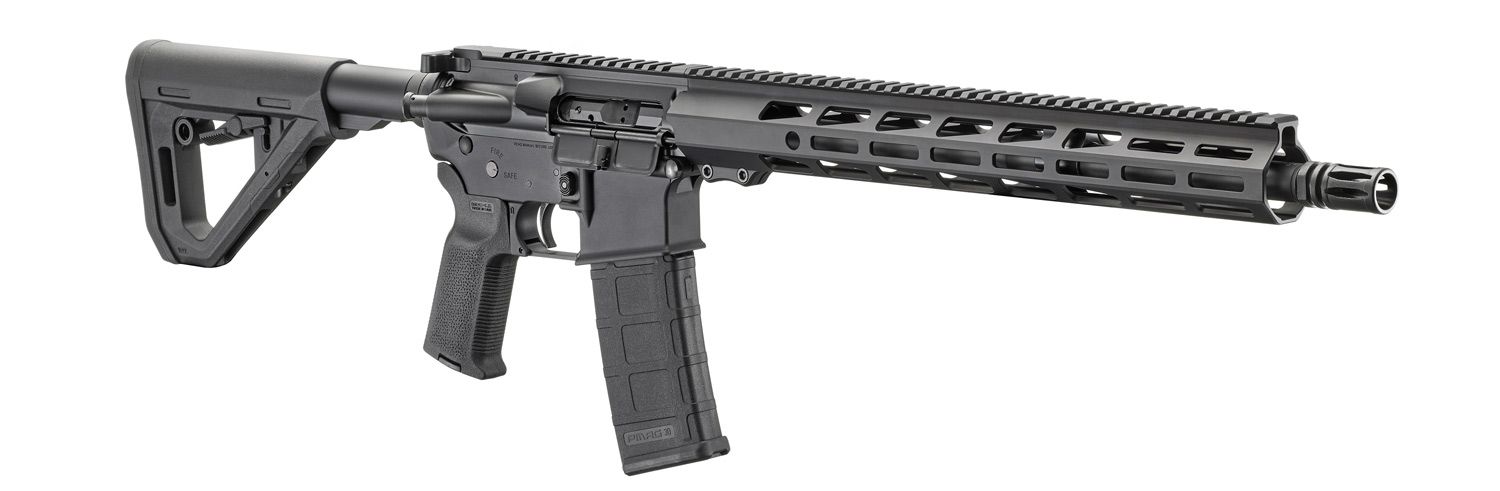
Ruger didn't update an existing AR when they built the Harrier — they redesigned the platform from scratch at a facility in Hebron, Kentucky. The result is an AR-15 that ships with features competitors charge $900+ to include: free-float rail, mid-length gas system, receiver tensioning, and a polished trigger, all at $699.
Receiver Tensioning
The party piece on the Harrier is Ruger's receiver tensioning system — a set screw that tightens the upper and lower receivers together, eliminating the wobble that plagues mil-spec AR-15s and that shooters have been buying aftermarket fit kits to fix for twenty years. On a $699 rifle, this is genuinely unusual. It tightens the overall feel of the platform, reduces mechanical noise, and contributes to accuracy by giving the barrel a more consistent harmonics baseline.
Gas System and Barrel
Mid-length gas system on a 16-inch barrel is the right call. Carbine gas length runs hotter and cycles faster than necessary, wearing parts and increasing felt recoil. Mid-length slows the bolt carrier velocity just enough to soften the cycle without compromising reliability. Ruger's cold hammer-forged barrel with a 1:8 twist handles everything from 55-grain to 77-grain projectiles without complaint.
The Competitive Picture
The Springfield Saint, IWI Zion-15, and BCM Standard are the primary competitors at this price point. The Harrier undercuts the BCM on price while matching it on gas system and barrel quality. What Ruger brings is domestic manufacturing, a nationwide dealer network, and their factory warranty support — which matters when something goes wrong three years from now.
Specs
Caliber: 5.56 NATO / .223 Rem | Barrel: 16 inches, cold hammer-forged | Gas system: Mid-length | Handguard: Free-float M-LOK | Trigger: Polished, single-stage | MSRP: $699
Bottom Line: The Harrier is what a $699 AR-15 should have been for the last decade. Ruger finally built it.