
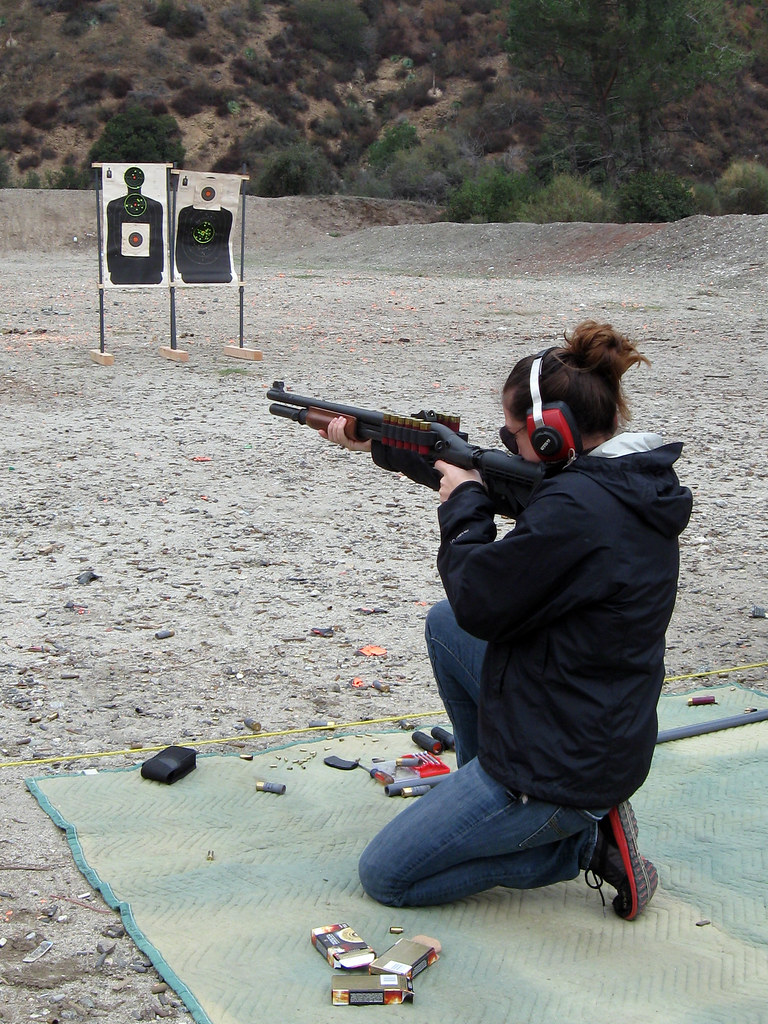
Colonel Jeff Cooper, founder of Gunsite Academy and one of the most influential firearms trainers of the 20th century, codified the Four Rules of Firearms Safety. They are not guidelines. They are not suggestions. They are the framework that prevents negligent discharges from becoming tragedies. Every single firearms accident can be traced to a violation of at least one of these rules.
Rule 1: Treat All Guns as if They Are Loaded
This is the first and most important rule because it is the mental foundation for all the others.
This rule does not mean "check if your gun is loaded and then treat it as unloaded." It means treat every firearm, every single time, as if it has a round in the chamber — regardless of whether you just checked it, regardless of whether you "know" it's empty.
Why this matters: The vast majority of negligent discharges happen when someone has "verified" their gun is unloaded. They put it down, pick it up later, and squeeze the trigger thinking nothing will happen. Something does happen.
Every time you handle a firearm, your brain should default to: this gun is loaded. This habit eliminates an entire category of accidents.
Rule 2: Never Point the Muzzle at Anything You're Not Willing to Destroy
The practical implication: This rule governs how you carry a firearm, how you hand it to someone, how you set it down, and how you store it. Muzzle discipline is something that experienced shooters can spot immediately — good muzzle discipline marks a responsible gun owner.
"Muzzling" someone — sweeping them with your muzzle even briefly — is a serious safety violation that will get you removed from any professional shooting course.
Rule 3: Keep Your Finger Off the Trigger Until Your Sights Are On Target and You Have Decided to Shoot
At all other times, your trigger finger lies straight along the frame above the trigger guard. This is called "trigger discipline" or "register" — your finger is registered along the frame.
Why this is hard: Modern pistol triggers are light — often 4–6 pounds of pull. Under stress, your grip tightens. Without discipline, a tightening grip can pull a trigger. This is called a sympathetic squeeze and it's responsible for many law enforcement accidental discharges.
Practice: Every time you pick up a firearm, immediately establish trigger discipline. Your finger should automatically go to register. This becomes muscle memory with practice.
Rule 4: Know Your Target and What Is Beyond It
A bullet does not stop at your target. A bullet that misses your target continues until it hits something. A bullet that passes through your target continues until it hits something.
This rule has two components:
Know your target: Positively identify what you are about to shoot. This is critically important in home defense scenarios — you must identify the threat before you fire. Shooting an unidentified shape in a dark hallway has killed family members.
Know what's beyond: What is behind your target? What is in that direction for the next half mile? Even inside a home, a 9mm FMJ round can penetrate multiple walls and injure someone in another room.
This is why defensive ammunition selection matters — modern hollow point bullets expand on impact, reducing penetration. It's why backstop selection at a range matters — you need a safe direction to fire in.
The Safety Math
The reason these four rules are so powerful is their redundancy.
Rules 2 and 3 together mean: even if you have a negligent discharge (rules 1 violated), no one gets hurt because the muzzle isn't pointed at anyone (rule 2) and your sights are on a safe target (rule 4).
Rule 1 means: even if you somehow break rules 2-4, you approach every firearm knowing it might fire.
For an accident to injure someone, a shooter must violate multiple rules simultaneously. Follow all four and the system is extremely robust. This is why professionals don't have accidents — not because they're more careful, but because four-rule compliance is so ingrained they don't have to think about it.

DJ Cavalcanti founded DownRange on a simple idea: the Second Amendment community deserves better information. He built the platform to make firearms news, state gun laws, legal developments, and market intelligence freely available to every gun owner — in one place, updated constantly.