
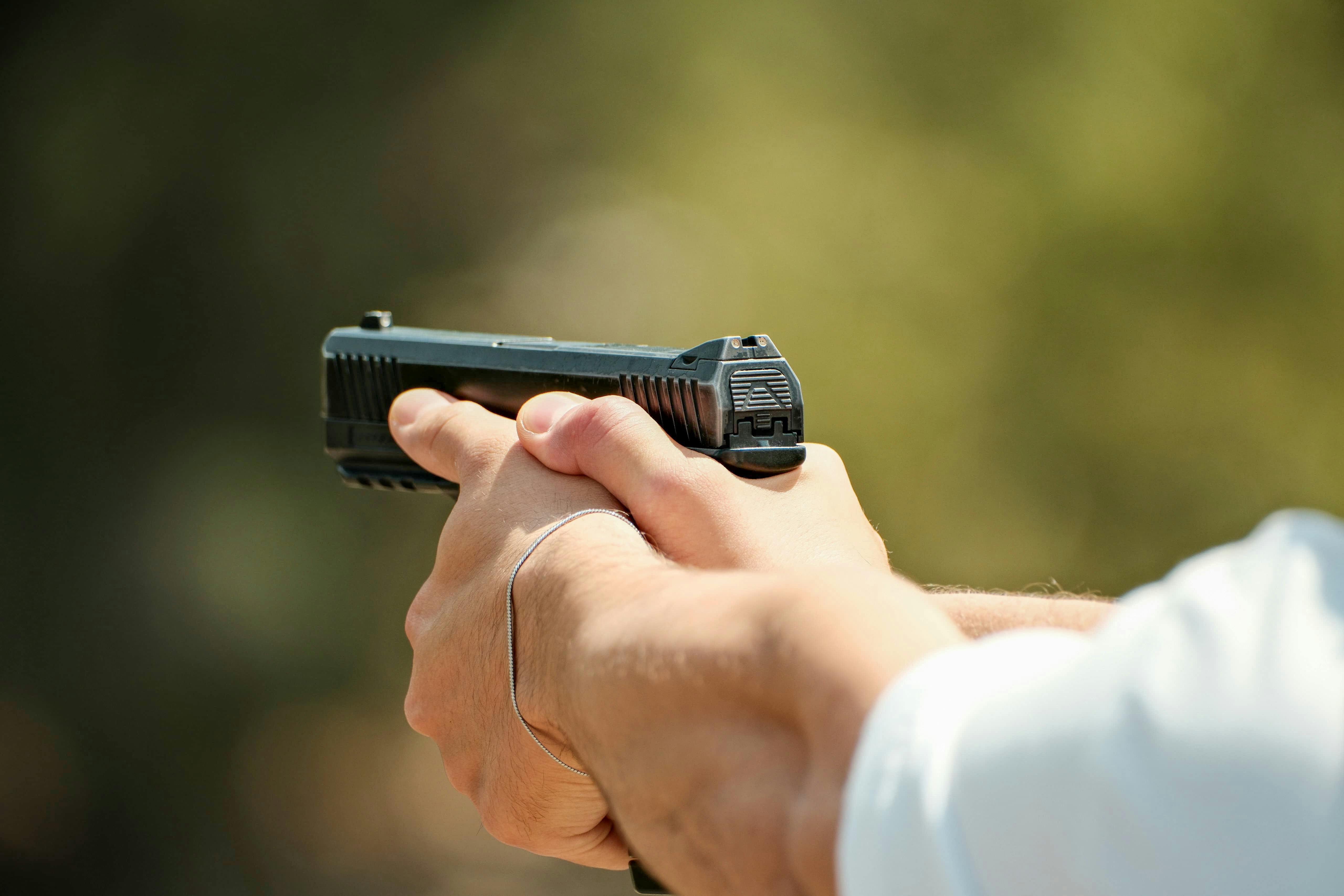

I Put a Red Dot on My EDC and Everything Changed
Three years ago, I was one of those guys. Iron sights only. Carry gun, backup gun, rifle—all irons. I'd trained that way for fifteen years. Then I shot a match with a buddy's Glock 19 MOS wearing a Trijicon RMR and I couldn't unsee it. My first shot was faster. My follow-ups were tighter. By the end of that day, I knew I was wrong.
The red dot on a carry gun isn't a gimmick anymore. It's not mall ninja stuff. Half the guys I trust most in the 2A space are running them now, and the manufacturers have figured out how to mount them without turning your pistol into a competition gun. I spent the last two years testing setups, mounting systems, and training protocols. This is what I learned.
How We Got Here: The Optics Revolution Hit Handguns Late
Rifle optics have been standard since the early 2000s. Shotgun optics since the '90s. But handgun optics were always niche—competition shooters, duty cycles with unlimited budgets, that crowd. The problem was practical: optics were too big, battery life was questionable, and mounting systems required gunsmithing.
Trijicon changed things with the RMR in 2007. It was small. It held zero. It was tough. But it still required a milled slide, which meant sending your carry gun to a gunsmith and waiting six weeks. Most of us weren't doing that.
Then manufacturers started building MOS (Modular Optics System) platforms into production pistols. Glock started with the Gen 5 MOS line. Smith & Wesson did the same with M&P models. Springfield added it to their XDs. Now you can buy a carry gun and bolt a red dot on in five minutes with an Allen wrench.
That changed everything. The barrier to entry collapsed.
What This Means for Gun Owners: You're Making a Choice Right Now
If you carry a gun for self-defense, you need to decide: irons only, or optics-ready? You're not choosing between equal options anymore.
A red dot gives you faster target acquisition. Your eye doesn't have to align three elements—front sight, rear sight, target—it has to find one dot and press the trigger. In stress testing and force-on-force training, that translates to rounds downrange faster and more accurate. There's no debate here. The data is clear.
The tradeoff is zeroing and maintenance. A red dot needs a battery. It can fail. It can break. Irons never stop working. That's not nothing. But modern dots—Trijicon RMR Type 2, Leupold DeltaPoint Pro, Holosun 507K, SRO—are remarkably reliable. Thousands of rounds. Years of deployment. They hold up.
The second tradeoff is training. If you switch to a carry optic, you have to actually use it at the range. You can't just show up with one gun and shoot the same way you always have. Your draw changes slightly. Your presentation changes. Your sight picture changes. That takes time. I spent three months with my carry setup before I felt solid. Some people need longer.
My take: if you shoot regularly—once a month minimum—move to a carry optic. If you shoot twice a year, stick with irons. The technology is good enough that reliability isn't the issue anymore. Commitment is.
Mounting: The Practical Details
You have three paths. MOS or similar factory-cut systems are the easiest. No gunsmithing, no mail-order nightmare. You buy a mounting plate for your optic and your slide—most RMRs run $60–$120 for the plate—and bolt it down. Done.
Milling a slide is the traditional route. It's still the most rock-solid mounting method. Gunsmiths charge $350–$500. Turn-around is usually 3–6 weeks depending on the shop. I used Jagerwerks for my Sig P365 XL. They milled the slide for an SRO and it's been flawless. The expense is real, but you're getting a permanent installation that doesn't depend on plate tolerances.
RMSc and other direct-to-slide optics skip the mounting plate entirely. Trijicon makes the RMSc specifically for small guns. Holosun makes the 407K and 507K versions that mount the same way. Leupold has the DeltaPoint Pro Micro. These bolt directly to the slide without a plate. Less bulk. Less to zero in. My carry P365 uses a 507K this way and it's rock solid.
Zeroing is straightforward. Shoot at 7 yards, adjusting your dot to hit point of aim, point of impact. I zero my carry guns at 7 yards, which gives me usable accuracy out to 25. For self-defense distances—almost all encounters happen under 10 yards—that's more than enough.
Training: This Is Where Most People Fail
You can't just add a red dot and shoot the same way. Your draw has to change slightly because you need your head slightly higher in the gun's frame to see the dot. Your sight picture is now a red dot on a target, not three aligned elements. Your presentation takes a few extra millimeters of movement.
I trained force-on-force with my carry optic at a facility near me. Two weeks into it, I realized I was still expecting to find my irons if something went wrong. That's the mental shift that's hard. You have to believe in the optic. You have to trust it won't fail. Most people never do that training. They just assume it'll work if they need it.
My suggestion: take your carry gun to a pistol class specifically designed around red dots. Paul Gomez and Darryl Bolke have courses centered on this. Or find a local instructor who trains optics-equipped pistols regularly. Spend 500 rounds with your setup. That's the baseline before you trust it to your life.
The Industry Is All-In Now
Five years ago, optics on carry guns were a niche. Now every major manufacturer offers MOS or equivalent systems. Holosun is flooding the market with affordable optics—$200–$300 for a good 407K or 507K. Trijicon and Leupold own the premium space, but they're not the only game anymore.
What's interesting is that this has made iron sights better. Suppressor-height irons became standard for optics co-witnessing. Night sights are brighter. Pistol manufacturers are rethinking stock sights because they know a significant percentage of buyers will be running optics.
I'm watching to see how law enforcement adopts this. The military went this direction years ago. Most serious police departments are still split on it. That's changing. NYPD tested carry optics. Other agencies are following. If adoption accelerates there, it signals that the technology is genuinely mature.
Where This Goes
The red dot on a carry gun is no longer experimental. It's the direction the industry is moving. That doesn't mean everyone should do it. But if you're building a carry gun today and you shoot regularly, you're choosing irons for tradition, not for technical superiority.
The guns are better. The optics are better. The mounting systems work. The only variable left is whether you're willing to train differently. That's the real question. Not the technology. You.