
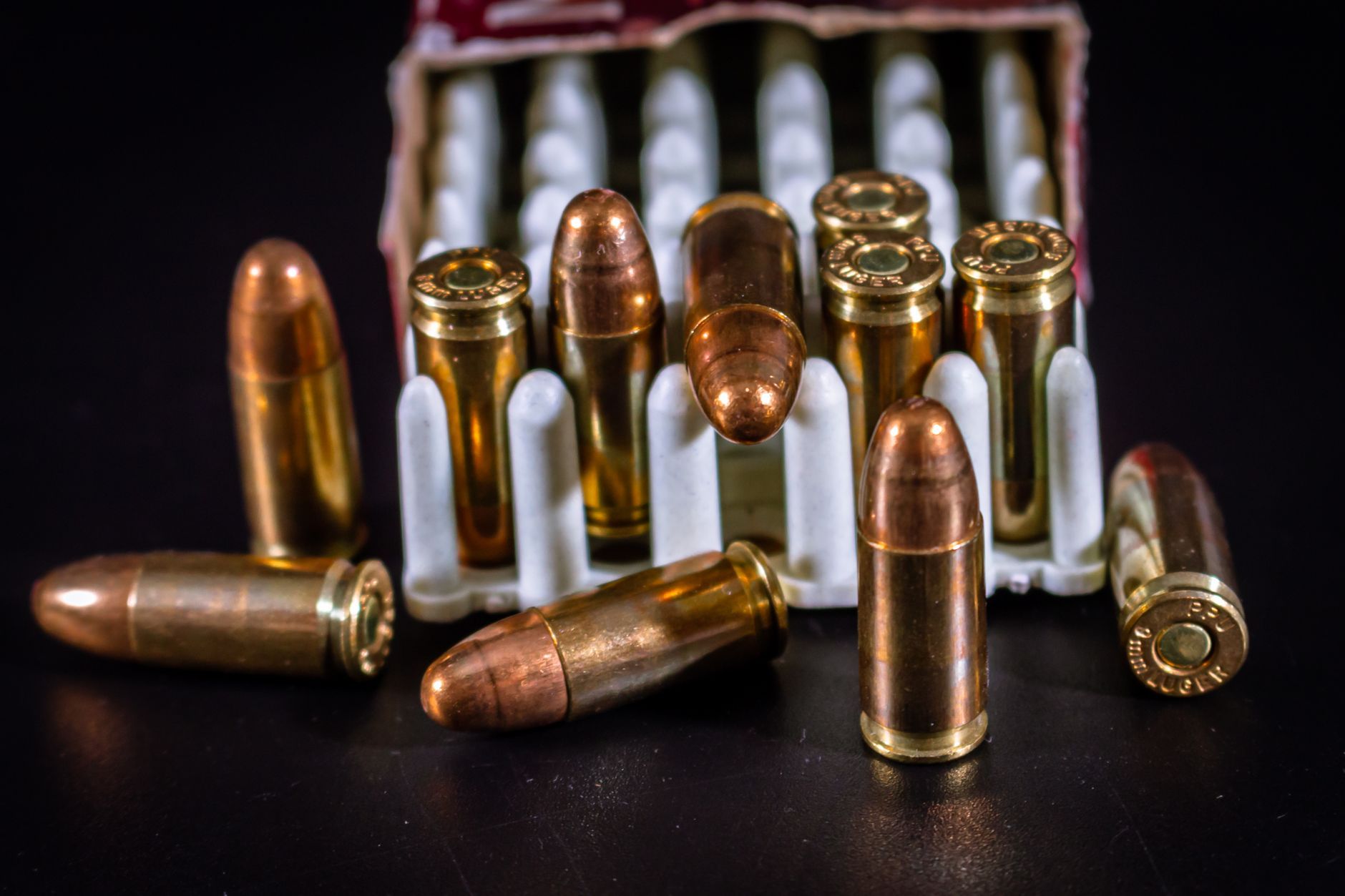
What Cartridge Wins for Your Game: The 2025 Canadian Hunter's Reality Check
The .30-06 Springfield is still the king of moose country, and I'm not saying that because it's traditional—I'm saying it because it works, ammunition is available at every Canadian gun counter, and a 180-grain Federal Power-Shok will drop a 1,200-pound bull dead if you place it right. That's the starting point for any serious conversation about hunting cartridges in Canada in 2025. The .30-06 does everything: moose, elk, deer, and it's cheaper than most premium magnum rounds. At Canadian retailers like Cabela's Canada and Wholesale Sports, you're looking at $1.40 to $1.80 per round for quality factory loads. For a guy who hunts multiple species and doesn't want to stock three different calibers, this is your answer.
The .308 Winchester (7.62×51 NATO) is the practical alternative. It generates less recoil than the .30-06, uses shorter actions that cycle faster, and ammunition is even more available because of military and police supply chains. I've taken moose with Federal .308 165-grain soft points, and they perform identically to .30-06 loads on game. Pricing is slightly better too—roughly $1.25 to $1.60 per round at Cabela's Canada and MidwayUSA's Canadian site. The trade-off is a 100-150 fps velocity loss, but at typical moose hunting ranges (under 200 yards in brush), that doesn't matter.
Now, if you're hunting open country or targeting animals at distance, the .300 Winchester Magnum and 7mm Remington Magnum enter the conversation. The .300 Win Mag is the cartridge you choose when you want flatter trajectory and more energy retention past 300 yards. Federal Premium ammunition in .300 Win Mag (180-grain Trophy Bonded) runs about $2.10 to $2.50 per round at Canadian retailers. The 7mm Rem Mag is slightly cheaper (roughly $1.90 to $2.20 per round) and kicks less, but the .300 Win Mag remains the standard for serious long-range moose hunters. I prefer it for Rocky Mountain terrain where you might glass and stalk animals at 400+ yards.
Deer: Smaller Caliber, Faster Shots
For whitetail and mule deer, most Canadian hunters are overthinking it. The .243 Winchester will cleanly kill any deer in North America if you shoot it well. Factory ammunition is abundant and affordable—Remington Core-Lokt and Federal Power-Shok rounds run $0.90 to $1.30 per round. A 100-grain bullet from a .243 at 2,960 fps has enough energy and penetration for deer out to 300 yards. It's also the perfect starter rifle for younger hunters because recoil is mild enough that kids develop good shooting habits instead of flinching.
The 6.5 Creedmoor has gained real traction since 2020, and it's legitimate. It shoots flatter than the .243, retains more energy at distance, and ammunition availability has improved dramatically. You can now find 140-grain Federal Premium and Hornady Precision Hunter rounds at most Canadian gun shops for $1.60 to $2.10 per round. If you're hunting open prairie or mountains where deer are spotted at 250+ yards, the 6.5 Creedmoor gives you an edge. It's also a genuinely pleasant rifle to shoot compared to larger magnums.
The .30-30 Winchester deserves mention because it's still the most common deer rifle sold in Canada. It's brush-country medicine—short range, fast-handling, and deadly from 50 to 150 yards. Ammunition is everywhere, cheap ($0.85 to $1.25 per round), and lever-action rifles chambered in .30-30 are affordable on the used market. If you hunt thick boreal forest or mixed timber, nothing moves faster or points quicker than a Marlin or Winchester .30-30.
Bear: Power and Penetration Non-Negotiable
The .338 Federal is the cartridge I recommend most to hunters who might encounter bears. It's not as punishing as a .338 Lapua Magnum, but it delivers the energy and penetration a bear demands. A 210-grain bullet at 2,630 fps will drive completely through a black bear, which is what you need when a wounded animal charges. Federal Premium ammunition in .338 Federal runs $2.30 to $2.80 per round at Cabela's Canada and Wholesale Sports.
The .45-70 Government has become the short-range bear medicine of choice in many provinces. It's legal for bear in Ontario, Alberta, and BC, and ammunition like Federal Premium 300-grain soft points ($2.10 to $2.60 per round) will absolutely anchor a bear at 100 yards or less. Lever-action rifles chambered in .45-70 handle quickly and deliver the stopping power needed in a crisis. This is also the cartridge of choice if you're hunting brown or grizzly bears in northern BC or Yukon—nothing penetrates and absorbs impact like a .45-70 at close range.
Waterfowl: Steel Shot Rules Everything
Steel shot is mandated for all waterfowl hunting across Canada—no lead, period. You need a shotgun with a steel-rated barrel (marked "steel safe" or "steel shot"), and ammunition choices are extensive. Federal Steel Shot and Remington Slugger steel loads run about $0.75 to $1.10 per round for 12-gauge 2¾-inch shells. For geese and distant ducks, 3-inch or 3½-inch magnum steel loads are standard, and pricing climbs to $1.20 to $1.60 per round. Choose #2 or #3 shot for ducks, BBB for geese.
Wolves and Coyotes: .223 and .22-250 Dominate
The .223 Remington (5.56 NATO) is the go-to for coyote and wolf control because ammunition is plentiful, cheap, and rifle platforms are everywhere. Factory .223 rounds run $0.65 to $1.10 per round at retailers like Cabela's Canada. A 55-grain or 62-grain hollow point is perfectly adequate for coyotes at typical shooting distances (under 200 yards).
The .22-250 Remington is the superior long-range varmint cartridge if you hunt open country. It shoots flatter than the .223, and a 55-grain bullet at 3,650 fps is devastatingly effective on coyotes past 300 yards. Ammunition is slightly harder to find but runs $1.15 to $1.50 per round.
Buy your ammunition in bulk (20 or 50-round boxes) when prices drop, stock your preferred cartridges, and practice with what you hunt. That's how Canadian hunters actually operate.